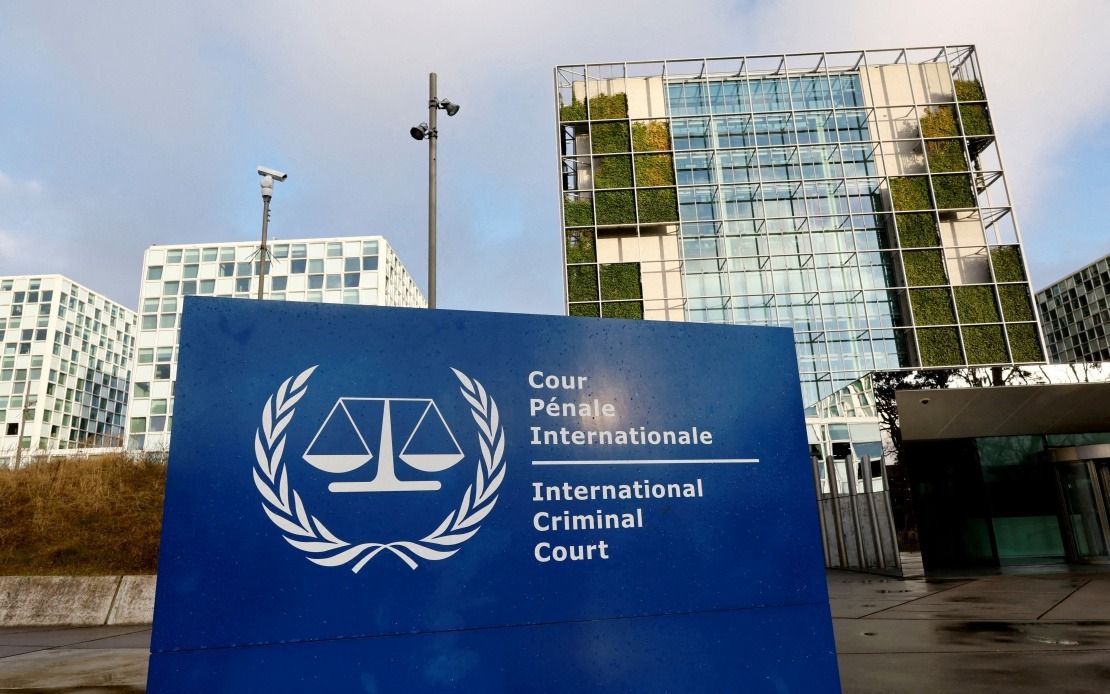
The Netherlands' leading legal experts have raised alarm over Washington's broad offensive against the International Criminal Court, describing the campaign as a destabilising threat to the international legal architecture that underpins global justice. The criticism from Dutch scholars underscores growing concern among international law specialists about the implications of the US stance for the future of multilateral institutions and accountability mechanisms.
On July 13, the US Department of State unveiled its sweeping initiative to counter what it characterised as an existential threat to American sovereignty. The department framed the Hague-based ICC as posing "an intolerable threat" through its claimed authority to investigate, prosecute, and potentially imprison American military personnel and government officials engaged in activities undertaken in service of US interests. This formal articulation of policy represents a significant hardening of Washington's position toward a court that the United States has long viewed with deep suspicion.
Alette Smeulers, professor of international crimes at the University of Groningen, articulated the Dutch academic perspective in stark terms. She warned that any attempt by the United States to dismantle international institutions would fundamentally alter the global order toward one governed by power rather than principle. "If the United States tries to dismantle such institutions, it would move the world toward a system governed by the rule of the strongest rather than the rule of law. That would be a very dangerous development," Smeulers told Xinhua, capturing the existential concern animating European legal circles about American unilateralism.
Smeulers' critique extends beyond rhetorical concern to substantive legal argument. She emphasised that the ICC operates within strict jurisdictional boundaries established by the Rome Statute, the treaty foundation of the court. The institution can only prosecute the gravest offences—those classified as crimes against humanity, war crimes, and genocide—and exclusively when such crimes occur on the territory of a state party to the Rome Statute or are perpetrated by nationals of member states. This framework, she stressed, hardly constitutes the unconstrained threat that Washington portrays.
The tension between the United States and the ICC has been escalating for months. In December of the previous year, Washington imposed sanctions against two ICC judges, alleging their involvement in what the State Department characterised as "politicised actions" targeting Israel. That move itself provoked international outcry, but the July announcement signals a fundamentally different order of magnitude in American opposition. Rather than targeting individual judges, the new campaign seeks to delegitimise and potentially dismantle the institution itself.
Kyra Wigard, an assistant professor of law at Utrecht University, offered another Dutch legal perspective that underscores the severity with which European scholars view American actions. Wigard characterised the imposition of sanctions on ICC judges as "absurd," pointing out that such measures are traditionally reserved for alleged terrorists or nations engaged in military conflict. The application of sanctions to judicial officers represents, from this perspective, a weaponisation of economic coercion against the independent exercise of judicial function.
The implications of the US campaign extend far beyond bilateral tensions between Washington and the court. Smeulers warned that American pressure could fundamentally compromise the ICC's operational capacity and simultaneously undermine the broader international legal order. More troublingly, she noted that Washington has signalled its intention to leverage diplomatic pressure to encourage other nations to withdraw from the Rome Statute entirely, potentially dismantling the court's institutional foundation through attrition of member states.
For Southeast Asian nations, the Dutch scholars' concerns carry particular relevance. The region's stability increasingly depends upon respect for international legal frameworks and multilateral institutions. Any successful American campaign to delegitimise the ICC would establish a dangerous precedent that powerful nations can simply opt out of inconvenient international obligations, potentially emboldening regional powers to adopt similar approaches toward other institutions constraining their actions.
The Netherlands itself occupies a unique position in this debate, hosting the ICC in The Hague and maintaining a deep commitment to international law and multilateral cooperation. Dutch legal expertise consequently carries particular weight in international legal circles. The unified concern expressed by scholars at prestigious Dutch universities reflects genuine anxiety that American unilateralism represents a fundamental threat to the post-World War II international architecture built upon the principle that all nations, regardless of power, remain subject to law.
The philosophical divide underlying this dispute cuts to the heart of contemporary international relations. The United States fundamentally objects to any institution that might constrain American military or political freedom of action, viewing such constraints as incompatible with national sovereignty. Conversely, international law scholars argue that genuine sovereignty in the modern era requires mutual acceptance of constraints, and that powerful nations abandoning international institutions sets a precedent that inevitably weakens the entire system. The Dutch scholars' warning essentially articulates the fear that if America succeeds in dismantling the ICC, no international institution will prove safe from great power pressure.
As this confrontation develops, the stakes for global governance and the principle of universal accountability remain extraordinarily high. The Dutch legal community's intervention in this debate signals that concern about American actions extends well beyond those directly involved with the court, reaching instead to fundamental questions about how the international community will function in an era of declining multilateral consensus.

