Dutch Prime Minister Rob Jetten delivered a formal state apology on Sunday to members of the Moluccan community, acknowledging more than seven decades of mistreatment by the Netherlands. The apology, delivered during an emotional ceremony in Rotterdam, represents a significant moment of reckoning for the Dutch government over a historical injustice that has reverberated through generations of families with roots in Indonesia's eastern spice islands.
The Moluccan people's painful relationship with the Netherlands stems from the immediate post-World War II period, when Indonesia was fighting to break free from Dutch colonial rule. Tens of thousands of Moluccans served in the Dutch colonial military during this independence struggle, believing their loyalty would be rewarded. However, when Indonesia achieved independence in 1949, the situation deteriorated dramatically for those who had fought alongside the Dutch. Facing potential reprisals from Indonesian nationalists who viewed them as collaborators, approximately 12,500 Moluccans were transported to the Netherlands in what Dutch authorities framed as a temporary humanitarian measure.
The transfer was supposed to be a brief, transitional arrangement. Dutch negotiators promised that once circumstances in Indonesia stabilised, the Moluccans would be repatriated to their homeland and resettled. This commitment formed part of broader diplomatic arrangements between The Hague and Jakarta as both nations sought to normalise relations following Indonesia's independence. Yet this promise proved hollow. The Dutch government never fulfilled its repatriation commitment, leaving Moluccan families stranded in a foreign country with no clear pathway home and no genuine effort to help them build new lives in Dutch society.
Conditions for Moluccans in the Netherlands were deeply inadequate by any measure. Upon arrival, many were placed in former concentration camps that had been used by Nazi occupiers during World War II to detain Dutch Jews before deporting them to death camps. For those with military service, the treatment was particularly cold—they were summarily discharged from the Dutch army and left without employment prospects or meaningful integration support. Rather than receiving the assistance one might expect from a government sponsoring their relocation, Moluccans faced systematic neglect, poor housing arrangements, and deliberate exclusion from Dutch social and economic life.
The frustration and sense of betrayal that accumulated over decades eventually exploded into violence during the 1970s. Young Moluccans, born in the Netherlands or brought there as children, grew increasingly angry about their community's marginalisation and the abandonment of their parents' hopes for return. A series of violent incidents involving second-generation Moluccans shocked Dutch society and brought international attention to the unresolved tensions within their communities. These actions, while condemned, reflected the depth of despair and alienation that had festered for two decades in the aftermath of the broken promises of the early 1950s.
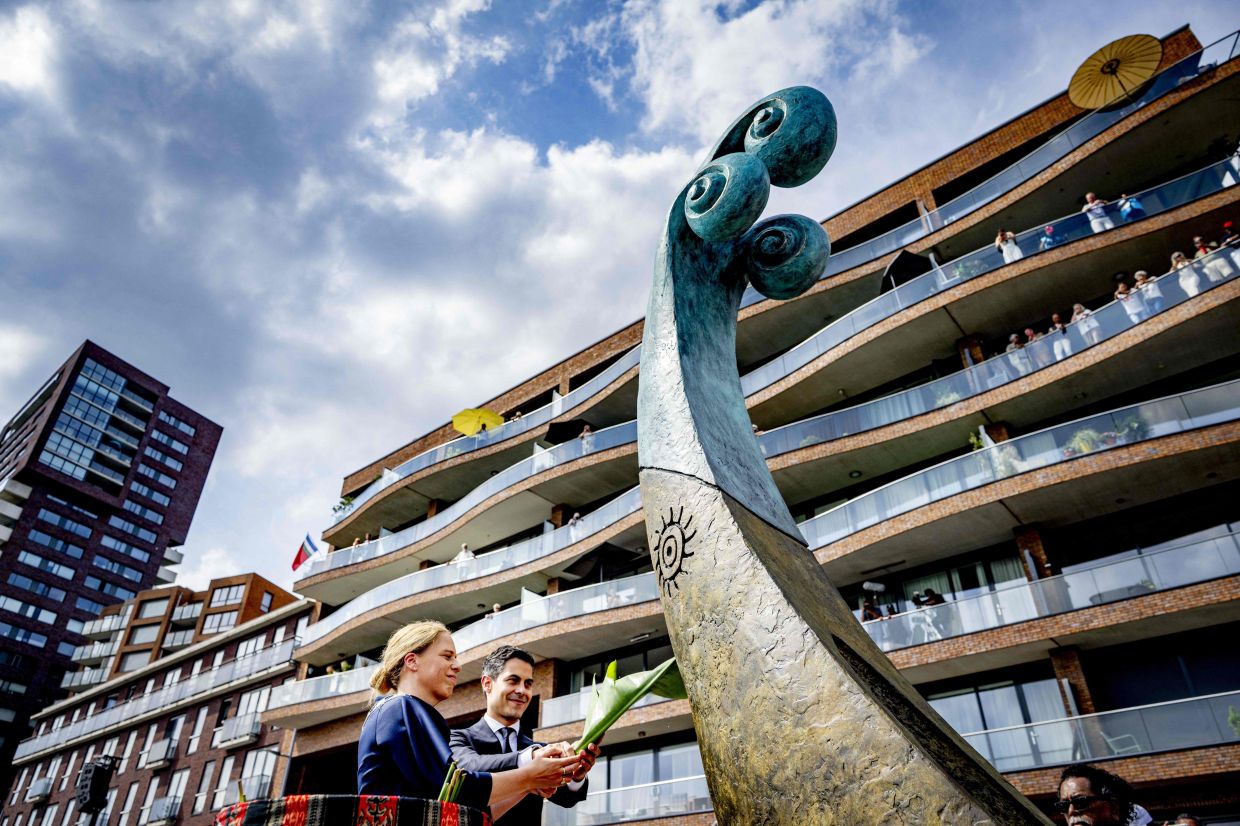
Jetten's apology, delivered at the unveiling of the Ulu Kora monument in Rotterdam, acknowledges multiple dimensions of this historical wrong. The monument stands at Lloydkade, the very Rotterdam quay where the first ships carrying Moluccan families arrived in the Netherlands, making the location itself a powerful statement about memory and reckoning. In his remarks, Jetten specifically apologised for the inadequate reception and housing provided to Moluccans, for allowing them to remain invisible and unsupported within Dutch society, for the unfulfilled longing for home that has haunted generations, and for the grief and pain that rippled through countless families.
The Dutch Prime Minister acknowledged that an apology, no matter how sincere or formally delivered, cannot undo the historical record or reverse the profound losses suffered by the Moluccan community. He recognised that words alone cannot restore the years lost, the opportunities missed, or the families fractured by displacement and abandonment. Many of those who attended the ceremony were clutching photographs of deceased relatives—first-generation Moluccans who never saw their homeland again and died in exile, their return journey perpetually delayed by official indifference.
For Malaysia and other Southeast Asian nations, this moment carries particular resonance. The Moluccan case exemplifies how colonial powers abandoned their commitments to populations when those commitments became inconvenient or diplomatically costly. It underscores how migration and displacement, even when framed as temporary measures, can become permanent fixtures that shape lives and communities across generations. The Dutch experience also demonstrates that formal apologies, while necessary steps toward reconciliation, require sustained commitment to addressing the material and social consequences of historical injustice.
The Moluccan diaspora today numbers tens of thousands across the Netherlands, and their descendants have built lives and contributed to Dutch society despite initial barriers. Yet the community has never ceased to grapple with questions of identity, belonging, and the unfulfilled promises made to their ancestors. Jetten's apology acknowledges that the Dutch state bears responsibility for this unresolved historical trauma, and it opens a new chapter in how the Netherlands reckons with its colonial past—a reckoning that became increasingly urgent in recent years as Dutch society engaged in more honest reflection about the darker chapters of its imperial history.
The broader implications extend to how nations manage migration, displacement, and historical wrongs. The Moluccan experience reveals the corrosive long-term consequences of treating vulnerable populations as temporary problems rather than recognising their full humanity and commitment to building peaceful, integrated communities. For Southeast Asian observers, the apology also represents validation that struggles for recognition and justice, even when delayed by decades, can eventually achieve formal acknowledgment and memorialisation by powerful nations that once dismissed these grievances as historical footnotes.