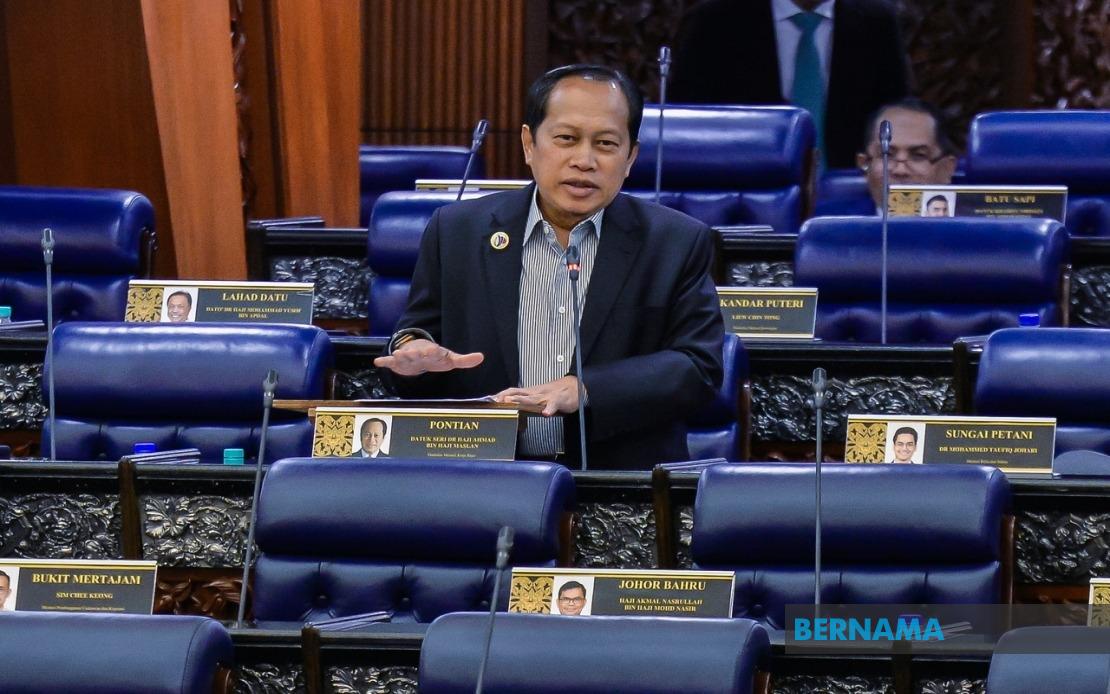
The government has decided to proceed with the East Coast Expressway Phase 3 (LPT3) as a public-private partnership rather than undertaking direct public funding, according to Deputy Works Minister Datuk Seri Dr Ahmad Maslan. Speaking in Parliament, Ahmad explained that the financial position of the Federal Government necessitated this approach, where private sector participation would bear the full development burden. The project will be tendered through a Request for Proposal process, inviting qualified bidders to assume complete responsibility for construction and financing.
The LPT3 represents a significant infrastructure addition to Malaysia's transport network, designed to address growing mobility needs along the East Coast corridor. The expressway will span 122 kilometres from Kampung Gemuruh in Kuala Terengganu southwestward to Tunjung in Kota Bharu, featuring dual two-lane carriageways and five interchange points. According to a 2022 feasibility study, the project carries an estimated development cost of RM9.8 billion, making it one of the larger transport infrastructure undertakings planned for the region.
Ahmad's justification for the PPP model focused on existing transport capacity and emerging alternatives that will soon service the East Coast. He noted that current congestion on the coastal route occurs primarily during peak travel periods such as Hari Raya festivities and public holidays, suggesting that demand does not yet warrant fully government-funded expansion. More significantly, several complementary transport projects are nearing completion or are in advanced planning stages, which will fundamentally alter travel patterns and reduce pressure on existing road infrastructure.
The East Coast Rail Link (ECRL), a mega-project that has consumed considerable government resources, is approaching completion and will offer an alternative transportation corridor between the East Coast and Klang Valley. When operational, the ECRL will divert significant passenger and some freight traffic away from road networks, reducing the urgency for additional expressway capacity. Additionally, the Kota Bharu-Kuala Krai Expressway (KBKK) and the Lingkaran Tengah Utama (LTU) Expressway are under development, creating a multi-modal transport ecosystem rather than dependence on a single expressway route.
From a strategic perspective, LPT3 becomes the third major transport corridor serving East Coast users seeking connectivity to the Klang Valley region. Ahmad positioned the expressway as a complementary facility that would provide redundancy and choice within the transport network rather than addressing an immediate capacity crisis. This positioning influences the financial case for the project—if demand were deemed urgent and concentrated, government funding would be more readily justified. Instead, the dispersed demand across multiple transport modes makes private sector involvement more viable, as operators can structure toll pricing and concession terms reflecting actual usage patterns.
The public-private partnership model represents a pragmatic response to Malaysia's constrained fiscal environment. Government budget allocations have been strained by competing demands for healthcare, education, social spending, and debt servicing. Large infrastructure projects increasingly rely on private financing mechanisms to supplement limited public resources. This approach allows the government to deliver infrastructure while preserving fiscal space for other priorities, though it typically results in toll charges for users who would otherwise have access to publicly-financed roads.
Critical commercial terms for the LPT3 remain undefined at this stage. The toll rate structure has not been finalised and will depend on multiple variables including actual construction costs once bidders undertake detailed engineering assessments, the financing arrangements selected by the concessionaire, anticipated operational and maintenance expenditures, projected traffic volumes from competing transport alternatives, and the duration of the concession period. These factors will be negotiated during the RFP process and finalised in the concession agreement between government and the selected private operator.
The determination of toll rates will be particularly complex given the existence of alternative routes and transport modes. Users comparing LPT3 against the ECRL, existing federal roads, or the alternative expressways will weigh travel time savings against toll costs. If LPT3 tolls are set too high relative to benefits offered, traffic volumes will fall short of projections, jeopardising the private operator's financial returns and potentially creating disputes over the concession agreement. Conversely, if tolls are artificially low to attract traffic, the operator may struggle with profitability, affecting project viability.
The concession structure itself—including the length of the exclusive operating period, toll system technology, maintenance responsibilities, and procedures for toll gantry placement—has not been determined. These operational details significantly influence both user experience and operator revenue. A shorter concession period creates greater urgency for toll revenue collection, potentially favouring higher initial charges. Longer concession periods allow more gradual toll escalation but extend private sector control over this public transport corridor for decades. The RFP process will establish parameters reflecting government priorities regarding affordability, efficiency, and public interest protection.
For Malaysian commuters and businesses in the East Coast region, the PPP model presents mixed implications. Private operation typically ensures efficient maintenance and modern toll collection systems, as operators seek to maintain network quality to justify toll revenues. However, toll charges represent an additional cost compared to free or low-cost public highways. Regional businesses transporting goods will factor these toll costs into operational expenses, potentially affecting competitiveness. The eventual choice of route—LPT3, ECRL, alternative expressways, or existing roads—will be driven by users' cost-benefit calculations.
The timing of LPT3 implementation depends on completion of the RFP process and the subsequent bidder evaluation period. Given that fundamental commercial terms remain unsettled, the project likely remains several months from formal tender release. Interested Malaysian and international infrastructure developers will monitor the RFP framework closely to assess commercial viability before committing to detailed bid preparation. The project represents a substantial investment opportunity within the Malaysian infrastructure market, particularly for firms with experience in toll road development and operations.
This decision also reflects a broader policy shift in how Malaysia is funding major infrastructure. Rather than relying exclusively on government debt financing, policymakers are increasingly employing PPP mechanisms to tap private capital and operational expertise. While this approach addresses immediate budget constraints, it redistributes infrastructure costs from general taxation to specific users through tolls. Over time, such models may create a tiered transport system where toll roads offer premium services while parallel public routes provide cost-free but potentially slower alternatives, raising equity considerations about transport access based on ability to pay.

