The Subsidised Diesel Control System (SKDS) expansion has delivered substantial benefits to East Malaysia's commercial transport sector, with companies in Sabah, Sarawak and Labuan dominating uptake of the newly opened scheme. Domestic Trade and Cost of Living Minister Datuk Armizan Mohd Ali revealed that 67.9 per cent of all firms registering under the fresh initiative are located across these three regions, underscoring how regional businesses have embraced the opportunity to access subsidised fuel for their operations.
Since the programme's expansion commenced on July 3, the scale of participation has grown impressively across the country. The figures released highlight that 10,453 companies operating in Sabah, Sarawak and Labuan have registered a combined fleet of 18,538 vehicles under the new jeep and pickup categories. These numbers represent only a portion of the broader national participation, with 15,388 companies nationwide having enrolled across all qualifying vehicle types, managing a total of 25,781 vehicles through the expanded system. The concentration of registrations in East Malaysia points to the acute relevance of the subsidy programme to regional business models that rely heavily on commercial transport.
The expansion of SKDS eligibility to include sole proprietorships and partnerships has proven to be a watershed moment for smaller transport operators. Previously excluded entities can now register private-use jeeps and pickups under the company classification and access a RM300 diesel subsidy through the established SKDS mechanism. This structural change addresses a longstanding gap that had prevented many informal and semi-formal transport businesses from participating in fuel subsidy programmes, effectively extending government support to a broader segment of Malaysia's commercial transport ecosystem.
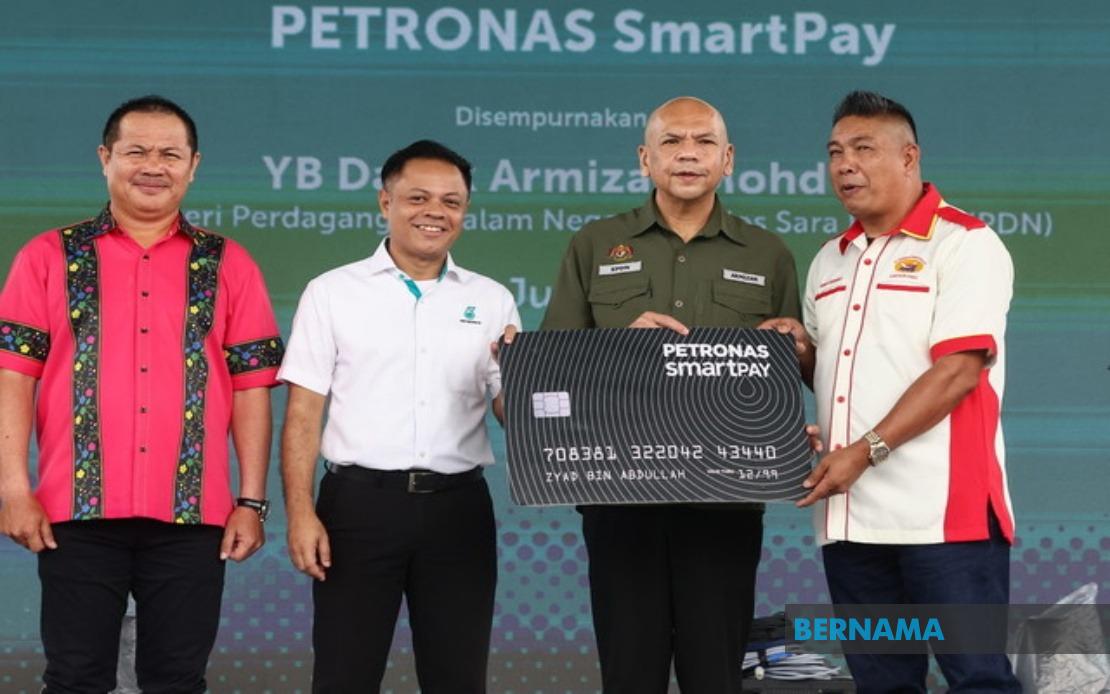
Armizan emphasised during the fleet card handover ceremony in Sandakan that this positive reception validates the government's strategy to strengthen the SKDS framework. The provision of physical fleet cards to participating companies, distributed through major oil companies, represents the operational backbone of the subsidy system. These cards enable enrolled businesses to purchase diesel at subsidised rates, directly reducing operating costs for transport operators and indirectly supporting the competitiveness of goods and services across the supply chain.
The SKDS framework encompasses three distinct sectoral categories, each serving different operational niches within Malaysia's transport and logistics infrastructure. Beyond the newly expanded jeep and pickup segment, the system includes public land transport operators and commercial freight hauliers. Companies receiving SKDS approval across any of these categories gain access to fleet cards that facilitate subsidised fuel purchases, streamlining what would otherwise be a complex reimbursement process. This integrated approach consolidates government support through a single administrative mechanism.
The government has mounted an active campaign to ensure maximum participation among eligible businesses. The MySubsidi portal serves as the centralised digital gateway for SKDS applications, allowing companies that meet eligibility criteria to register remotely without requiring physical office visits. Armizan publicly urged enterprises operating within qualifying parameters but not yet enrolled to submit applications promptly, signalling that the application window remains open and bureaucratic barriers have been minimised. This accessibility represents a deliberate policy choice to maximise programme penetration among the target business population.
Administrative responsibility for diesel subsidies remains segregated across government structures in ways that occasionally create complications. The Ministry of Domestic Trade and Cost of Living oversees SKDS distribution to 35 categories of commercial vehicles, positioning it as the primary regulator of business-oriented fuel assistance. Conversely, the Ministry of Finance controls individual and agricultural subsidy channels, namely Budi Diesel and Budi Agri-Komoditi programmes. This division of labour, while organisationally logical, has prompted regional representatives to seek greater coordination and standardisation of eligibility conditions between programmes.
During his Sandakan visit, Armizan received representations from Sabah stakeholders regarding inconsistencies in subsidy eligibility frameworks. Regional representatives raised concerns about differing conditions applied to diesel and petrol subsidies for non-commercial vehicle categories, particularly the Budi95 and Budi Diesel programmes. The requests centred on harmonising access criteria across all subsidy schemes and potentially simplifying requirements to focus primarily on driving licence possession as a qualifying metric. Such standardisation would reduce compliance confusion and enhance perceived fairness across beneficiary groups.
The complexity of Malaysia's subsidy architecture extends to vehicle ownership registration protocols determined by the Ministry of Finance. Current arrangements that permit vehicle registration in individual names have generated administrative questions, particularly regarding how such registrations interface with business-level subsidy eligibility determinations. Armizan indicated that such policy queries would be channelled through formal intergovernmental coordination mechanisms established between federal ministries and the state governments of Sabah and Sarawak, ensuring that regional concerns reach appropriate decision-makers.
The commitment to sustained SKDS strengthening reflects recognition that fuel subsidies constitute a critical policy lever for maintaining transport sector competitiveness and supply chain efficiency. Armizan publicly pledged continued collaborative engagement with the Ministry of Finance, state governments of Sabah and Sarawak, petroleum companies and industry stakeholders. This multi-institutional approach acknowledges that effective subsidy administration requires alignment across fiscal authorities, commercial partners and beneficiary communities.
For Malaysian and Southeast Asian readers, the East Malaysia subsidy experience demonstrates how targeted government support can respond to geographical and sectoral economic realities. The preponderance of Sabah and Sarawak registrations reflects how regional development strategies depend on accessible transport cost infrastructure. As other Southeast Asian economies grapple with fuel price volatility and transport sector profitability challenges, Malaysia's SKDS model offers operational lessons regarding mechanism design, administrative simplification and multi-stakeholder coordination. The programme's apparent success in driving uptake suggests that well-structured subsidy systems can achieve policy objectives when eligibility frameworks align with actual business structures and access mechanisms reduce bureaucratic friction.

