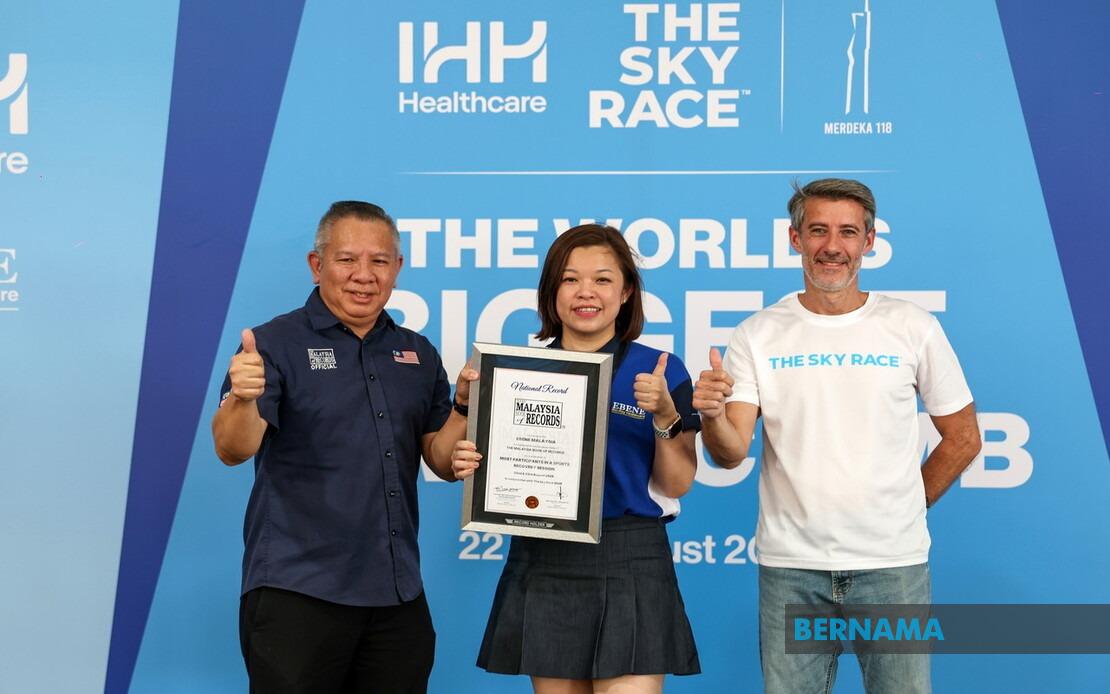
EBENE Bio-Ray Healthcare has leveraged the recently concluded Sky Race 2026 event to spotlight the critical role that proper recovery plays in athletic performance and long-term wellness, achieving a Malaysia Book of Records milestone in the process. The wellness company surpassed its initial target of 1,000 participants for the "Most Participants in a Sports Recovery Session" category, drawing record numbers to its dedicated recovery zone during the tower running challenge held at Stadium Merdeka on August 22 and 23. With approximately 8,000 runners and fitness enthusiasts converging on the venue, the initiative represents a significant platform for changing attitudes toward preventive health care among Malaysia's growing community of active individuals.
Marketing and E-Commerce Director Goh Sa Ki explained that the record attempt was fundamentally about public education rather than mere brand promotion. The company sought to embed the concept of recovery into the broader consciousness of runners and tower runners, demographics that often underestimate the importance of post-exertion care. By partnering with the Malaysian Book of Records and creating a tangible, measurable goal, EBENE transformed what could have been a standard promotional booth into a legitimate milestone that signals industry recognition of recovery's legitimacy as a core component of fitness culture.
The Sky Race 2026 partnership also aligned with EBENE's established messaging around courage, determination and confidence in athletic pursuits. Tower running, in particular, represents an extreme form of physical exertion that demands exceptional lower-body strength and cardiovascular endurance. Participants ascending tall structures at speed face unique biomechanical challenges that conventional running does not impose, making the post-event recovery experience especially valuable for this specialized community.
From a physiological standpoint, tower running imposes severe demands on the knees, lower back and leg muscles. The repetitive impact of climbing stairs under load, combined with the psychological intensity of height and speed, creates a cumulative stress that, if not properly managed, can lead to chronic injury or burnout. EBENE's product portfolio including knee guards and compression socks addresses this reality by offering both preventive support during the activity and therapeutic benefits during and after exertion. The compression technology helps manage inflammation, improve blood circulation and provide proprioceptive feedback that enhances stability on demanding terrain.
The establishment of a dedicated Sports Recovery Zone at the event marked an operational commitment to the recovery message. By offering sports massage and guided stretching sessions, EBENE moved beyond product sales into experiential education. Participants could tangibly experience how targeted recovery interventions felt and understood their purpose. This hands-on approach proves far more persuasive than marketing claims alone, allowing runners to understand that recovery is not a luxury or indulgence but an essential investment in maintaining their passion for running and other physical activities.
Goh emphasized a paradigm shift that EBENE is promoting within Malaysian wellness discourse: the importance of proactive rather than reactive knee care. Too often, individuals address joint discomfort only after pain becomes unavoidable, by which time preventive interventions have become remedial treatments with longer recovery timelines. By encouraging Malaysians to adopt proper support systems before discomfort emerges, EBENE advocates for a preventive model that extends the active years of participants' lives and reduces dependence on more aggressive medical interventions.
This initiative represents the fifth iteration of EBENE's "Move with EBENE" activation campaign, suggesting an institutional commitment to this messaging rather than a one-off marketing exercise. The repetition across multiple events and touchpoints indicates that the company views sports recovery awareness as a core corporate mission rather than seasonal promotional content. For consumers, this consistency provides reassurance that EBENE's emphasis on recovery reflects genuine corporate values rather than opportunistic advertising.
The timing of this record attempt during Sky Race 2026 carries particular significance for Malaysia's emerging tower running scene. As the sport gains popularity and attracts increasingly serious competitors, the infrastructure supporting athlete wellness and injury prevention remains underdeveloped compared to traditional road running. By establishing recovery as a valued, record-breaking activity, EBENE helps normalize the practice and encourages event organizers to incorporate recovery resources into future competitions.
With three decades of experience in healthcare support products, EBENE brings substantial credibility to its recovery advocacy. The company's longevity in the sector suggests deep understanding of biomechanics, material science and consumer behaviour within the wellness industry. This established expertise lends weight to its assertion that proper support and recovery represent non-negotiable components of sustainable athletic participation, particularly for older or less-conditioned runners who may face greater injury risk than elite athletes.
The broader context of this record attempt reflects growing regional recognition that fitness culture in Southeast Asia must evolve beyond simple participation metrics toward holistic wellness frameworks. Malaysian runners increasingly seek not just events in which to compete but comprehensive ecosystems supporting their athletic development. Companies like EBENE that position themselves as partners in this journey, rather than merely vendors of products, distinguish themselves in an increasingly competitive wellness marketplace.
For Malaysian fitness enthusiasts considering tower running or intensive training regimens, the EBENE initiative signals that recovery resources and expertise are now accessible within local sports communities. Rather than seeking international brands or expensive physiotherapy services, runners can access evidence-based recovery solutions designed specifically for their activity profile. This democratization of recovery knowledge and products may ultimately expand tower running's appeal by reducing perceived barriers to safe participation.
Looking forward, the success of the Sky Race 2026 record attempt may influence how other Malaysian sporting events approach athlete welfare. By demonstrating that recovery zones attract genuine engagement and generate measurable participation metrics, EBENE provides a template for future events to incorporate similar facilities. As tower running grows in Malaysia, establishing recovery as a valued part of the competitive experience ensures that the sport develops in ways that prioritize participant longevity and injury prevention alongside competitive achievement.

