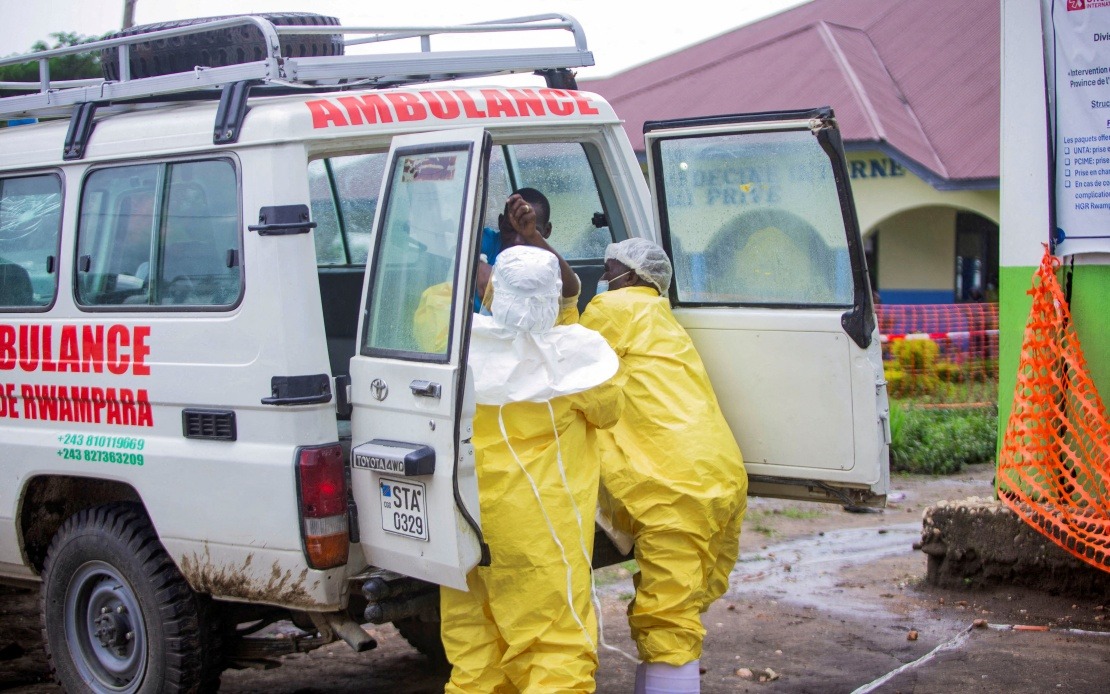
The Democratic Republic of the Congo faces an expanding public health crisis as authorities confirmed the spread of Ebola to multiple regions, with cumulative cases approaching 1,900. The nation's health ministry released figures on Sunday documenting 1,873 confirmed infections and 672 fatalities, marking a concerning trajectory for the epidemic that was first declared in mid-May. The geographical dispersal represents a significant escalation in the outbreak's severity, suggesting transmission patterns that extend well beyond initial containment zones and indicate potential challenges in curbing further spread.
The virus, identified as Bundibugyo ebolavirus, has now been documented across five provinces spanning different regions of the country. Ituri province remains the primary epicentre where the outbreak originated, yet the disease has subsequently reached North Kivu and South Kivu provinces. Most notably, Haut-Uele and Tshopo provinces were included in the national epidemiological report for the first time, signalling the outbreak's northward and eastward expansion. Each newly affected area represents fresh complications for disease control efforts, as regional health systems must simultaneously establish diagnostic capabilities, isolation facilities, and contact tracing protocols.
Investigations by health authorities have established epidemiological connections between the newly affected provinces and the original outbreak zone in Ituri. The pathways linking these cases demonstrate that transmission occurred through both direct contact networks and population movements between regions. This pattern reflects the reality of disease dynamics in the DRC, where geographic mobility, cross-border interactions, and community migration patterns facilitate viral transmission across provincial boundaries. Understanding these transmission corridors remains essential for designing targeted public health interventions and predicting where cases may emerge next.
The healthcare system faces extraordinary strain under the weight of the outbreak. Currently, 763 patients are receiving active treatment or remain isolated in designated facilities, representing the most critically ill portion of the caseload. Across treatment centres throughout the affected provinces, bed occupancy rates have reached 95.1 percent, indicating that infrastructure is nearly saturated. This near-maximum utilisation means that additional surge capacity must be rapidly established to accommodate further patient influxes, yet expanding facilities requires trained personnel, supplies, and equipment that are often scarce in resource-constrained settings. The high occupancy rates also suggest that hospitals risk being overwhelmed should case numbers continue their upward trajectory.
Recoveries offer some encouraging indicators within an otherwise dire epidemiological picture. To date, 306 patients have successfully recovered from confirmed Ebola infections and been discharged from treatment facilities. However, this recovery figure remains modest relative to the total confirmed caseload, highlighting the severity of illness and mortality associated with this particular viral strain. The Bundibugyo virus, while less frequently documented in human populations compared to other Ebola species, nonetheless demonstrates substantial pathogenicity. The recovery rate suggests that intensive medical management, including supportive care and organ function preservation, can improve outcomes for some patients, underlining the critical importance of treatment access.
Suspected cases continue to complicate the epidemiological situation and suggest that confirmed case numbers may rise as laboratory testing catches up with clinical presentations. Currently, 299 suspected infections remain under investigation, with 91 suspected deaths recorded among this group. These figures represent individuals displaying clinical symptoms consistent with Ebola but awaiting laboratory confirmation through testing protocols. The presence of a substantial suspected caseload indicates ongoing transmission and emergence of new symptomatic individuals. As suspected cases are progressively confirmed through laboratory analysis, the official tally will undoubtedly increase, potentially accelerating the trajectory toward higher numbers.
The outbreak's declaration on May 15 means the epidemic had already been underway for weeks before formal recognition by authorities. This lag between initial cases and official declaration, while common in disease outbreaks, may have permitted additional transmission during the period before coordinated public health responses mobilised. The months since declaration have involved building diagnostic capacity, establishing treatment facilities, training healthcare workers, and launching contact tracing operations. Nevertheless, the continued expansion into previously unaffected provinces suggests that control measures have not yet succeeded in halting transmission, and sustained disease circulation continues across multiple geographic zones.
For Southeast Asian observers, including Malaysian health authorities, the DRC outbreak underscores the persistent global threat posed by highly pathogenic viruses and the vulnerability of healthcare systems when confronted with emerging infectious diseases. The Democratic Republic of Congo's experience demonstrates how quickly an outbreak can expand geographically and how severely it can burden healthcare infrastructure. The international health community's response, including technical assistance, supply provision, and epidemiological support, becomes essential when national capacity is overwhelmed. Malaysia and other ASEAN member states maintain relevant interests in global disease surveillance and outbreak containment, given regional interconnectedness through air travel and trade networks.
The challenge confronting DRC authorities involves simultaneously executing multiple complex interventions across vast geographic territory. Contact tracing of infected individuals and their interactions, identification and monitoring of exposed persons, promotion of safe burial practices to prevent transmission during funeral rites, public health messaging to encourage appropriate health-seeking behaviour, and community engagement to build trust in response efforts all demand substantial coordination and resources. Furthermore, security concerns in parts of the DRC have occasionally complicated outbreak response activities, limiting access to affected populations and hampering contact tracing efforts. These contextual factors shape the response environment and may influence the outbreak's ultimate trajectory.
Looking ahead, the coming weeks will prove critical in determining whether the outbreak can be controlled and transmission halted. The epidemiological data from the weeks following this July report will indicate whether cases continue accelerating into additional provinces or whether public health interventions prove sufficient to interrupt transmission chains. The international medical and scientific community closely monitors the situation, given implications for understanding Ebola epidemiology and for demonstrating effective outbreak response strategies in low-resource settings. For the DRC's population and healthcare workers, the priority remains bringing the epidemic under control and preventing further deaths.

