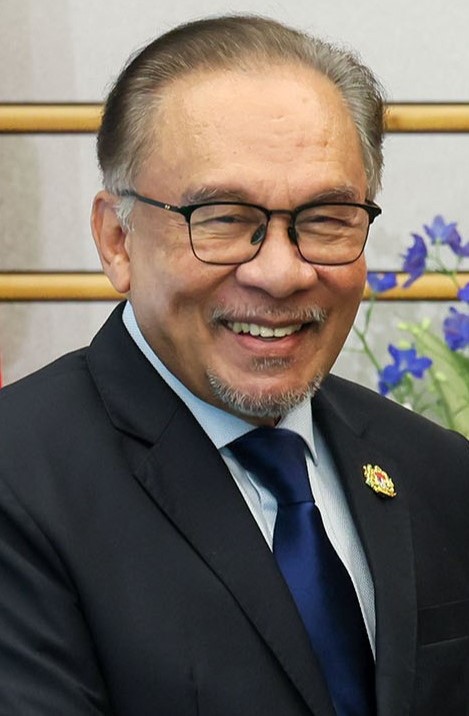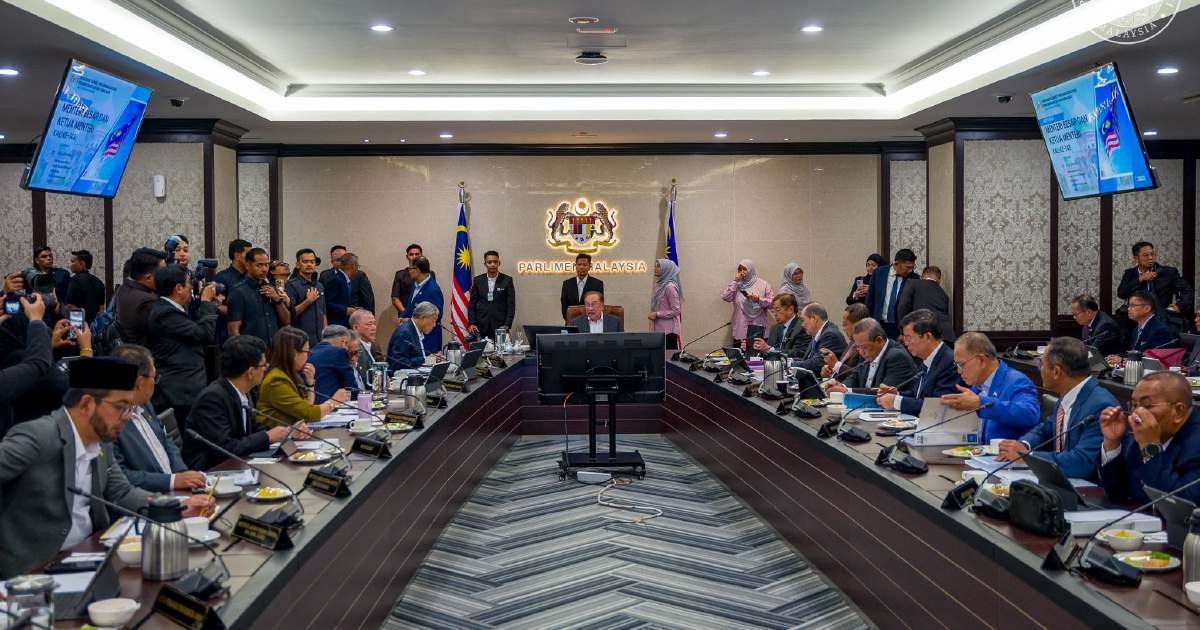
Prime Minister Datuk Seri Anwar Ibrahim brought together Malaysia's regional leaders for the 149th Meeting of Menteris Besar and Chief Ministers at the Parliament building, establishing economic revival as the central theme of deliberations. The gathering, which represents the highest-level coordination mechanism between the federal government and state administrations, underscored the collective focus on fortifying the nation's economic foundations during a period marked by significant international volatility.
The timing of the meeting carries particular significance given the current geopolitical landscape. The Middle East remains embroiled in ongoing conflicts that have reverberated through global markets, creating headwinds for developing economies like Malaysia. Oil price fluctuations, disrupted supply chains, and investor uncertainty stemming from these regional tensions have prompted Malaysian policymakers to recalibrate their economic strategy. By assembling the 13 Menteris Besar from state governments and Chief Ministers from federal territories, the Prime Minister demonstrated the recognition that economic recovery cannot be achieved through federal initiatives alone, requiring coordinated action across all tiers of government.
The venue itself—the Parliament building—symbolized the gravity of the economic situation and the imperative for legislative and executive alignment. Such senior-level consultations typically address fiscal policy coordination, investment incentives, infrastructure development priorities, and regulatory harmonization across states. For Malaysia's regional economy, where state governments control significant portfolios including local commerce, land administration, and industrial development, synchronizing these functions becomes crucial during economic downturns.
International conflicts affecting the Middle East region pose specific challenges for Malaysia's economy. The nation has substantial trade relationships with Gulf Cooperation Council nations, significant numbers of Malaysian workers employed in the region, and exposure to energy price volatility. Additionally, any prolonged disruption to the Strait of Malacca or global shipping routes directly impacts Malaysia as a major maritime trading hub. These vulnerabilities necessitate proactive government coordination to maintain economic stability and investor confidence.
The federal-state collaboration framework assumes heightened importance when considering Malaysia's diverse economic profiles across regions. While Kuala Lumpur and Selangor function as financial and manufacturing hubs, other states depend heavily on specific sectors such as palm oil, tourism, or commodities. A one-size-fits-all recovery approach would prove inadequate; instead, tailored strategies reflecting each region's comparative advantages and challenges require serious deliberation among state leaders with the federal government.
Economic revival efforts typically encompass multiple dimensions that require coordination across state and federal boundaries. Investment attraction, both domestic and foreign, demands stable regulatory environments and consistent policy frameworks across jurisdictions. Menteris Besar and Chief Ministers, as implementers of federal policies at the state level, play instrumental roles in ensuring business-friendly environments and removing local-level obstacles that might impede economic activities. Their input during such meetings ensures that recovery strategies remain grounded in ground-level realities rather than theoretical projections.
The current global uncertainty presents both challenges and opportunities for Malaysia's policymakers. While Middle Eastern conflicts create immediate headwinds, they also highlight the necessity for economic diversification and resilience-building. State leaders gathered at Parliament would likely have discussed initiatives to reduce overdependence on particular sectors or trading partners, strengthen domestic consumption, and develop emerging industries such as digital economy and renewable energy. These considerations require cross-boundary cooperation, as industrial development and workforce training span multiple state jurisdictions.
Infrastructure development represents another critical discussion area within federal-state coordination frameworks. Major projects connecting regions, improving port facilities, and enhancing digital connectivity necessitate alignment between state and federal planning. Such infrastructure not only addresses immediate economic stimulus but also builds long-term competitiveness. The meeting provided an opportunity for Menteris Besar and Chief Ministers to present state-level infrastructure priorities and synchronize them with federal development corridors and national strategies.
Investor confidence, particularly from foreign direct investment sources, depends significantly on political unity and consistent messaging from government. The 149th meeting, by assembling state leaders under federal leadership, demonstrated Malaysia's commitment to coherent policymaking and stable governance. This stability messaging proves especially valuable when regional conflicts create investment uncertainty, as international capital seeks markets with clear direction and predictable policy environments.
The meeting's focus on economic revival also reflects recognition that Malaysia cannot remain insulated from global economic currents. While the nation possesses inherent strengths—strategic location, educated workforce, established financial infrastructure—these assets require conscious cultivation and strategic deployment. Regional governments, through their control over local development approval, business licensing, and service delivery, fundamentally influence whether Malaysia's potential translates into actual economic growth.
Looking forward, the outcomes of such inter-governmental consultations typically manifest in coordinated action plans addressing immediate stabilization needs and longer-term structural reforms. State leaders would carry specific mandates back to their jurisdictions, translating federal economic strategy into local implementation mechanisms. The effectiveness of Malaysia's economic revival ultimately depends on this seamless translation of policy from federal conception to state-level execution.
The convening of the 149th meeting underscores that navigating global economic uncertainty requires not only sophisticated policy formulation but also institutional coordination across multiple layers of government. Prime Minister Anwar Ibrahim's leadership of these proceedings signals that Malaysia's response to current challenges operates through deliberate, collective effort rather than unilateral federal direction, potentially enhancing the legitimacy and effectiveness of recovery initiatives across the nation's diverse regions.