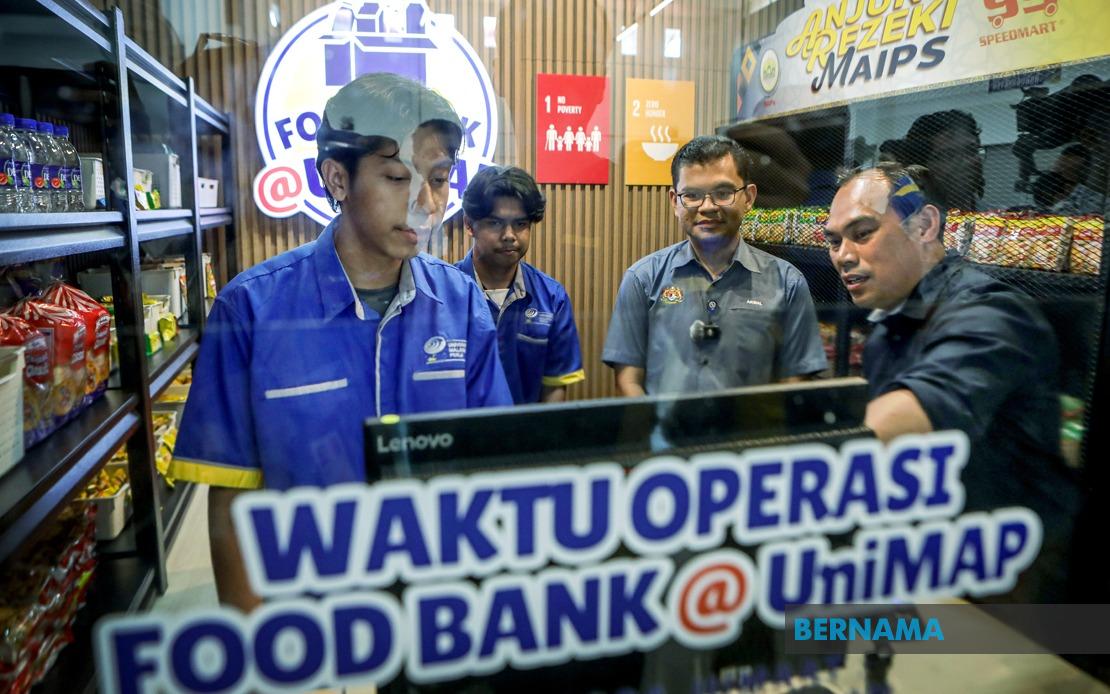
The Malaysian Economy Ministry is moving to secure continued funding for its People's Income Initiative – Food Entrepreneur Initiative (IPR-INSAN), a scheme designed to uplift lower-income entrepreneurs and provide budget-conscious consumers with affordable prepared meals. During a campus visit to Universiti Malaysia Perlis, Economy Minister Akmal Nasrullah Mohd Nasir confirmed that the ministry has formally requested an extension from the Ministry of Finance, citing strong field evidence of the programme's positive impact on both business operators and customers alike.
The initiative represents a strategic intersection of social support and entrepreneurship development. By placing food entrepreneurs into university campus environments through vending machines, the scheme tackles multiple challenges simultaneously: creating income-generation opportunities for B40 households, reducing food insecurity among students, and establishing a sustainable business model that requires minimal overhead. The mechanism leverages technology and institutional partnerships to democratise market access for individuals who might otherwise struggle to launch or maintain food businesses.
During his site inspection at Universiti Malaysia Perlis, Minister Akmal Nasrullah witnessed the practical application of this concept at two residential colleges. The vending machine setup allows participating entrepreneurs to reach a concentrated customer base with minimal logistics complexity. Rather than navigating volatile street markets or securing expensive commercial premises, participants can operate through managed campus locations that guarantee regular foot traffic and consumer demand.
The financial performance data emerging from the university pilot reveals substantial earning potential for participating entrepreneurs. At Tuanku Abdul Rahman Residential College, operator Norleyana Nordin achieved average monthly revenues of RM2,178.80, with peak sales reaching RM4,905 in January. This level of income represents meaningful supplementary earnings for B40 households and demonstrates market demand for the services offered. Her counterpart at Tuanku Tengku Fauziah Residential College, Noor Hasfalela Mohd Noor, recorded substantially higher figures, with average monthly revenue of RM4,595 and peak sales of RM10,012 in January, followed by RM5,049 in February and RM4,868 in April.
These revenue trajectories are significant within the B40 income bracket context. For individuals operating from home kitchens or informal settings, the potential to generate several thousand ringgit monthly provides material improvement in household finances. The data also illustrates seasonality patterns, with January showing exceptional performance—a pattern likely driven by university calendar dynamics and student purchasing behaviour following festive season breaks.
Beyond entrepreneurial income generation, the IPR-INSAN framework addresses genuine food affordability challenges facing university students. Campus accommodation and academic costs already strain student budgets, particularly those from lower-income backgrounds. The vending machine initiative ensures access to reasonably priced cooked food, reducing reliance on expensive campus food courts or convenience stores. This accessibility factor supports student wellbeing and academic focus by removing daily food procurement stress.
The ministry's emphasis on comprehensive benefits reflects a sophisticated understanding of programme impact measurement. Officials are not merely tracking transaction volumes but assessing broader ecosystem outcomes: whether participants achieve income sustainability, whether consumers receive genuine value, and whether institutional partnerships strengthen social safety nets. This holistic evaluation approach justifies continued government investment and positions the scheme within Malaysia's broader B40 support architecture.
Universiti Malaysia Perlis has become a demonstration site for the model's viability at institutional scale. The university's partnership encompasses three complementary initiatives: the vending machine food entrepreneur programme, the Food Bank, and MADANI Dapur Siswa (student kitchen). This integration shows how single-site interventions can address multiple welfare dimensions. Student volunteers contribute to operational success, creating peer-support networks that reinforce community engagement beyond transaction-based interactions.
The extension request reflects confidence that the pilot phase has generated sufficient evidence to justify broader rollout. Universities across Malaysia could potentially adopt similar frameworks, scaling the model across the higher education sector. This expansion would create thousands of microentrepreneur opportunities while simultaneously improving food security for millions of students nationwide. The model's technology component—vending machines—also facilitates performance monitoring and data collection that can inform future policy refinements.
From a regional development perspective, food entrepreneurship programmes like IPR-INSAN offer important lessons for Southeast Asia's broader poverty reduction agenda. Many neighbouring countries grapple with informal sector integration and B40 income generation challenges. Malaysia's systematic approach to formalising informal food businesses through institutional partnerships and technology presents a replicable model that other ASEAN economies could adapt to local contexts.
The programme also intersects with sustainability considerations. By supporting home-based food entrepreneurs, the initiative reduces large-scale commercial dependency and preserves traditional food preparation knowledge within communities. The vending machine infrastructure, while modern, still distributes income to individual operators rather than concentrating it within large food service corporations, preserving wealth within local economies.
Successful extension of IPR-INSAN depends on Ministry of Finance approval and budget allocation decisions. Government officials will likely evaluate the proposal against competing fiscal priorities and assess whether demonstrated campus outcomes justify investment in broader institutional deployment. The data from Universiti Malaysia Perlis provides compelling evidence that the investment generates measurable returns in household income improvement and consumer welfare enhancement.
The ultimate significance of IPR-INSAN extension extends beyond immediate participant benefits. It signals continued government commitment to pragmatic, evidence-based interventions that bridge entrepreneurship support with social safety nets. By demonstrating that B40 entrepreneurs can generate sustainable income through accessible platforms, the programme challenges stereotypes about low-income household economic capability and provides a pathway toward graduated economic participation that dignifies participants while improving community welfare.

