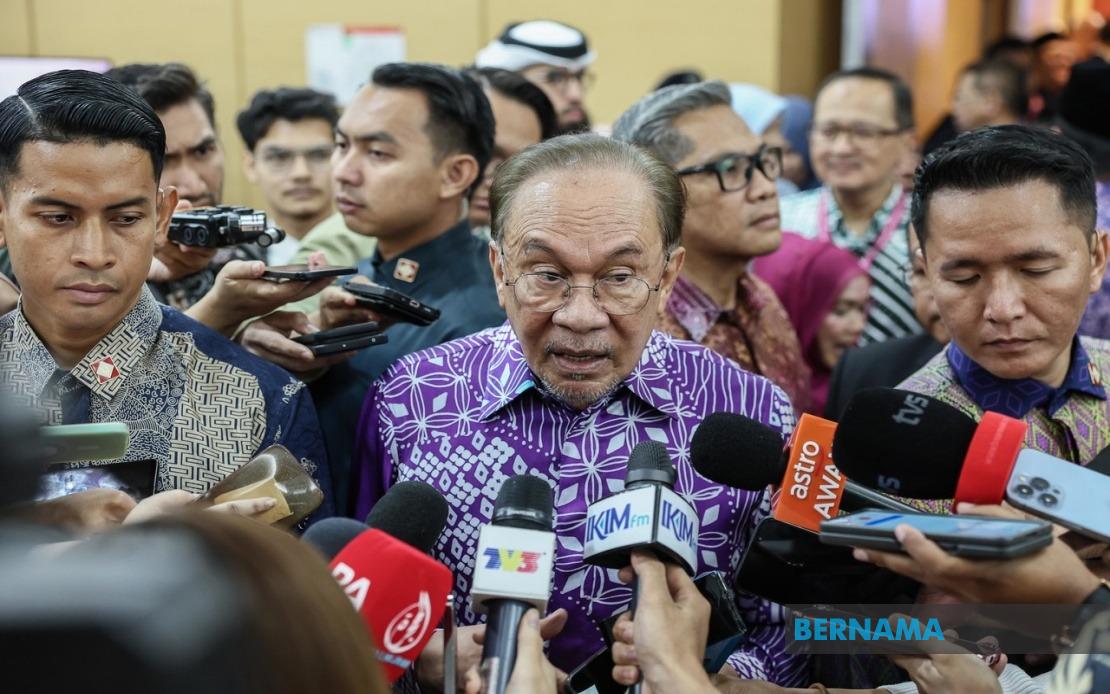
Prime Minister Datuk Seri Anwar Ibrahim has issued a clarion call for Malaysia to reframe its approach to economic development, insisting that prosperity must ultimately serve the advancement of human welfare and moral purpose rather than become consumed with chasing growth figures alone. Speaking at the Humane Economy Global Discourse in Kuala Lumpur, Anwar articulated a vision of development that places dignity and dignity at the centre of policy-making, a message that carries particular resonance as nations across Southeast Asia grapple with the tensions between rapid modernisation and social cohesion.
The Prime Minister acknowledged that Malaysia stands at a critical juncture, facing transformative technological shifts that will reshape economies and societies. Artificial intelligence, renewable energy systems, advanced manufacturing capabilities, and biotechnological innovations are reshaping competitive landscapes globally, and Malaysia cannot afford to remain passive in this transition. Yet Anwar's overarching argument transcends mere economic competition; he insisted that technological prowess and investment attraction, while necessary, remain hollow achievements if divorced from a deeper commitment to improving lives and restoring human connection to economic endeavour.
Anwar's framing of the economy as fundamentally a tool rather than a destination represents a philosophical pivot in how Malaysia's leadership discusses development. For decades, economic indicators—GDP growth rates, foreign direct investment flows, export performance—have dominated policy discourse throughout the region. The Prime Minister's assertion that the economy must be "connected to moral purpose" challenges this paradigm, suggesting that Malaysia should evaluate success not merely through balance sheets but through measures of social equity, environmental stewardship, and genuine improvements in citizens' quality of life. This positioning also signals Malaysia's attempt to differentiate itself from neighbouring economies by embedding ethical considerations into development frameworks.
The timing of these remarks at a dedicated forum on humane economics suggests a deliberate strategic choice by Malaysia's government to champion this narrative within regional and global conversations. The Humane Economy Global Discourse platform, alongside the Forum Ekonomi Manusiawi (FEM), provides institutional scaffolding for Malaysia to position itself as a thoughtful counterweight to purely extractive or exploitative development models. By hosting such discourse and articulating these principles at the highest level, Malaysia signals that it takes seriously the nexus between growth and human flourishing—a distinction that carries weight in an era of mounting global concerns about inequality, environmental degradation, and technological disruption's social consequences.
For Malaysian policymakers and business leaders, Anwar's message carries concrete implications. If economic life must be anchored in humanity, this logically extends to how Malaysia attracts and manages investment, how it designs labour protections, how it ensures technological benefits distribute across society rather than concentrate among elites, and how it balances development pressures against environmental and cultural preservation. These considerations become particularly important for Malaysia's diverse, multi-ethnic society, where equitable development remains essential to social stability. Policies divorced from moral anchoring risk exacerbating existing disparities and triggering social friction.
The principle that development should uplift dignity rather than merely boost indicators also responds to emerging critiques of Southeast Asian development models. Across the region, rapid industrialisation and urbanisation have generated prosperity for some while displacing others, degrading ecosystems, and sometimes eroding traditional communities. Thailand, Vietnam, and Indonesia have all experienced tensions between growth imperatives and social cohesion. Malaysia's explicit commitment to weaving humanity into economic strategy offers a potential pathway for regional leadership on this question, positioning it as concerned not just with outpacing competitors but with building sustainable, inclusive prosperity.
The presence of Minister in the Prime Minister's Department (Religious Affairs) Dr Zulkifli Hasan at the forum underscores that this is not merely a secular economic philosophy but one rooted in Malaysia's faith traditions and values systems. Islam, Christianity, Buddhism, and other faiths represented in Malaysia contain teachings about economic justice, stewardship, and human dignity that can be mobilised in service of more humane development. By explicitly linking religious affairs ministry participation to economic discourse, Malaysia suggests that spiritual and ethical dimensions should inform material policy-making.
This philosophical repositioning also bears implications for how Malaysia engages with global technology and investment flows. As artificial intelligence and automation reshape labour markets, a commitment to human-centred development becomes increasingly urgent. Nations that adopt AI and advanced manufacturing purely for productivity gains risk technological unemployment and social dislocation. A framework that insists the economy must serve humanity would demand that such technologies be deployed in ways that create meaningful work, protect displaced workers, and distribute gains equitably rather than concentrate them among capital owners and technical elites.
Moreover, Anwar's emphasis resonates with mounting international discourse on stakeholder capitalism and corporate purpose beyond shareholder returns. Major economies from the United States to Europe have begun questioning whether capitalism should be restructured to serve broader social objectives. Malaysia's articulation of this principle at national leadership level contributes to a growing global conversation and potentially positions the country as a thoughtful voice on economic reform and responsible development, enhancing its soft power and appeal to investors and partners who increasingly care about environmental, social, and governance considerations.
The challenge, however, lies in translating rhetoric into implementation. Declaring that economic life must align with moral purpose is substantially easier than operationalising such commitment through budget allocations, regulatory frameworks, and enforcement mechanisms. Malaysian policymakers will face inevitable tensions between short-term growth pressures from investors and long-term commitments to human dignity, between sectional interests and broader social good. Whether Anwar's vision becomes embedded in actual policy architecture—through reformed labour laws, stronger environmental protections, equitable education investment, and wealth redistribution mechanisms—will ultimately determine whether this philosophy yields substantive change or remains aspirational rhetoric.
Looking forward, Malaysia's positioning on humane economy matters not only domestically but regionally. As Southeast Asia navigates rapid technological change and faces mounting pressures to maintain competitiveness, the question of whether growth serves humanity or humanity serves growth becomes increasingly urgent. If Malaysia can demonstrate that prosperity and human-centredness are compatible, even complementary objectives, the country could offer a compelling model for regional peers while building domestic legitimacy and social cohesion. Conversely, if economic policies continue to prioritise indicators over welfare, this articulation risks appearing as rhetorical flourish disconnected from reality, potentially deepening public cynicism about political leadership.

