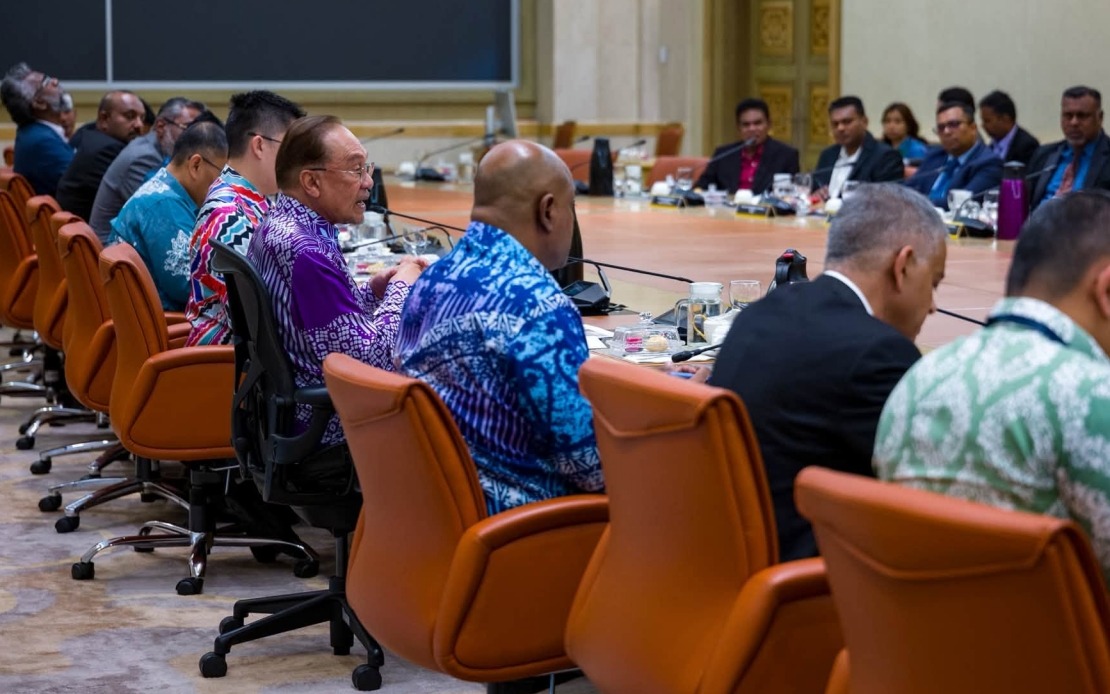
Prime Minister Datuk Seri Anwar Ibrahim has outlined a comprehensive framework for empowering Malaysia's Indian community, emphasising that meaningful progress requires simultaneous investment across multiple sectors including education, social welfare, vocational training and job creation. Speaking after meeting with Indian community leaders, Anwar articulated a vision where targeted interventions address both immediate welfare needs and long-term capability building, positioning these elements as interdependent rather than standalone initiatives.
The Prime Minister, who concurrently holds the Finance portfolio, underscored the necessity for quality education as a foundation for community advancement. This reflects growing recognition that educational attainment remains the most reliable pathway for intergenerational mobility among disadvantaged groups. By emphasising quality rather than mere access, Anwar's remarks suggest awareness that existing educational infrastructure may require significant enhancement to produce measurable outcomes in literacy, numeracy and critical thinking skills among Indian Malaysian students.
Complementing educational priorities, Anwar highlighted comprehensive welfare systems as essential infrastructure. This acknowledgement comes as Malaysia navigates expanding income inequality and rising cost of living pressures that disproportionately affect lower-income communities. Welfare provisions, when effectively designed and administered, create social safety nets that enable families to maintain stability while pursuing education and employment advancement, breaking cycles of poverty that span generations.
Skills development programmes emerged as a central pillar in Anwar's strategic approach. The emphasis on vocational and technical training reflects pragmatic understanding that not all community members will pursue tertiary education, yet all require marketable competencies. In Southeast Asia's competitive labour market, where technological disruption continues reshaping employment landscapes, accessible skills development becomes increasingly critical for maintaining workforce relevance and earning potential across age groups.
Anwar explicitly directed the Malaysian Indian Transformation Unit (MITRA) and allied government agencies to adopt more aggressive grassroots engagement strategies. This directive acknowledges that centralised policy formulation, while necessary, proves insufficient without effective community-level implementation. The reference to proactive approaches suggests recognition that historically, marginalised communities have experienced policy implementation gaps wherein programmes designed in capital cities fail to address actual ground realities.
A crucial component of Anwar's message emphasised precise identification of community needs through sustained dialogue. This diagnostic approach contrasts with top-down policy design and reflects understanding that effective empowerment initiatives must remain responsive to evolving circumstances. The Prime Minister cautioned against inefficient resource allocation, stressing that government assistance must reach those genuinely requiring support rather than dispersing benefits across populations regardless of actual need.
The emphasis on accountability and good governance within this framework signals commitment to transparent programme administration. Given Malaysia's historical concerns regarding patronage-driven resource distribution and institutional corruption, transparent mechanisms for identifying beneficiaries and tracking programme outcomes become essential for maintaining public confidence and ensuring equitable outcomes. Accountability mechanisms also create institutional learning loops where underperforming initiatives can be identified and modified.
Anwar's articulation of an inclusive development philosophy—wherein no societal segment experiences marginalisation—carries specific implications for Indian Malaysian communities. Historically, this demographic group has experienced socioeconomic disparities relative to other major Malaysian communities, with representation gaps in certain professional sectors and higher concentrations in lower-income employment categories. Targeted empowerment becomes necessary to address these structural inequalities.
The linkage between community empowerment and broader national development demonstrates understanding that Malaysia's overall prosperity depends on maximising human capital contributions across all demographic groups. When substantial population segments experience constrained opportunities, the nation forgoes productive potential and risks social tension. Conversely, communities achieving improved living standards and expanded opportunities contribute more substantially to economic growth, tax revenues and social stability.
For Malaysian Indian communities specifically, these announced priorities offer both substantive commitment and measurable benchmarks against which progress can be evaluated. Education quality improvements, welfare programme coverage expansion, skills training accessibility and employment placement outcomes become quantifiable indicators of genuine policy implementation. Whether MITRA and related agencies can translate these priorities into concrete programmes and demonstrable results will significantly influence community confidence in government intentions.
The timing of these statements also warrants consideration within Malaysia's broader political context. Community-specific outreach by national leadership serves multiple functions: acknowledging particular demographic concerns, signalling inclusive governance approach, and reinforcing connections with constituencies. For the Indian Malaysian community comprising approximately eight percent of the national population, visible prime ministerial attention to their development priorities carries symbolic significance beyond immediate policy implications.
Moving forward, implementation dynamics will determine whether these announced priorities translate into tangible community benefits. Effective execution requires sustained funding allocation, institutional coordination across multiple agencies, community participation in programme design, and genuine political commitment transcending electoral cycles. The Malaysian Indian community will likely scrutinise implementation progress against these specific commitments across education outcomes, welfare coverage expansion, skills training programme availability and documented employment improvements resulting from government initiatives.

