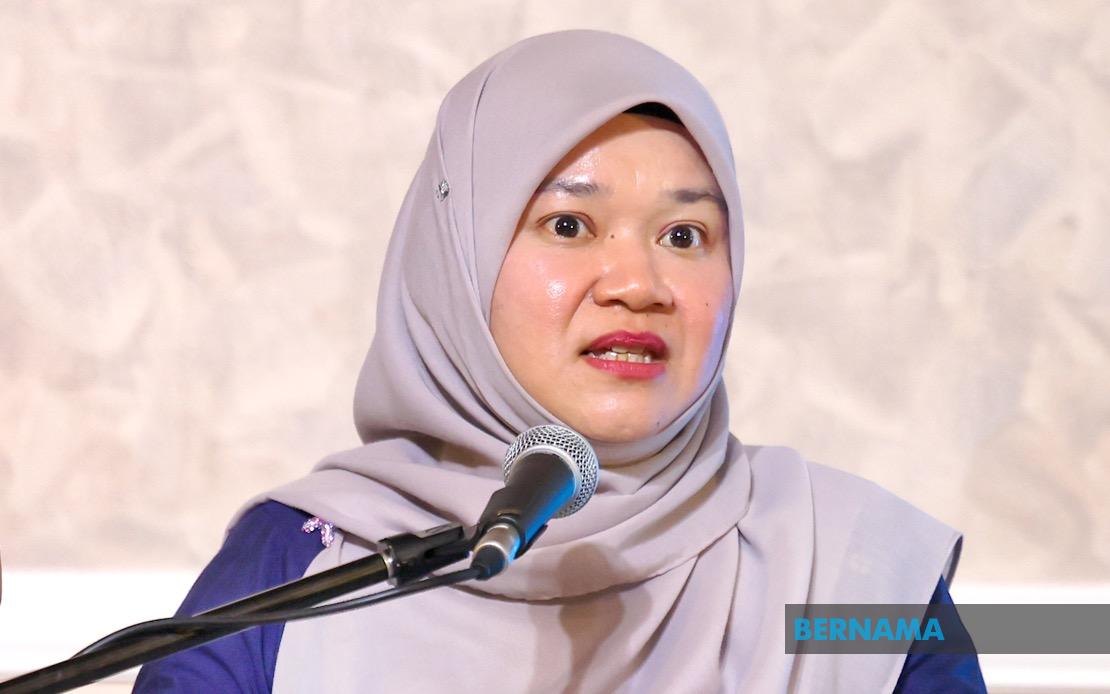
Education Minister Fadhlina Sidek, who heads the PKR Wanita wing, has taken formal legal action by lodging a police report in response to the circulation of an artificially generated video containing what she characterised as malicious and false allegations. The incident underscores a growing problem facing Malaysian politicians, particularly women, as deepfake and AI-manipulated content becomes increasingly accessible and weaponised for reputational damage.
In a statement released here on June 24, Fadhlina expressed her concern about the nature and intent behind the video's distribution. She described the dissemination campaign as fundamentally malicious, noting that it represented a deliberate attempt not merely to damage her standing but to systematically undermine her character and professional integrity. The use of artificial intelligence to fabricate compromising content marks a troubling escalation in the tactics employed by those seeking to discredit public figures through means that are becoming harder for ordinary people to detect or verify.
The incident raises significant questions about the vulnerability of political figures to technological manipulation. Deepfake videos and AI-generated content have emerged as a potent tool in political warfare globally, capable of spreading rapidly across social media platforms before fact-checking mechanisms can intervene. The relative ease with which such content can be produced, combined with the viral nature of digital platforms, means that even thoroughly debunked material can leave lasting impressions on public perception.
Fadhlina's decision to file a police report signals an intention to pursue the matter through formal legal channels rather than relying solely on public denial. This approach reflects a broader strategy of women politicians in Malaysia to take decisive action against coordinated campaigns of character assassination and harassment. By involving law enforcement, she is attempting to establish a clear precedent that such activities carry consequences, potentially deterring future attempts at similar conduct.
Beyond the immediate matter of her own case, Fadhlina used the occasion to issue a broader call to action directed at Malaysian society. She urged all stakeholders—civil society organisations, political parties, media outlets, and government institutions—to adopt an uncompromising stance against slander, character assassination, and sexual harassment that disproportionately targets women in politics. This appeal recognises that the problem extends far beyond isolated incidents and reflects systemic vulnerabilities in how Malaysian discourse treats female politicians.
The emphasis on sexual harassment in her statement is particularly noteworthy. Women politicians worldwide report elevated levels of online abuse with sexual dimensions, ranging from crude comments to deepfake pornography. These attacks serve multiple purposes: they humiliate the target, discourage other women from entering politics, and implicitly send a message that female political participation will be met with aggression. Malaysia's political environment has not been immune to such dynamics, and Fadhlina's explicit naming of sexual harassment suggests she views this as an interconnected problem requiring a comprehensive response.
The police investigation that she has requested carries several potential avenues. Investigators may examine the technical origins of the video, trace its distribution networks, and identify individuals who deliberately spread it knowing its falsified nature. They may also explore whether existing legislation covering defamation, criminal harassment, or cybercrime provisions could apply. The outcome of such investigations will signal whether Malaysian law enforcement agencies are prepared to treat AI-generated defamatory content with the seriousness it merits, or whether existing legal frameworks prove inadequate to address emerging technological challenges.
For Malaysia's broader political landscape, this incident occurs at a time when the country continues to grapple with questions about democratic resilience and the quality of public discourse. The proliferation of misleading content, whether AI-generated or otherwise, threatens to undermine informed democratic participation and contributes to an environment where truth becomes increasingly difficult to establish. When citizens cannot reliably distinguish genuine material from fabrications, the foundation for rational political debate erodes.
The case also illuminates a significant gender dimension in Malaysian politics. Women represent a minority among elected officials and senior government positions, and research suggests they face disproportionate levels of online abuse compared to male counterparts. Tactics like deepfake distribution appear designed not merely to attack individual women but to create a hostile environment that discourages female political participation more broadly. This has implications for democratic representation and the diversity of perspectives in policymaking.
Fadhlina's position as Education Minister adds another layer to the significance of this incident. As the minister responsible for shaping Malaysia's education system, her ability to focus on substantive policy matters without distraction from coordinated harassment campaigns has direct implications for the nation's educational outcomes. The resources expended in defending against false allegations are resources that might otherwise go toward curriculum development, infrastructure, or addressing systemic challenges in Malaysian schools.
Moving forward, the response of Malaysian authorities to this case will be closely monitored by civil society observers, journalists, and women in politics. A robust investigation and appropriate legal action would signal that Malaysia takes such matters seriously and is prepared to update its legal and enforcement mechanisms to address technologically sophisticated attacks on public figures. Conversely, if the case receives insufficient attention, it would reinforce perceptions that women politicians in Malaysia lack adequate protection against coordinated harassment campaigns.
The broader challenge extends beyond the police investigation into questions about platform responsibility, digital literacy, and media literacy across Malaysian society. As AI tools become more sophisticated and more widely available, the problem of detecting and preventing malicious deepfakes will intensify. Solutions will likely require coordination across technical experts, law enforcement, media organisations, and educational institutions to build public resilience against manipulation and to establish clearer consequences for those who weaponise these technologies against individuals.