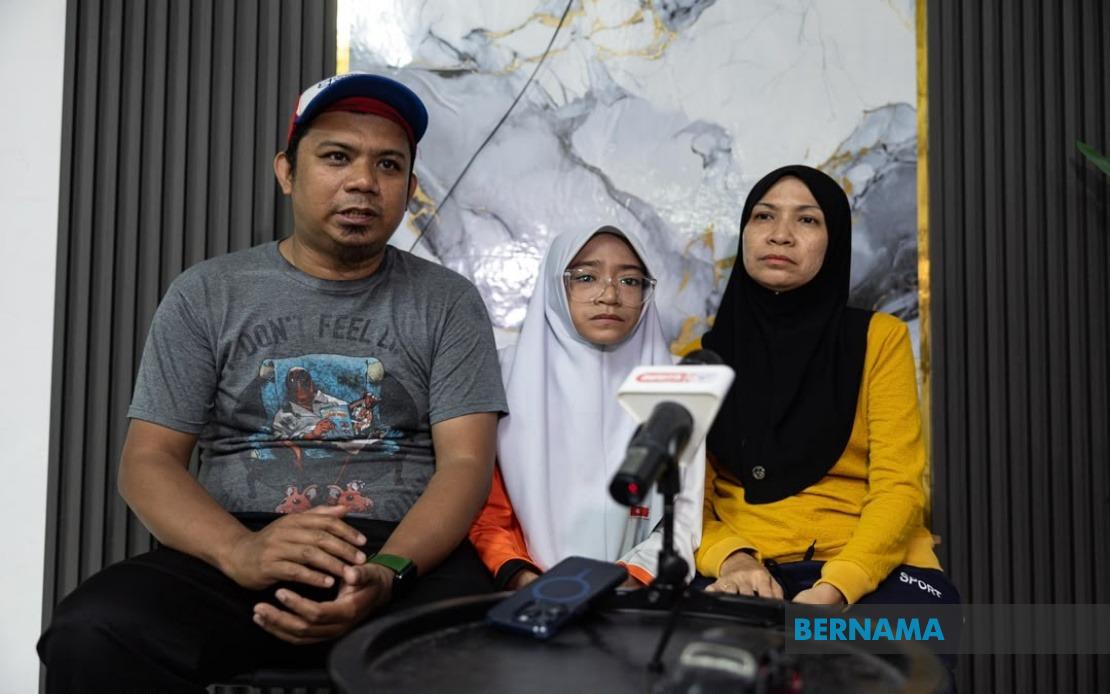
Education Minister Fadhlina Sidek has announced that she and the Tun Hussein Onn Teachers' Foundation (YGTHO) will jointly fund a RM10,000 surgical procedure for Arissa El Zahra Reduan, a 13-year-old student from Ipoh who requires corrective spinal surgery. The operation, addressing the teenager's scoliosis condition, is scheduled to take place at Raja Permaisuri Bainun Hospital on September 8. The commitment follows an appeal from the girl's father, Reduan Saad, who had publicly sought assistance covering the medical expenses required for his daughter's treatment.
In her announcement made through social media, Fadhlina emphasised the emotional weight of witnessing a young student's determination to remain engaged in formal education despite facing significant health challenges. She highlighted that the decision to provide financial support reflected a broader commitment to ensuring that financial barriers do not prevent Malaysian children from accessing necessary healthcare and continuing their schooling. The Education Minister's involvement underscores how government officials sometimes step beyond their standard portfolios to address individual cases of genuine hardship within their constituencies or communities.
The YGTHO, established to honour former Prime Minister Tun Hussein Onn's legacy, functions as a charitable organisation providing financial assistance for educational and humanitarian causes. The foundation's participation in this case demonstrates how established institutions can rapidly mobilise resources when presented with documented cases of need. By combining ministerial resources with foundation support, the initiative represents a collaborative approach to addressing medical emergencies that would otherwise burden working-class families.
Fadhlina reached out personally to Arissa and her mother through a video call, delivering the news directly and offering reassurance about the treatment process ahead. During the conversation, the Minister stressed that the confirmed funding would eliminate financial anxiety surrounding the procedure, allowing the teenager to focus on her physical and mental preparation for surgery. She also pledged that her office would oversee necessary administrative arrangements to ensure the contribution reached the family promptly and that Arissa would receive optimal medical care throughout her hospitalisation and recovery period.
Scoliosis, the condition affecting Arissa, involves abnormal lateral curvature of the spine that can progress during adolescence and lead to respiratory complications and mobility restrictions if left untreated. Surgical intervention becomes necessary when the spinal curve exceeds certain thresholds or continues deteriorating despite conservative management approaches. For teenagers like Arissa, early surgical correction during the growth years significantly improves long-term health outcomes and quality of life, preventing complications that might otherwise emerge in adulthood.
The case of Arissa reflects broader healthcare accessibility challenges faced by middle and lower-income Malaysian families. While Malaysia's public healthcare system provides subsidised treatment through institutions like Raja Permaisuri Bainun Hospital, significant procedural costs can still overwhelm families without adequate financial reserves. The RM10,000 contribution, while substantial, highlights how governmental and institutional support mechanisms remain crucial in bridging gaps between available services and actual affordability for vulnerable populations.
Education officials have increasingly recognised that student health directly impacts academic performance and attendance. A teenager recovering from untreated or delayed spinal surgery faces physical pain, restricted mobility, and potential absenteeism that compounds educational disadvantages. By addressing Arissa's medical needs, Fadhlina's intervention effectively removes a barrier to her continued participation in schooling, recognising the interconnection between healthcare access and educational outcomes.
The public acknowledgment of this case through social media has also elevated awareness about charitable giving mechanisms and government assistance pathways available to Malaysian families facing medical emergencies. Media coverage of ministerial interventions can encourage both individual donations and institutional responses to similar cases, creating ripple effects beyond the immediate beneficiary. For families navigating complex healthcare systems and financial pressures, knowing that formal appeals can reach decision-makers provides an important safety valve within Malaysia's social support infrastructure.
The scheduled September 8 operation provides Arissa with a concrete timeline for recovery and return to normal activities before the school year progresses significantly. Spinal surgery recovery typically requires several months of physiotherapy and gradual activity resumption, making the timing of the intervention important for minimising academic disruption. Fadhlina's emphasis on ensuring a smooth recovery and full return to school with peers demonstrates sensitivity to the psychological and social dimensions of prolonged illness and medical treatment among teenagers.
This intervention also reflects evolving expectations about ministerial engagement with constituent welfare. Beyond policymaking and administrative responsibilities, elected officials increasingly respond directly to individual cases of hardship that gain public attention. While such ad-hoc assistance cannot substitute for systematic poverty alleviation and universal healthcare coverage, these interventions demonstrate responsiveness to community needs and reinforce channels through which vulnerable citizens can access support when conventional systems prove insufficient.
The contribution from both the Education Ministry and YGTHO signals institutional commitment to supporting young Malaysians' health and education, two domains essential to national development. As Arissa prepares for her surgical procedure, her case serves as a reminder of both the gaps in healthcare accessibility and the potential for coordinated governmental and charitable action to address individual crises affecting Malaysia's young people.

