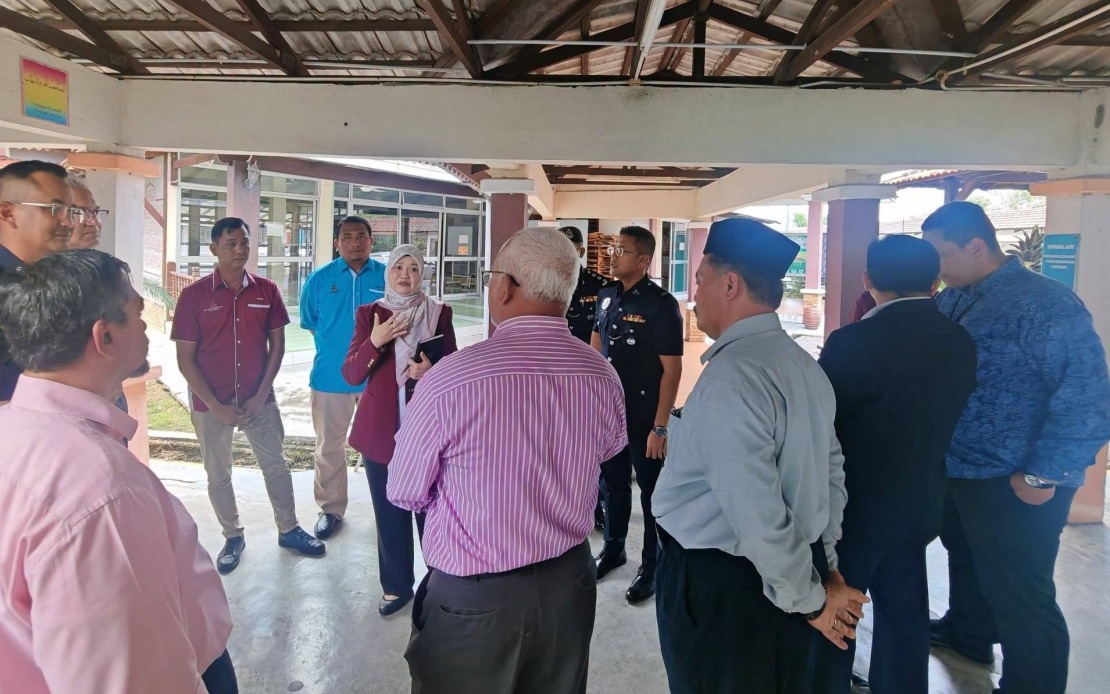
Education Minister Fadhlina Sidek made an unscheduled visit to a secondary school in Banting, Kuala Langat, on July 6 after a disturbing incident left a Form Three student with knife wounds sustained during school hours. The minister arrived at the institution at 1.20 pm to assess the situation firsthand and consult with senior staff about the immediate aftermath and longer-term support measures required for the school community.
According to police records, authorities received notification of the assault at 9.50 am, triggering a rapid response from the Kuala Langat district force. The victim, wounded in what authorities confirmed was an attack by another female student wielding a knife, was rushed to medical care and has since been stabilized at Banting Hospital. The suspect, also a schoolgirl, was apprehended at the scene and is currently assisting police with their investigation into the circumstances surrounding the violence.
During her campus visit, Fadhlina convened with the school's management team to gather detailed accounts of the incident and understand the institutional response mobilized in the immediate hours following the stabbing. Her engagement with school leaders focused on two critical dimensions: ensuring the injured student received appropriate medical intervention and establishing comprehensive psychological support infrastructure for the broader student body and teaching staff who had witnessed or been emotionally affected by the trauma.
In her public statement released through social media channels, Fadhlina emphasized the government's commitment to the victim's wellbeing while cautioning against the spread of unverified narratives surrounding the event. She specifically requested restraint from the public in disseminating speculative accounts or fabricated details, noting that such activity could complicate the ongoing police investigation and cause additional distress to those directly affected. Her measured tone reflected an effort to balance transparency with the need for investigative discretion.
The minister expressed confidence in the Royal Malaysia Police's handling of the security situation and their swift apprehension of the suspect, framing their intervention as a stabilizing force in what could have escalated into a more serious situation. Fadhlina also pledged that comprehensive updates would be released to the public as the investigative process progressed and authorities cleared information for disclosure, signaling a commitment to keeping stakeholders informed while respecting operational constraints.
V. Paparaidu, the Banting state assemblyman and chairman of Selangor's Human Resources and Poverty Eradication Committee, amplified calls for enhanced school security measures in the aftermath of the incident. He commended the State Education Department's swift activation of psychosocial support services, which extended counseling and emotional assistance not only to the stabbing victim but also to her family members and other students experiencing psychological distress from the traumatic event.
Pararaidu's intervention introduced a wider security policy dimension to the discussion, arguing that physical safety infrastructure at educational institutions demands continuous vigilance and systematic improvements. He stressed the necessity for security personnel stationed at school entrances to maintain elevated alertness, carefully monitoring the flow of individuals entering and departing the premises throughout the day. His emphasis on gate-level security reflected growing concerns about unauthorized access to campus areas during vulnerable periods such as student arrival and dismissal times.
The assemblyman further advocated for strengthened protocols governing who is permitted within school grounds, positioning campus security as an essential component of creating an environment conducive to learning and development. His framing of schools as sanctuaries where students should pursue education without fear or threat underscored the broader societal expectation that educational institutions provide not merely academic instruction but also physical and emotional safety.
The stabbing incident at the Banting secondary school raises pressing questions about school safety frameworks across Malaysia's education system. While isolated violent incidents within institutions do occur, this event highlights the intersection of adolescent conflict management, mental health support availability, and physical security architecture. Schools operate within broader community contexts where behavioral issues, interpersonal disputes, and emotional disturbances among young people can occasionally manifest in dangerous ways.
The rapid police response and ministerial engagement demonstrated institutional capacity to address acute crises, yet the incident prompts reflection on preventative measures that might reduce the likelihood of such violence occurring. Many Southeast Asian educational systems have increasingly recognized that comprehensive approaches combining trained counselors, peer mediation programs, and conflict resolution curricula alongside perimeter security yield better outcomes than security measures alone.
For Malaysian parents and educators, the Banting incident serves as a reminder of the multi-faceted nature of school safety. While securing physical boundaries matters, so too does fostering psychological resilience among students and creating reporting mechanisms that surface behavioral warning signs before they escalate to violence. The involvement of both ministerial and local political leadership signals government acknowledgment of education security as a priority issue warranting sustained attention.
The fact that the suspect was reportedly another student complicates the narrative around external threats, instead pointing toward interpersonal dynamics within the student body that may have contributed to the violence. This aspect underscores why psychological support services and peer relationship education constitute essential complements to security infrastructure. Moving forward, the school and district authorities will likely conduct comprehensive reviews of their crisis response protocols and safety systems to identify areas for enhancement.

