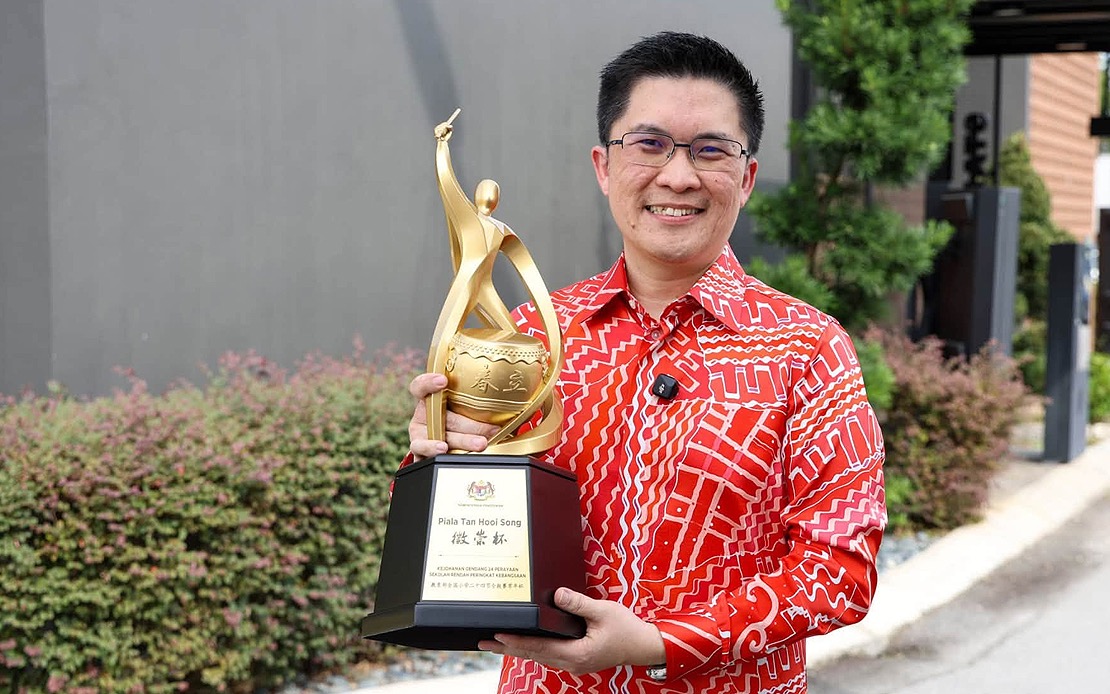
Malaysia's Education Ministry is moving forward with plans to secure international recognition for Gendang 24 Perayaan, the country's distinctive percussion-based cultural art form, by submitting an application to UNESCO for designation as a recognised cultural heritage. Deputy Education Minister Wong Kah Woh unveiled this initiative during the closing ceremony of the National Primary Schools Gendang 24 Finals Competition held at Stadium Indera Mulia in Ipoh, signalling the government's commitment to elevating the status and global visibility of this uniquely Malaysian cultural expression.
The decision to pursue UNESCO recognition reflects a broader governmental strategy to safeguard intangible cultural assets that define national identity. Wong indicated that the ministry had engaged in substantive planning since May, coordinating with various stakeholders at both institutional and grassroots levels to develop a comprehensive approach to the application process. This preparatory work underscores the seriousness with which the education establishment views the preservation challenge, acknowledging that without deliberate intervention and international legitimacy, traditional art forms risk gradual erosion in an increasingly globalised environment.
Central to the ministry's preservation strategy is the implementation of a Train the Trainers programme designed to equip school educators with the knowledge and skills necessary to instruct students in Gendang 24 Perayaan. By building capacity within the teaching workforce, the initiative aims to institutionalise the art form's transmission across the education system rather than relying on informal or family-based transmission alone. This pedagogical approach recognises that sustainable cultural preservation requires embedding traditional practices within formal educational structures where they can reach broader cohorts of young Malaysians consistently and systematically.
Gendang 24 Perayaan carries significant historical weight in Malaysia's contemporary cultural landscape. The art form originated in Malaysia in 1988 through the creative vision of the late Tan Hooi Song and Tan Chai Puan, two pioneering cultural figures whose legacy continues to shape the nation's artistic identity. The form's relatively recent emergence distinguishes it from ancient traditional practices, yet its rapid institutional adoption across the education system has established it as an authentic and valued expression of Malaysian cultural creativity. Recognition as Intangible National Heritage in 2009 provided domestic validation, but UNESCO designation would position it on the global cultural stage alongside other protected heritage forms.
The competitive landscape surrounding Gendang 24 Perayaan demonstrates its expanding influence within Malaysian schools. The inaugural National Primary Schools Finals Competition attracted 16 elite primary school teams comprising a combined 417 students drawn from institutions throughout the country. This participation level indicates substantial institutional investment in the art form's development and reflects growing appreciation among educators and parents for its value in broadening students' cultural literacy and artistic capabilities. The competition itself serves multiple functions: it provides performance opportunities, establishes benchmarks for artistic excellence, and generates public visibility that reinforces the legitimacy of Gendang 24 Perayaan as a curricular component.
The growth trajectory of Gendang 24 Perayaan over the past four decades illustrates the potential for cultural forms to achieve mainstream acceptance through deliberate promotion and institutional support. What began as a niche artistic practice confined to a limited number of school groups has evolved into a movement encompassing hundreds of schools nationwide. This expansion demonstrates that traditional and contemporary cultural expressions need not exist in competition; rather, they can flourish simultaneously when educational institutions provide platforms for their development and recognition structures that reward participation and excellence.
Organisational partnerships prove essential to this cultural preservation effort. The Sports, Co-curricular and Arts Division of the Education Ministry collaborated with the Malaysia Gendang 24 Perayaan Association to conceptualise and execute the national finals competition, while Yayasan Sime Darby contributed substantial financial backing as the principal sponsor. This tripartite model—government education authority, community-based cultural organisation, and corporate social responsibility initiative—creates a sustainable ecosystem capable of supporting the financial and logistical demands of comprehensive cultural programming.
For Southeast Asian observers, Malaysia's approach to preserving Gendang 24 Perayaan offers instructive lessons about institutional strategies for cultural maintenance. Many nations in the region grapple with similar challenges: how to sustain traditional and contemporary cultural forms against the homogenising pressures of globalisation, how to integrate cultural education into already-crowded school curricula, and how to secure resources for artistic development. Malaysia's decision to leverage formal education as the primary transmission mechanism, combined with international recognition ambitions, presents a replicable model that other countries might adapt to their own cultural contexts.
The UNESCO application represents more than bureaucratic credential-seeking; it embodies recognition that cultural heritage requires active stewardship to survive generational transitions. By internationalising the protection framework for Gendang 24 Perayaan, Malaysia signals that cultural preservation is a shared global responsibility rather than solely a national concern. UNESCO designation carries practical implications beyond prestige—it can unlock additional funding sources, facilitate international cultural exchanges, and establish Gendang 24 Perayaan within a recognised inventory of humanity's cultural wealth.
Young Malaysians' demonstrated enthusiasm for Gendang 24 Perayaan, as evidenced by strong competition participation and the growth of school-based programmes, suggests that cultural engagement need not feel antiquated or irrelevant to contemporary youth. When presented with quality instruction, performance opportunities, and peer recognition within school communities, students embrace participation in traditional and culturally rooted art forms. This generational interest provides confidence that the art form can sustain itself through educational transmission, provided institutions maintain commitment to its development and provide adequate resources.
The timing of the UNESCO application pursuit coincides with broader regional and global conversations about intangible cultural heritage protection. As countries across Southeast Asia increasingly recognise the economic and social value of cultural tourism and creative industries rooted in traditional practices, Malaysia's proactive positioning of Gendang 24 Perayaan positions the nation advantageously within emerging cultural economy frameworks. International recognition enhances Malaysia's cultural soft power while creating potential pathways for cultural diplomacy and cross-border artistic collaboration.
Moving forward, the success of this preservation initiative will depend on sustained commitment from multiple stakeholders. The Education Ministry must maintain budgetary support for the Train the Trainers programme and ensure that teacher education curricula incorporate instruction in Gendang 24 Perayaan pedagogy. Schools must integrate the art form meaningfully into co-curricular offerings rather than relegating it to peripheral status. The Malaysia Gendang 24 Perayaan Association must continue its advocacy and community mobilisation work. And corporate sponsors must recognise cultural preservation as an enduring priority worthy of long-term investment rather than one-off gestures. Only through this comprehensive institutional alignment can Gendang 24 Perayaan achieve the robust, intergenerational transmission necessary for its continued evolution and survival.

