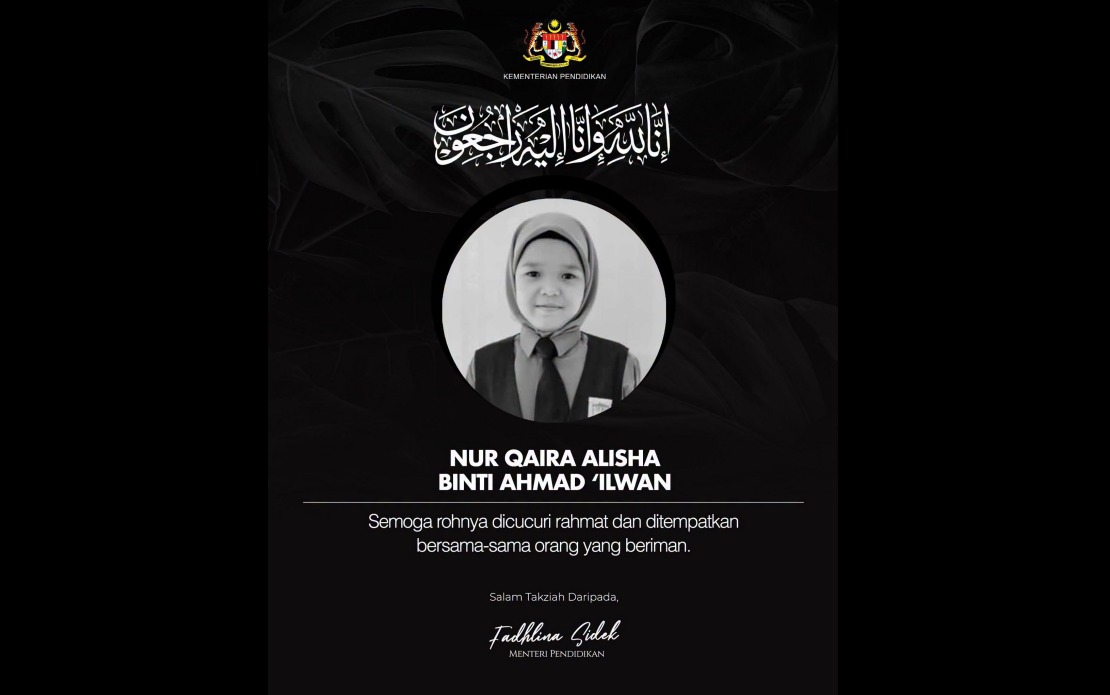
Education Minister Datuk Seri Fadhlina Sidek has instructed the ministry's Integrity Unit to proceed with an investigation into a formal complaint submitted by the family of Year Four pupil Nur Qaira Alisha Ahmad Ilwan, whose death has sparked significant concern over student safety protocols in Malaysian schools. The directive emphasises that all investigative proceedings must adhere to established guidelines and remain grounded in fair treatment for all involved parties.
The case has drawn considerable public attention due to troubling circumstances surrounding the nine-year-old's death. According to the family's account, despite the school having received medical documentation exempting Nur Qaira from participating in physical education activities, a teacher allegedly pressured the child to take part in a running event organised as part of the school's sports house selection process on April 15. This occurred despite Nur Qaira having lived with a serious cardiac condition since early infancy.
Nur Qaira's medical history revealed significant vulnerability. She had been diagnosed with heart complications when she was merely three months old, a condition that required ongoing medical supervision and imposed strict limitations on physical exertion. The school had been formally notified of these restrictions through an official medical letter, yet the alleged instruction to participate in the running event proceeded regardless.
The consequences proved tragic. Within nine days of the sports day event, on April 24, Nur Qaira was admitted to Sultanah Bahiyah Hospital displaying acute symptoms including severe vomiting and facial swelling. Hospital investigations subsequently confirmed that the child had experienced catastrophic cardiac failure resulting from decompensated dilated cardiomyopathy. She did not recover from this condition and passed away while under hospital care.
Fadhlina's statement reflects the ministry's acknowledgement that the matter demands serious institutional attention. She emphasised that the MOE maintains an unwavering commitment to student safety and overall welfare, positioning these concerns at the core of educational operations. The minister also prioritised extending compassionate support to the grieving family during their period of bereavement, recognising the profound loss they have endured.
The Kedah State Education Department has already conducted preliminary investigations into the family's formal complaint. This regional body's involvement highlights how such matters typically flow through established education department hierarchies before escalating to federal ministry level. However, the decision to engage the federal Integrity Unit represents an escalation of scrutiny and suggests recognition that the case may involve systemic issues requiring examination beyond the state level.
This incident raises broader questions about institutional safeguards protecting vulnerable students in Malaysian schools. Schools receive numerous medical exemption letters and special circumstances notifications each academic year, yet ensuring these protections are universally respected remains a persistent challenge. The case exemplifies how communication breakdowns between medical records, teaching staff, and administrative personnel can create dangerous situations for children with pre-existing health vulnerabilities.
The circumstances also prompt reflection on the culture of participation that sometimes pervades school sporting events. While physical education and team spirit remain important developmental components of schooling, institutions must balance competitive and communal objectives against the fundamental principle of protecting individual student safety. Teachers and administrators require clear protocols for recognising and honouring medical exemptions without creating situations where children feel pressured to exceed their physical limitations.
For Malaysian parents, particularly those with children living with chronic health conditions, this case underscores the importance of maintaining detailed medical documentation at schools and establishing direct communication channels with educators about their children's specific limitations. However, the burden should not rest solely on families; schools must develop robust systems ensuring that medical information reaches all relevant staff members and that respected protocols remain consistently applied across all activities.
The integrity investigation process now underway will likely examine multiple dimensions including the teacher's decision-making process, whether adequate protocols existed for implementing medical exemptions, whether school administrators had properly disseminated the medical information, and whether systemic training was sufficient to prevent such occurrences. These findings could influence policy implementation across Malaysian educational institutions.
Minister Fadhlina's expression of condolences to Nur Qaira's parents acknowledges the family's immeasurable loss while the investigation proceeds. The case demonstrates how tragic circumstances can catalyse institutional review and potentially strengthen protective frameworks benefiting countless other vulnerable students throughout Malaysia's schools.

