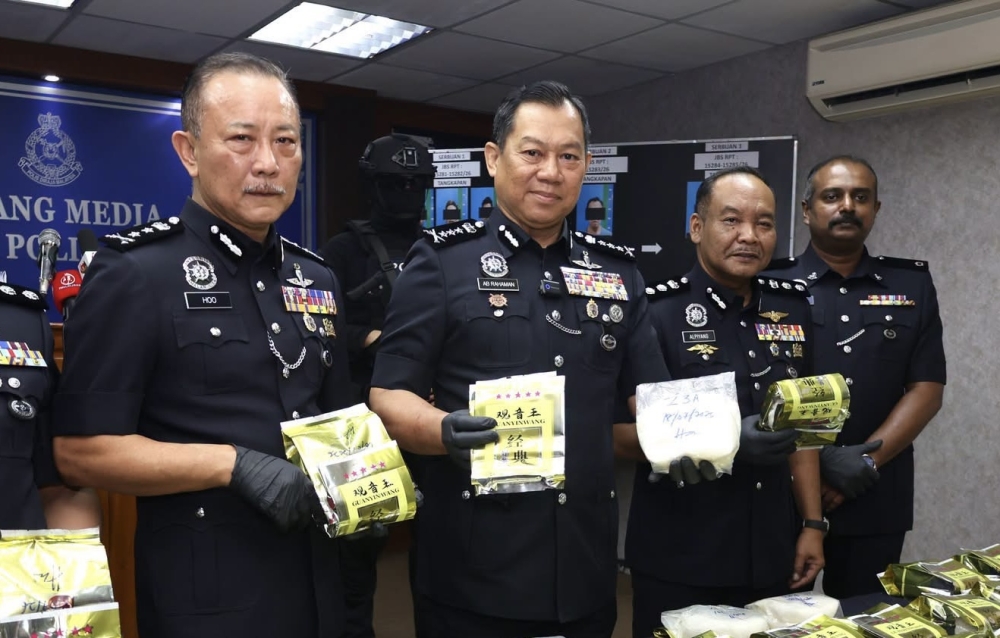
Law enforcement authorities in Johor Bahru have successfully disrupted a synthetic drug distribution network through coordinated raids that resulted in eight arrests on July 22, marking another significant victory in the state's ongoing campaign against organised narcotics trafficking. Among those apprehended is a teenager aged 16, whose involvement in the operation underscores a troubling trend of young people being drawn into drug-related criminal activities across Malaysia.
The investigation revealed that the juvenile suspect had been utilising his grandfather's vehicle as a mobile distribution hub, exploiting family assets to facilitate the illegal movement of synthetic drugs throughout Johor. This method of operation—repurposing legitimate family transportation for criminal purposes—demonstrates the adaptability and sophistication that some drug networks employ to evade detection. The misuse of a family member's trust and property highlights the collateral damage that drug operations inflict on entire households, as grandparents and relatives become unwitting participants in their loved ones' criminal ventures.
The broader implications of this case extend beyond the immediate arrests. The recruitment of a teenager into drug distribution suggests deliberate targeting of young people by organised networks, a practice that has become increasingly common throughout Southeast Asia. Young operatives are often preferred by crime syndicates because they typically receive more lenient legal treatment under juvenile justice systems, allowing networks to maintain operational capacity even when individuals are apprehended. This structural incentive has created a pipeline of youth involvement in drug trafficking that authorities across the region continue to struggle against.
Synthetic drugs remain a persistent challenge for Malaysian law enforcement, with the nation serving as both a production hub and transit point for regional trafficking. The particular focus on synthetic narcotics in this investigation reflects the growing prevalence of such substances compared to traditional drugs. These laboratory-produced compounds are often easier to manufacture clandestinely and more profitable than heroin or cannabis, making them increasingly attractive to criminal organisations seeking to maximise returns on their investments.
The strategic deployment of multiple simultaneous raids by Johor police indicates a well-coordinated investigative effort that likely required weeks or months of surveillance and intelligence gathering. Such operations depend on informant networks, electronic monitoring, and cooperation between federal and state law enforcement agencies. The success in dismantling the entire ring rather than merely arresting street-level dealers suggests that investigators identified and systematically dismantled the supply chain from higher organisational levels downward.
For Malaysian society, the case presents a cautionary narrative about the evolving nature of drug crime. The involvement of family vehicles and young perpetrators illustrates how synthetic drug operations have increasingly embedded themselves within communities, disguised among ordinary domestic arrangements. This normalisation of drug activity within families represents a concerning shift in trafficking patterns, as it reduces visibility and makes detection more difficult for authorities relying on traditional enforcement methodologies.
The investigation also raises important questions about youth vulnerability and recruitment tactics employed by criminal networks. A 16-year-old's participation likely reflects exposure to peer pressure, family dysfunction, or deliberate grooming by older network members who recognised his utility as a juvenile operative. Understanding these recruitment mechanisms has become essential for Malaysian policymakers considering prevention strategies that address root causes rather than merely addressing symptoms through enforcement.
The arrest outcome carries implications for Johor's broader public safety agenda, as the state has increasingly positioned itself as a serious contender in reducing drug-related criminality. High-profile busts like this one generate positive headlines and demonstrate law enforcement commitment, yet they represent only individual interventions within a much larger systemic challenge. The sustainability of such success depends on whether authorities can simultaneously address underlying factors that make young people susceptible to drug network recruitment.
Cross-border considerations also merit attention, given Johor's proximity to Singapore and its role as a gateway state for both domestic and international trafficking. The dismantled network's operational scope—distributed throughout Johor—suggests it may have had connections beyond the state, potentially linking to larger regional supply chains. Johor police coordination with neighbouring jurisdictions in addressing transnational drug trafficking remains crucial for preventing the emergence of replacement networks.
The case reinforces that modern synthetic drug operations often lack the hierarchical structures of traditional organised crime, instead employing dispersed networks with multiple small cells and flexible personnel arrangements. This adaptation makes some networks resilient to individual arrests, as the removal of one cell does not necessarily compromise the entire operation. However, the intelligence gathered during this investigation may provide valuable insights into network architecture, funding mechanisms, and supply sourcing that could inform future enforcement efforts.

