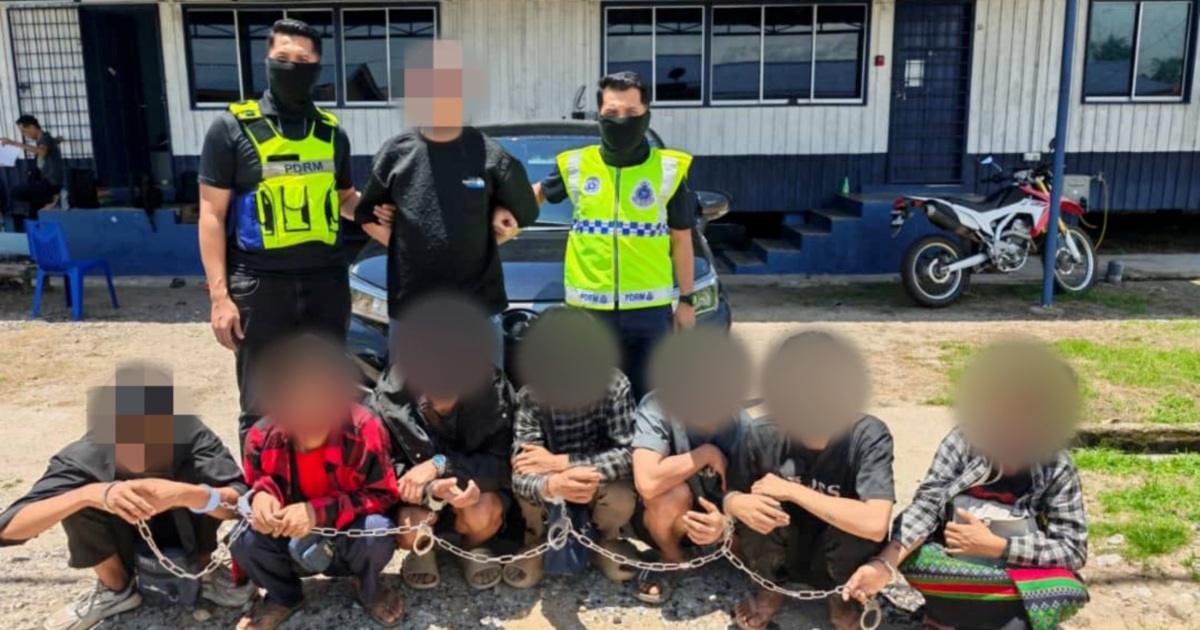
Police in Kelantan have moved against an apparent people-smuggling operation, detaining eight suspects including a Malaysian national accused of ferrying seven undocumented Myanmar nationals across state lines. The arrests occurred during a vehicle stop in Kota Baru in the early morning hours, signalling ongoing law enforcement focus on the country's porous borders and the human trafficking ecosystems that exploit vulnerability.
The operation underscores the persistent challenge facing Malaysian authorities in combating organised migrant smuggling, which has become increasingly sophisticated across northern Peninsular Malaysia. Kelantan, positioned along Thailand's border and serving as a crucial transit corridor, remains a flashpoint for illegal movement of foreign nationals seeking work or onward passage to more developed urban centres. The arrests represent a rare intervention point in networks that typically operate with considerable operational security and local protection.
The Myanmar nationals encountered in the vehicle were classified as undocumented, meaning they either entered Malaysia without proper immigration procedures or had overstayed valid visas. This category of irregular migrant faces acute vulnerability to exploitation, as smugglers and labour traffickers leverage their precarious legal status to enforce compliance through debt bondage and threats. The presence of seven individuals in a single vehicle suggests organised commercial movement rather than ad-hoc assistance, indicating established smuggling routes and demand chains.
Migrant smuggling networks operating in this region typically function through layered structures that insulate leadership from direct involvement in transportation. Low-level operatives, often recruited from local communities or drawn from economically desperate populations, handle the highest-risk logistics. The involvement of a Malaysian national as a driver or transit organiser is particularly significant, as it demonstrates the integration of local actors into transnational criminal operations—a pattern that complicates enforcement since smugglers exploit familiarity with law enforcement patterns and terrain.
Kelantan's geography and demographics create structural conditions favouring such activity. The state's relatively long international border, scattered border posts, and numerous informal crossing points provide multiple entry vectors for migrant smugglers. Additionally, the state's economy, concentrated in agriculture and small-scale manufacturing with seasonal labour demands, generates local demand for low-cost undocumented workers. This supply-demand dynamic has spawned established criminal networks with deep community roots, making enforcement particularly challenging without broad cooperation from local residents and businesses.
The Myanmar connection reflects broader regional migration patterns stemming from political instability and economic displacement in Myanmar since the 2021 military coup. Hundreds of thousands of Myanmar nationals remain in Malaysia, with substantial undocumented populations concentrated in Kelantan, Selangor, and Penang. These communities become both victims and unwitting accomplices in smuggling operations, as economic desperation and isolation create conditions where information about border movement becomes valuable social currency. Smugglers leverage family networks and ethnic connections to maintain operational security and recruit additional migrants.
Successful prosecutions of smuggling cases require establishing intent to profit from illegal border movement and demonstrating knowledge of migrants' undocumented status. Malaysian courts have prosecuted such cases under anti-trafficking legislation and immigration statutes, though convictions typically depend on cooperation from migrant witnesses—a challenge when migrants fear deportation or harbour trust issues toward authorities. The investigation phase therefore becomes crucial, with police needing to establish communication patterns, financial flows, and previous movements that prove systematic commercial activity rather than charitable assistance.
The timing and location of this particular operation raise questions about intelligence quality and informant networks. Successful dismantling of smuggling operations requires sustained surveillance, which in turn demands resource commitment and inter-agency coordination. Immigration authorities, criminal investigation units, and border security personnel must share information effectively—a coordination challenge that Malaysian police have worked to improve through dedicated human trafficking task forces established across northern states.
These arrests arrive amid international scrutiny of Malaysia's migrant management practices. The International Labour Organization and human rights organisations have repeatedly flagged Malaysia's vulnerability to trafficking, partly attributable to enforcement gaps that allow smuggling networks to operate with relative impunity. The National Anti-Trafficking in Persons and Smuggling of Migrants Commission coordinates policy responses, yet implementation remains uneven across state lines, with resource-constrained units struggling to address the scale of irregular migration.
Investigators will likely examine the broader operational structure surrounding these eight arrests, tracing connections to transit houses, employment brokers, and receiving employers. Such networks typically maintain safe houses where migrants are held pending onward movement, generating paper trails through utility payments and landlord relationships. Financial forensics examining money transfers and cash flows can establish how profits flow to network leadership, potentially expanding the investigative scope beyond the immediately detained individuals.
The detention of seven Myanmar nationals raises subsequent questions about their status and deportation procedures. Malaysia operates repatriation agreements with Myanmar's government, though some civil society organisations express concern that returned migrants face persecution or conscription. Voluntary return programmes offer alternatives, yet migrants often fear for safety or refuse return given political conditions in Myanmar. These humanitarian considerations complicate straightforward enforcement, as humanitarian concerns must be balanced against immigration law compliance.
Looking forward, these arrests will likely feature in police reporting on anti-smuggling performance, yet sustained impact requires addressing underlying incentive structures that make smuggling profitable. Labour market regulations ensuring work visa availability for legitimate employers, wage enforcement preventing exploitation of undocumented workers, and economic development projects reducing premium salaries paid to undocumented workers would fundamentally alter the economics of smuggling. Without such structural interventions, enforcement actions remain costly tools addressing symptom rather than cause, with smuggling networks demonstrating considerable capacity for operational regeneration following arrests of key personnel.

