A federal investigation into an alleged terror plot targeting a mixed martial arts event at the White House has resulted in charges against eight suspects, according to an announcement by the United States Department of Justice on Thursday. The case underscores ongoing security concerns around high-profile government events and the persistent threat of coordinated violence targeting senior officials and their families.
The suspects face a trio of serious federal charges: conspiracy to provide material support to terrorists, conspiracy to commit murder on federal government property, and conspiracy to murder a federal government official. Conviction on these charges carries the possibility of life imprisonment, reflecting the gravity with which American authorities treat alleged plots against the nation's leadership and iconic institutions.
According to federal prosecutors, the alleged scheme involved a sophisticated two-stage attack. The conspirators reportedly planned to deploy explosive-laden drones around the event venue to create chaos and force an evacuation of attendees from the location. Once crowds began fleeing the scene, the second phase would involve stationing snipers at strategic positions to target what authorities describe as "high-value targets"—presumably referring to senior government officials and family members attempting to escape the confusion.
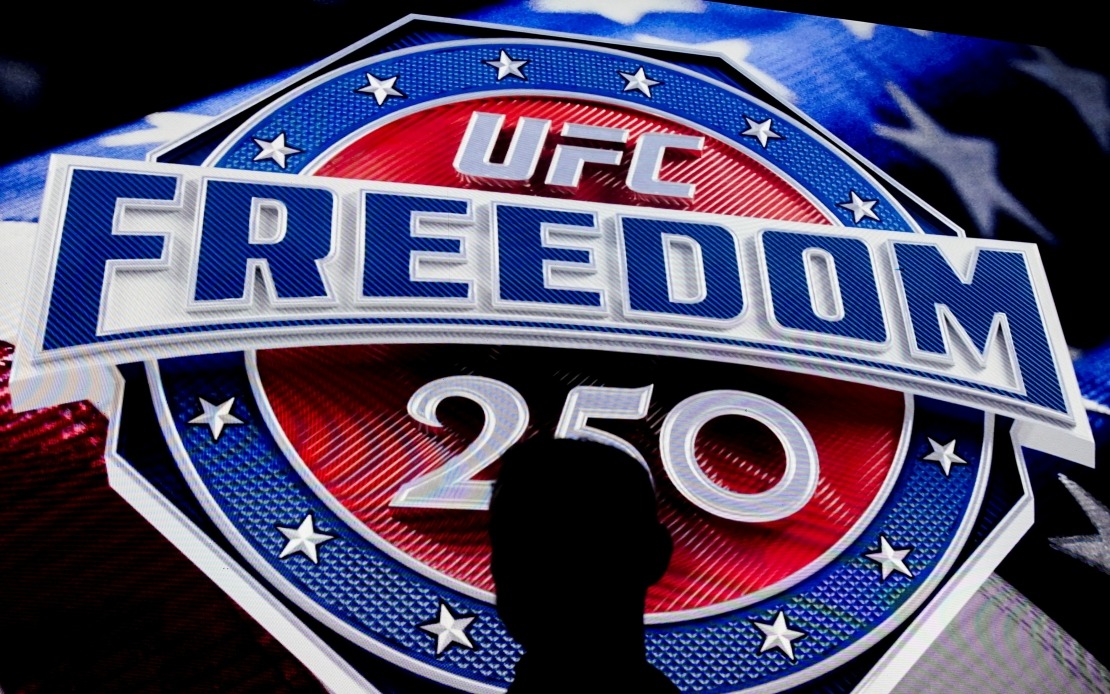
The event in question was "UFC Freedom 250," hosted by the Ultimate Fighting Championship and held on June 14 in a specially constructed arena positioned adjacent to the South Lawn of the White House. The gathering attracted significant attendance from the nation's political elite, including President Donald Trump, members of his immediate family, and several cabinet-level officials. The concentration of high-ranking government figures in a single location made the event an attractive target for those harbouring violent intentions.
While the timing coincided with Trump's 80th birthday, the event was formally framed as part of broader celebrations marking the 250th anniversary of American independence, despite the Independence Day holiday falling on July 4. This framing suggests the organisers sought to position the gathering as a patriotic celebration rather than a birthday party for the sitting president.
The investigation and apprehension of suspects unfolded over several weeks. Authorities had previously announced the arrest of seven individuals connected to the alleged plot. The eighth suspect, a 21-year-old man identified by prosecutors as someone designated to serve as a sniper in the alleged attack scheme, was apprehended more recently in West Virginia, indicating the investigation's reach across multiple states.
For Malaysian and Southeast Asian observers, this case demonstrates the multi-layered security apparatus that operates around major government events in developed democracies. The alleged use of drone technology combined with traditional sniper tactics reflects how modern threats adapt to evolving security measures. Similarly, the involvement of multiple perpetrators across different states suggests the challenges law enforcement faces in disrupting networks where coordination occurs through digital channels and personal relationships.
The case also highlights the critical importance of intelligence gathering and early intervention. The fact that authorities were able to identify, track, and apprehend all suspects before any attack materialised indicates either strong human intelligence sources, sophisticated electronic surveillance, or both. For Southeast Asian security establishments grappling with their own terrorism concerns, the operational methods employed by US federal agencies offer valuable lessons in threat prevention.
From a broader geopolitical perspective, the incident occurs against a backdrop of heightened political polarisation and growing concerns about political violence in American society. The alleged plot represents one among numerous incidents where individuals or groups have been charged with planning attacks targeting government facilities or officials. This pattern suggests that security professionals in the United States face an environment where the threat landscape encompasses not only traditional foreign terrorist organisations but also domestic actors motivated by political grievances or extremist ideologies.
The legal proceedings that will follow—including grand jury determinations, trial preparation, and potentially convictions—will unfold over months or years. These cases often become test grounds for how federal courts apply anti-terrorism statutes, how evidence regarding conspiracy is presented and evaluated, and what standards prosecutors must meet to prove criminal intent and coordinated planning among multiple defendants. The outcomes may influence how similar cases are prosecuted domestically and potentially offer precedents relevant to international terrorism jurisprudence.
For observers in Malaysia and the broader region, the case underscores several enduring security challenges. First, the sophistication of alleged plots—involving coordination across multiple perpetrators, planning of complex multi-stage attacks, and acquisition of specialised equipment or weapons—demonstrates why governments must invest substantially in counterterrorism infrastructure. Second, the vulnerability of high-profile events, despite best efforts by security professionals, suggests that no gathering of senior officials can be rendered completely risk-free. Third, the successful identification and apprehension of suspects before attack execution illustrates that advanced intelligence capabilities and law enforcement cooperation can disrupt potential violence.
The broader implications for the region include the recognition that while the United States possesses vast resources devoted to security and counterterrorism, threats persist. This reality carries particular weight for smaller nations in Southeast Asia that must devise security strategies with more limited resources while hosting regional summits, international conferences, and diplomatic gatherings where officials from multiple nations congregate. The methodologies, technologies, and intelligence-sharing frameworks employed in this American investigation may offer valuable models, though adapted appropriately to local contexts and capabilities.

