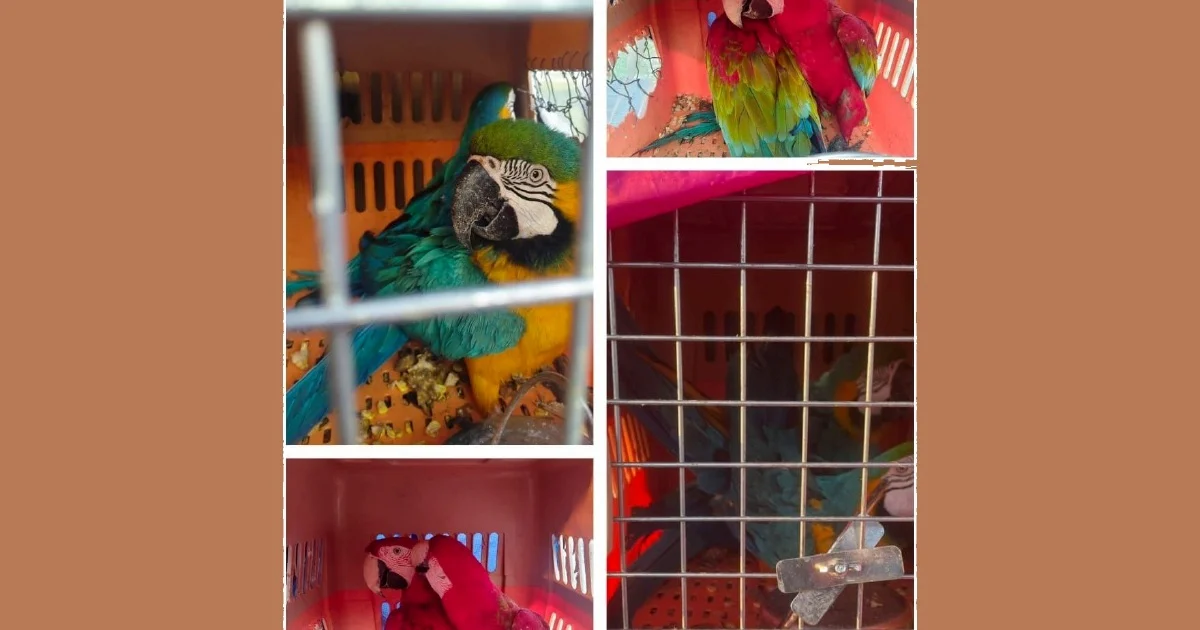
A major wildlife trafficking operation came to light in Kelantan when enforcement officers apprehended two longstanding associates during a checkpoint operation on Jalan Bandar Tumpat in Tumpat. The seizure of eight macaws, collectively valued at RM400,000, represents a significant blow to smugglers operating along the northern corridor and underscores the persistent challenge of illegal wildlife trade in Malaysia's eastern states.
The macaws, among the world's most distinctive and economically valuable bird species, are protected under Malaysian federal wildlife legislation. These large, colourful parrots originate from Central and South America, where habitat loss and poaching have rendered many populations vulnerable. Their scarcity in the wild, combined with their impressive appearance and longevity as captive birds, creates intense demand in illegal pet markets across Asia. The RM400,000 valuation reflects current trafficking prices, suggesting these birds were destined for high-net-worth buyers willing to circumvent customs and conservation regulations.
The arrest in Tumpat adds to a growing pattern of wildlife smuggling cases concentrated in Malaysia's northern states. Kelantan's strategic location—proximate to Thailand's border and positioned along major transportation routes connecting Malaysia to international networks—makes it an attractive transit point for traffickers. The state's extensive road infrastructure and relatively fewer internal checkpoints compared to other regions provide logistical advantages for criminal operations seeking to move contraband northward or eastward into Singapore and beyond.
Species like macaws feature prominently in regional enforcement data. Unlike some protected animals, macaws present detection challenges during transport because they are living creatures requiring minimal space and can be concealed in vehicle compartments with makeshift containment. Their high market value—individual specimens can command prices exceeding RM50,000 in black markets—makes the risk-to-reward calculation favourable for traffickers. The eight birds seized here, if legitimately sold in formal markets, would generate substantial profit margins after accounting for acquisition costs in source countries and distribution expenses.
The apprehension of two individuals who were identified as friends reflects the social dimensions of trafficking networks. Unlike highly organized syndicates, many wildlife smuggling operations involve personal relationships and informal arrangements. Friends or relatives may recruit partners for specific transport assignments, creating fluid networks that complicate law enforcement's intelligence-gathering efforts. The personal nature of this relationship does not diminish the sophistication of their operation—success requires knowledge of border procedures, timing, route selection, and buyer identification.
Malaysia's position as a transit hub for wildlife trafficking extends beyond birds. The country sits along critical migratory routes and serves as a transshipment point for endangered species moving between Africa, Asia, and beyond. Enforcement agencies have documented seizures involving rhinoceros horn, elephant ivory, pangolin scales, and counterfeit wildlife parts. The macaw case exemplifies how authorities must maintain vigilance across multiple species and commodity types simultaneously, stretching limited enforcement resources across porous borders and extensive coastlines.
The RM400,000 valuation underscores the financial stakes involved in wildlife crime. For context, this seizure value exceeds the annual salaries of numerous Malaysian civil servants and represents potential revenue that trafficking networks funnel away from legitimate conservation initiatives. Funds derived from wildlife crime frequently support other illicit activities, including drug trafficking and arms smuggling. International agencies estimate that wildlife crime generates annual proceeds exceeding USD20 billion globally, positioning it as a major transnational criminal enterprise.
Enforcement outcomes in macaw cases carry implications for regional cooperation mechanisms. ASEAN member states face coordinated pressure from international conservation bodies to strengthen border controls and intelligence-sharing protocols. The Convention on International Trade in Endangered Species (CITES), to which Malaysia is a signatory, obligates member nations to regulate trade in protected fauna. Seizures like this one contribute to enforcement data that shapes regional policy discussions and resource allocation decisions at ASEAN Wildlife Enforcement Network meetings.
The detention of the two men will likely proceed through Malaysian courts under wildlife protection statutes, potentially resulting in significant fines and custodial sentences. Successful prosecution depends on evidence handling, expert testimony regarding the birds' species status, and documented valuation. Precedent cases in Malaysia have resulted in fines reaching six figures and imprisonment terms. However, prosecution alone addresses only the immediate perpetrators; network dismantling requires sustained investigation into supplier relationships, buyer networks, and intermediaries facilitating transactions.
Looking beyond this incident, the case highlights persistent gaps in Malaysia's enforcement capacity. While individual seizures generate positive headlines, trafficking volumes suggest that apprehended cases represent a fraction of actual smuggling operations. Enhanced funding for wildlife enforcement agencies, investment in detection technology at borders and airports, and improved inter-agency coordination between customs, police, and wildlife authorities would strengthen prevention capacity. Regional information-sharing platforms, when fully operationalized, could enable authorities to identify patterns suggesting larger trafficking organizations.
Conservation implications extend to species-level considerations. Macaws captured for trade experience high mortality rates during capture and transport. Beyond individual birds lost, trafficking pressure threatens wild populations in source countries, complicating international conservation efforts. The seizure protects eight individual animals and disrupts at least one shipment destined for illegal markets. Multiplied across numerous species and enforcement actions, such interventions contribute incrementally to reducing trafficking demand and raising operational risks for criminal networks.
For Malaysian readers and the broader Southeast Asian context, this arrest demonstrates that enforcement mechanisms remain active despite persistent challenges. The collaboration between local authorities and specialized enforcement units reflects institutional commitment to conservation objectives. However, the continued prevalence of such cases also signals that trafficking networks adapt constantly, identifying new routes and methods as enforcement pressure increases in established corridors. Sustained commitment to both prevention and prosecution remains essential for limiting Malaysia's utility as a trafficking hub.

