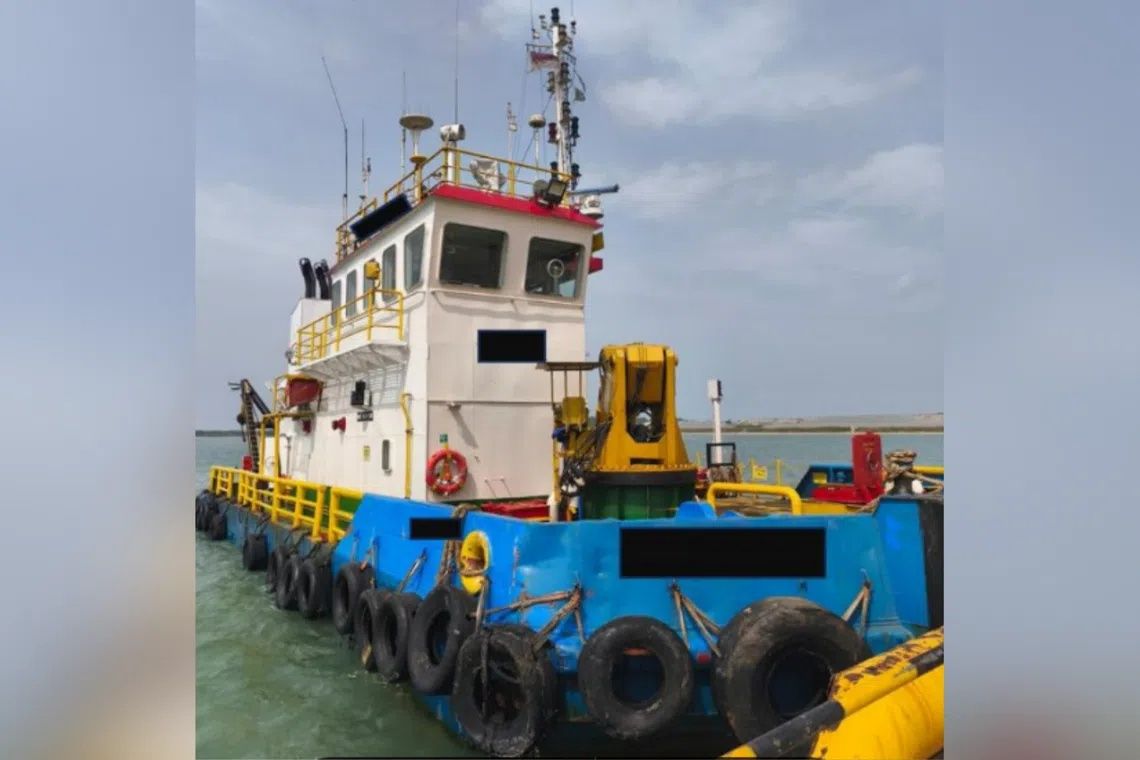
Eight crew members from a Singapore-registered tugboat are to face court charges on Friday following their arrest for involvement in what authorities describe as an illegal transaction of marine gas oil in the strategically important waters off Tuas. The arrests represent the latest in Singapore's ongoing enforcement efforts against maritime cargo theft, a persistent challenge in one of the world's busiest shipping corridors.
Police Coast Guard officers made the arrests in the early hours of August 13, conducting a routine check on the vessel at approximately 1.05am. The operation uncovered a scheme in which the eight men, ranging in age from 25 to 54 years old, had allegedly misappropriated marine gas oil worth approximately S$10,570 without authorization from their employer. Initial police investigations suggest the stolen fuel was subsequently sold off the books for personal profit.
Marine gas oil, a middle-range fuel commonly used in maritime operations, remains a target for theft across Southeast Asian waters due to its commercial value and the challenges of monitoring supply chains at sea. The incident underscores vulnerabilities within the maritime workforce, where crew members with legitimate access to company assets can potentially exploit their position for financial gain. Such thefts complicate port operations and raise concerns about safety protocols aboard commercial vessels.
The arrested men will be prosecuted under Singapore's Penal Code provision covering theft by servants of property held by their employer. This specific charge acknowledges the unique breach of trust involved when crew members exploit their authorized access to company resources. Conviction carries substantial penalties, including potential imprisonment for up to seven years alongside fines, reflecting the severity with which Singapore treats maritime crimes.
The case arrives amid broader regional concerns about cargo security in one of Asia's most critical maritime zones. The Straits of Malacca and Singapore waters handle approximately one-third of global maritime trade, making them both economically vital and vulnerable to various forms of maritime crime ranging from piracy to organized theft rings. Singapore's aggressive policing of such activities serves as a deterrent and demonstrates commitment to maintaining the integrity of regional shipping lanes.
For Malaysian readers, the incident carries particular relevance given Malaysia's own maritime security challenges. The waters off Tuas lie near Malaysian territory, and cross-border maritime enforcement cooperation remains essential for regional stability. Similar cargo theft incidents have occurred in Malaysian waters, highlighting how criminal networks often operate across jurisdictions. The arrest demonstrates how coordinated patrols and modern surveillance can help detect and prevent such crimes.
The Singapore Police Coast Guard's enforcement operations represent a coordinated approach combining routine patrols with intelligence-led interventions. The early morning timing of the check suggests operations are deliberately scheduled at varied hours to prevent criminals from establishing predictable patterns. Such strategies require significant resource commitment and coordination between maritime authorities, port operators, and shipping companies.
The shipping industry faces mounting pressure to strengthen internal security measures following such incidents. Companies operating tugboats and other commercial vessels must balance crew welfare with robust oversight systems designed to prevent unauthorized transactions. Training protocols, inventory management systems, and crew vetting procedures all factor into reducing vulnerability to insider threats. Industry associations have increasingly emphasized the need for transparent reporting mechanisms that allow employees to raise concerns without fear of retaliation.
Singapore's stern approach to maritime crime reflects its position as a global shipping hub where reputation and reliability directly impact economic activity. Port authorities worldwide monitor enforcement effectiveness, and consistent action against cargo theft helps maintain Singapore's standing as a secure maritime destination. This competitive advantage translates into increased shipping volumes and related economic activity.
The investigation's findings also prompt questions about vessel management practices and whether the tugboat operator had adequate monitoring systems in place. The company's lack of knowledge about the misappropriation raises concerns about inventory controls and crew oversight protocols. Such lapses, while seemingly internal matters, have implications for port security and supply chain integrity across the region.
Larger implications extend to workforce management within maritime industries across Southeast Asia. The incident illustrates how economic pressures and opportunity can motivate crew members toward illicit activities. Addressing root causes requires attention to fair compensation, career development opportunities, and workplace conditions that reduce incentives for criminal behavior. Regional maritime employers increasingly recognize that investing in workforce welfare yields better long-term outcomes than reactive enforcement alone.
The police statement emphasizing their serious view of such transactions signals continued commitment to maritime security operations. Planned enforcement activities will likely increase in coming months, potentially extending beyond Singapore's territorial waters through cooperative arrangements with neighboring countries. Malaysian authorities coordinate with Singapore on maritime security matters, and incidents like this often trigger discussions about enhanced cross-border patrols and information sharing.

