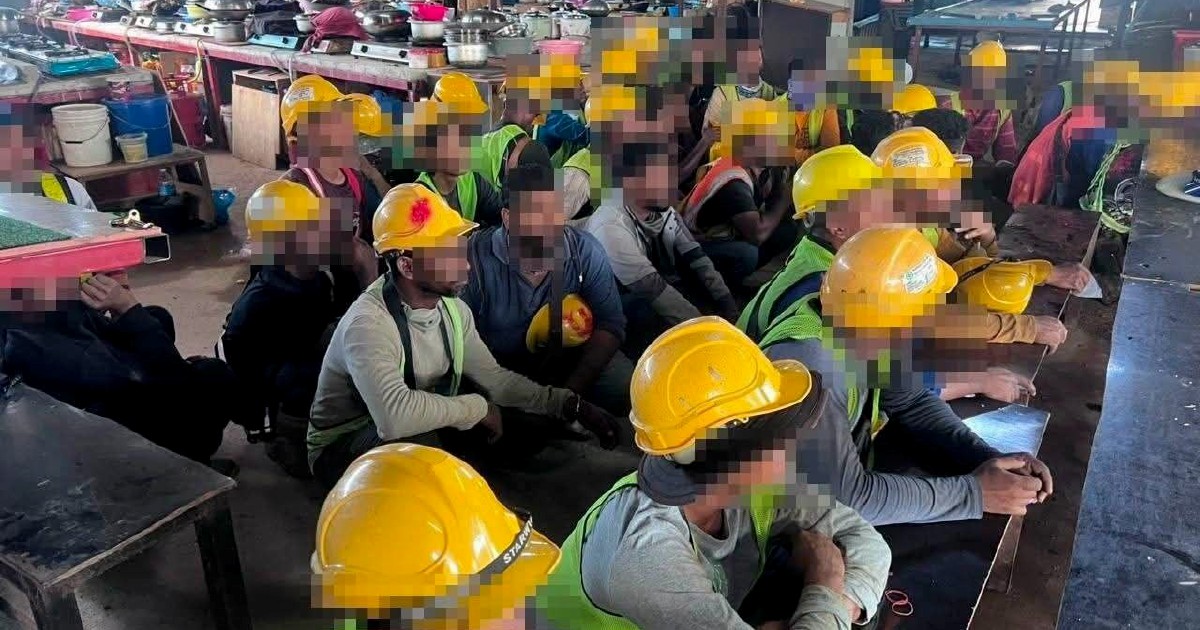
Authorities in Kedah have stepped up enforcement against illegal immigration with the arrest of 81 undocumented migrants discovered working at a construction site in Kuala Kedah. The sweeping operation, known as Op Sapu, was conducted by the Kedah Immigration Department and highlights the ongoing challenges facing Malaysia's immigration control mechanisms, particularly in the construction sector which remains a magnet for undocumented workers seeking employment.
Construction sites across Malaysia, particularly in the northern corridor, have long served as focal points for immigration enforcement teams. The sector's reliance on transient labour, combined with competitive wage pressures and tight project schedules, creates conditions where employers may inadvertently or deliberately hire workers lacking proper documentation. Kuala Kedah, as a bustling port and industrial area, presents multiple vulnerabilities where undocumented migrants can find work.
Op Sapu, meaning "sweep operation" in Malay, represents part of a broader nationwide strategy by the Immigration Department to apprehend illegal immigrants and ensure employers comply with hiring regulations. These coordinated raids serve dual purposes: they deter future hiring of undocumented workers and they gather intelligence about migrant trafficking networks and employment arrangements that circumvent official channels. The scale of the Kedah operation suggests systematic trafficking or a deliberate hiring practice rather than isolated incidents.
The arrest of 81 individuals in a single location underscores the magnitude of illegal immigration in Malaysia. While official statistics show hundreds of thousands of documented foreign workers across the country, undocumented populations remain difficult to quantify. However, enforcement data points consistently suggest that construction remains among the sectors with the highest concentration of workers without proper permits, alongside agriculture, manufacturing, and domestic work.
For Malaysian employers and the construction industry broadly, such operations serve as reminders of legal obligations and penalties. Under current immigration law, employers who knowingly hire undocumented workers face substantial fines and potential imprisonment. However, enforcement effectiveness depends on adequate staffing, regular monitoring, and coordination between immigration officials and local authorities. The Kedah operation demonstrates that such coordination is possible, though critics argue that more resources and consistency would improve deterrence.
The implications extend beyond individual employers to the broader economy and labour market. Undocumented workers typically accept below-minimum wages and hazardous conditions, undercutting legitimate local and documented foreign workers. This creates unfair competition, depresses wages in labour-intensive sectors, and potentially compromises workplace safety standards. From a public health and social perspective, undocumented populations often lack access to medical care, creating spillover risks that affect broader communities.
Regional dynamics also colour the picture. Malaysia's proximity to countries with significant emigration pressures—Thailand, Indonesia, Bangladesh, Myanmar, and the Philippines—means that managing irregular migration remains a perpetual challenge. While Malaysia hosts millions of documented foreign workers through official channels, the lure of higher wages and informal employment opportunities continues to attract undocumented migrants. Transnational smuggling networks exploit these incentives, charging migrants substantial fees for passage and false documentation.
The detention of 81 individuals raises questions about what happens following arrest. Immigration authorities typically process undocumented migrants for deportation, though the speed of repatriation depends on agreements with origin countries, available detention capacity, and administrative procedures. Some detainees may have legitimate claims for protection or family circumstances that warrant individual assessment. Malaysia has faced international scrutiny regarding detention conditions and processes, with human rights organisations occasionally raising concerns about adequacy of care.
From a Malaysian perspective, immigration enforcement directly affects local employment opportunities, workplace conditions, and social cohesion. When undocumented migrants undercut wages, this impacts vulnerable Malaysian workers competing for similar positions. However, some sectors—particularly construction—genuinely rely on foreign labour due to insufficient domestic supply. The challenge lies in balancing legitimate labour needs with effective enforcement against exploitation and irregular migration.
Looking forward, the sustainability of immigration control requires multi-faceted approaches beyond individual raids. Stronger employer compliance mechanisms, improved workplace inspections, cooperation with origin and transit countries, and investment in detection technologies would complement enforcement operations. Additionally, addressing root causes—poverty, limited opportunities in origin countries, and demand from Malaysian employers—remains essential for long-term reduction in irregular migration flows.
The Kedah operation, while successful in apprehending a significant number of undocumented workers, represents a single enforcement action within an ongoing challenge. The construction site raid demonstrates that illegal employment networks remain active and profitable, suggesting that employers continue to perceive benefits in hiring undocumented workers despite legal risks. Sustained, coordinated enforcement combined with administrative improvements and employer education will be necessary to meaningfully reduce this persistent problem across Malaysia's labour market.

