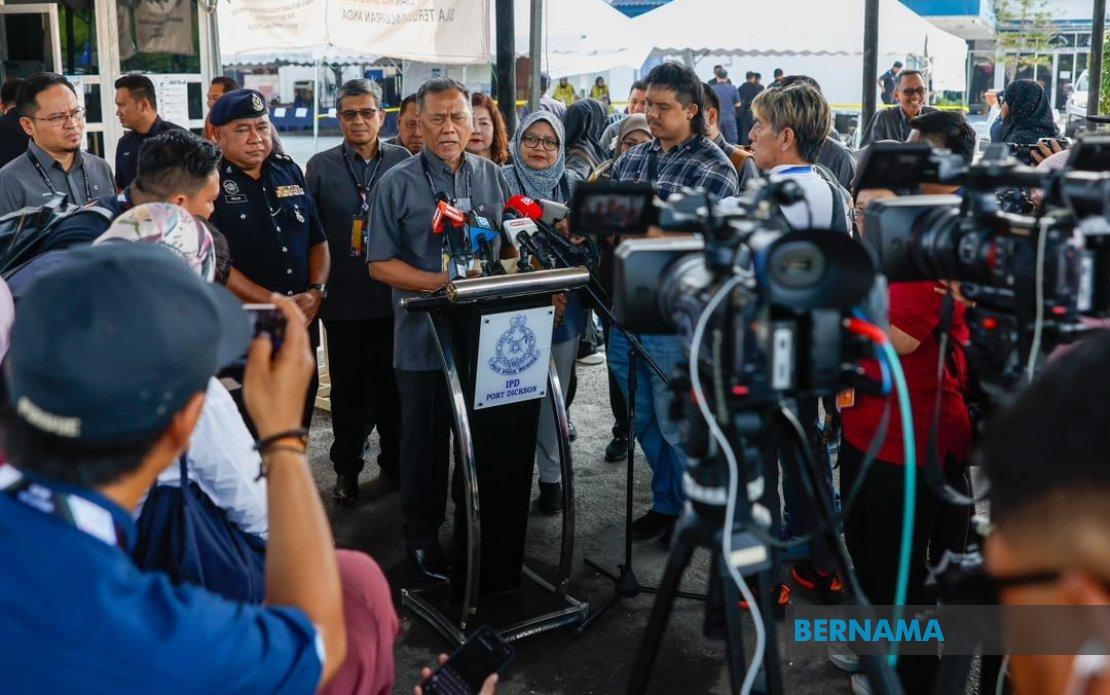
The Election Commission is targeting a voter turnout between 72 and 75 per cent for Negeri Sembilan's 16th state election scheduled for this Saturday, according to its chairman Datuk Seri Ramlan Harun. The commission's optimism stems from the energetic campaigning environment observed throughout the state over recent weeks, combined with what officials describe as an encouraging groundswell of voter interest and participation rates recorded during preliminary phases of the electoral process.
Ramlan made these remarks on Friday at the Port Dickson District Police Headquarters in Seremban while observing the early voting mechanics firsthand. He emphasised that the projected turnout figure reflects genuine enthusiasm among the electorate, suggesting that voters across all districts appear motivated to exercise their democratic rights. The commission views this as a positive indicator that citizens recognise the significance of Saturday's ballot and the implications for state governance over the coming term.
The early voting process began this week specifically for military and police personnel alongside their spouses—groups whose work commitments preclude participation in the standard voting schedule. The EC had originally anticipated 22,339 individuals in this category would cast ballots early, though the final figure was revised downward to 16,467 after a subset of eligible voters opted to utilise postal voting arrangements instead. By mid-morning Friday, early voter participation had reached 34.26 per cent across all designated centres.
While the commission aims for at least 90 per cent participation among early voters, officials acknowledge this represents an aspirational rather than mandatory target. Ramlan attributed the gap between early turnout and the theoretical maximum to practical considerations, notably changes in marital circumstances among security force members that can affect voting eligibility. The commission structured early voting sessions strategically, with 38 centres opening simultaneously at 8 am, then closing in staggered intervals—18 facilities at noon, two at 2 pm, and the remainder at 5 pm—to accommodate shift schedules across the security sector.
Regarding electoral conduct, the commission has fielded 206 complaints related to campaign materials so far, reflecting the commission's active monitoring of adherence to election regulations. These grievances cover everything from improper poster placement to alleged violations of content guidelines governing political advertising. Such complaints, while manageable in number given the scale of campaigning activity, underscore the commission's commitment to maintaining equitable conditions for all contenders.
The 16th Negeri Sembilan State Election represents a significant democratic exercise involving 889,490 registered voters across 36 state constituencies. A total of 103 candidates are competing for these seats, providing voters with substantive choices across varied political platforms and local agendas. The scale of this electoral engagement positions the Negeri Sembilan contest as a meaningful barometer of electoral momentum and voter sentiment in peninsular Malaysia at this juncture.
From a regional perspective, Negeri Sembilan's election carries implications extending beyond the state itself. The turnout achieved and electoral preferences expressed will inform political calculations throughout the peninsula, particularly regarding coalition dynamics and the relative appeal of competing political narratives. For neighbouring states and at the federal level, the results and participation rates will provide insights into voter receptivity and engagement patterns in non-urban, mixed-demographic constituencies.
The targeting of 72-75 per cent turnout suggests the commission anticipates solid but not exceptional voter mobilisation. This represents neither the peak participation rates occasionally recorded during watershed electoral moments nor the depressed turnouts that occasionally characterise routine midterm polls. Instead, it reflects a realistic calibration based on recent campaigning intensity and the commission's institutional experience with voter behaviour patterns in state-level contests within comparable constituencies.
For Malaysian voters in Negeri Sembilan and observers monitoring electoral dynamics across Southeast Asia, Saturday's poll will test whether contemporary political engagement remains sufficiently robust to produce healthy democratic participation. The commission's preparedness and transparent projection of expectations signals institutional confidence that the electoral machinery will function smoothly, that voters will exercise their rights responsibly, and that the democratic process itself will reinforce public confidence in institutional legitimacy and procedural integrity.

