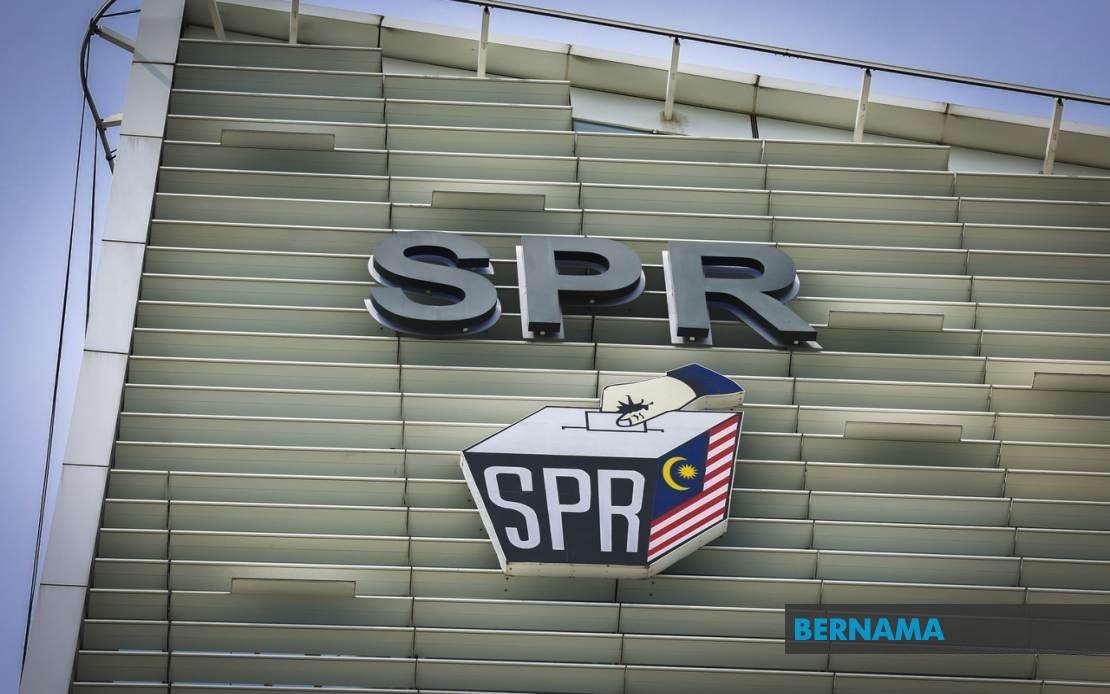
The Election Commission has committed to examining whether postal voting facilities should be extended to auxiliary police officers tasked with securing Malaysia's critical infrastructure and strategic assets, according to Deputy Minister M. Kulasegaran. The announcement came during a parliamentary motion tabled by Senator Datuk Salehuddin Saidin, who highlighted the voting participation challenges faced by this workforce category.
Kulasegaran's assurance that the EC would conduct a thorough review represents a shift in dialogue around electoral access for uniformed personnel. The examination will balance three key considerations: the operational readiness of security installations, the existing legal framework governing early and postal voting, and the broader imperative to ensure smooth electoral administration without compromising essential government functions. This multidimensional approach acknowledges that expanding voting rights cannot occur in isolation from practical security concerns.
Currently, Malaysia's postal voting system operates through three distinct categories. Category 1A encompasses Election Commission staff, election officials, armed forces and police personnel on active duty during polling, and accredited media workers. Category 1B extends coverage to Malaysian citizens permanently residing abroad, while Category 1C applies to designated government personnel whose presence is mandatory on election day. Notably, auxiliary police officers fall outside these prescribed categories despite performing security roles comparable to their regular police counterparts.
The distinction is administratively significant. Approximately 27,000 auxiliary police officers are stationed across the nation's governmental and private sectors, protecting key installations ranging from airports and seaports to energy facilities, financial institutions, and oil and gas operations. These officers represent an invisible but essential security architecture maintaining infrastructure continuity throughout Malaysia's economy. Unlike regular police or military personnel already eligible for postal voting, auxiliary officers currently face the dilemma of either relinquishing their vote or abandoning their posts on election day.
Salehuddin's proposal directly addresses this electoral exclusion by arguing that denying auxiliary police voting access creates both fairness and security complications. Granting simultaneous leave to allow all auxiliary officers to vote could potentially compromise security at strategically sensitive locations. Conversely, preventing them from voting violates the democratic principle of universal suffrage. The senator's motion therefore advocates for a comprehensive government study involving the Election Commission, Home Ministry, and relevant agencies, potentially including regulatory amendments to the Election (Registration of Electors) Regulations 1981.
The proposal carries broader implications for Malaysia's approach to electoral administration in the modern state. As security responsibilities become increasingly distributed across public and private organisations, the question of which personnel categories warrant voting protections becomes more complex. The auxiliary police dilemma reflects a gap between traditional regulatory frameworks and contemporary security arrangements, where private security contractors and government-linked companies operate critical infrastructure alongside state employees.
Kulasegaran also highlighted an alternative administrative solution already available to voters: transferring their electoral registration to their current residential location rather than their place of origin. This constituency transfer option could theoretically simplify voting participation for auxiliary officers not assigned to their home areas, though it does not address the fundamental issue of officers on active duty during polling periods. The Deputy Minister's emphasis on this existing mechanism suggests the government views incremental solutions alongside comprehensive postal voting expansion.
The timing of this electoral debate occurs within Malaysia's broader democratic governance context. The 2022 introduction of Adjournment Speech procedures in the Dewan Negara represents an institutional effort to provide parliamentary space for policy discussion on administrative matters. Salehuddin's motion marks the first government administrative matter debated under this framework, signifying increased parliamentary engagement with electoral mechanisms and voting access issues.
The auxiliary police voting question also intersects with Malaysia's commitment to inclusive democratic practices. The nation has progressively expanded voting accessibility through postal voting mechanisms, yet gaps remain where legitimate operational constraints meet democratic principle. Resolving this tension requires sophisticated policy design that maintains security integrity while respecting electoral participation rights.
Meanwhile, the Dewan Negara's legislative agenda reflects diverse governance concerns. Concurrent motions addressed cross-border e-commerce pricing impacts on domestic retail and SME sectors, demonstrating Parliament's simultaneous engagement with electoral mechanics and contemporary economic disruption. These parallel discussions underscore the multifaceted challenges confronting Malaysian governance institutions.
The Election Commission's undertaking to study the auxiliary police postal voting proposal represents neither approval nor rejection but rather a commitment to rigorous institutional examination. The timeline for this review remains undefined, though precedent suggests such studies typically require several months of interagency coordination and legal analysis. The outcome could substantially reshape voting eligibility parameters for security personnel across Malaysia's public and private sectors, establishing precedents for future categorical expansions.
Ultimately, the postal voting proposal for auxiliary police embodies the fundamental tension within democratic governance: balancing security imperatives with universal suffrage principles. How Malaysia resolves this issue may influence future electoral policy adjustments and signal the nation's institutional willingness to adapt regulations addressing security personnel voting rights across an increasingly complex security landscape.

