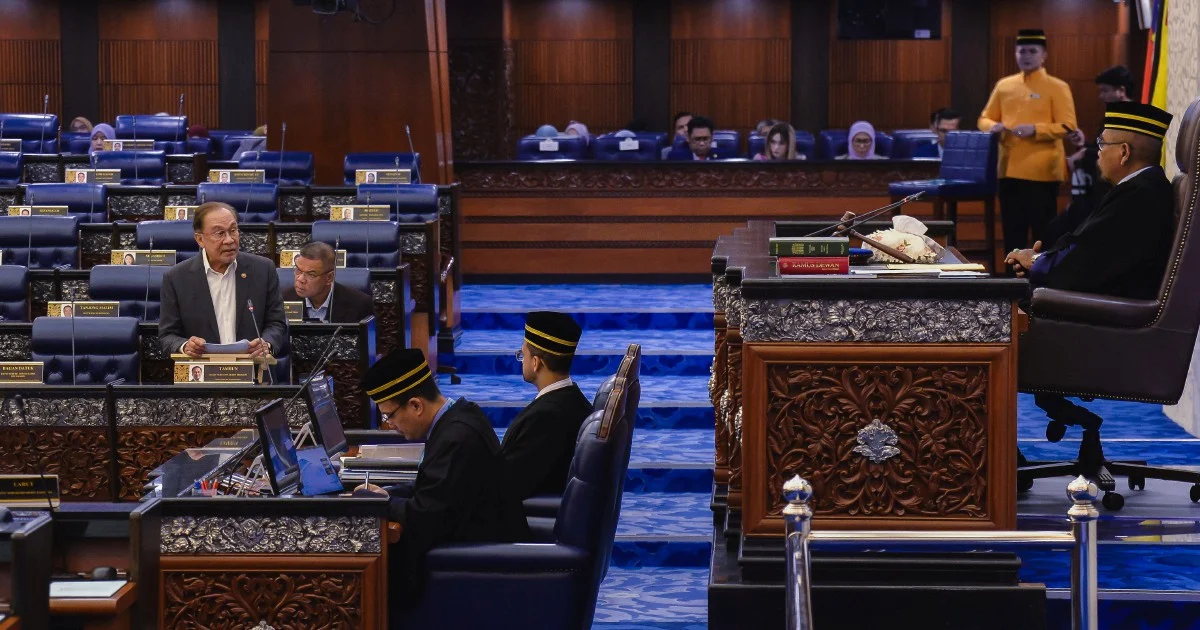
The Election Commission has signalled its readiness to intervene against caretaker administrations that breach established election protocols, particularly those involving spending commitments or policy announcements with significant financial repercussions. Prime Minister Datuk Seri Anwar Ibrahim made this commitment clear, underscoring the importance of maintaining electoral neutrality during campaign periods when governments occupy a transitional status between elections.
Caretaker governments in Malaysia's political system operate under specific constraints designed to prevent incumbent administrations from gaining undue electoral advantage through the announcement of popular policies or spending measures during campaign windows. These restrictions form a critical part of Malaysia's election framework, ensuring that voters make decisions based on party manifestos and campaign promises rather than incumbent governments' last-minute policy announcements or allocations. The Election Commission's willingness to enforce these boundaries represents a significant safeguard for electoral integrity in the Malaysian system.
The scope of Election Commission oversight extends beyond mere policy announcements to encompass decisions with tangible financial implications. This encompasses departmental approvals for spending, new project allocations, contract awards, and budget commitments that would ordinarily fall within an elected government's purview. By restricting these actions during caretaker periods, the framework prevents sitting governments from using administrative machinery and treasury resources to influence electoral outcomes through targeted spending in marginal constituencies or among key voter demographics.
For Malaysian voters and observers, this commitment carries substantial implications for how elections unfold in future cycles. The enforcement of caretaker guidelines protects the principle of electoral equality, ensuring that all competing parties operate under equivalent constraints rather than allowing incumbent administrations to leverage their control of state resources. This becomes increasingly important in Malaysia's competitive political environment, where margins between major political coalitions have narrowed significantly in recent election cycles.
Regional context matters here as well. Southeast Asian democracies face persistent challenges in maintaining electoral integrity, and Malaysia's experience with caretaker protocols offers instructive lessons for how institutional safeguards can function. The Election Commission's proactive stance in this area distinguishes Malaysia's approach from some neighbours where caretaker restraints prove weaker or less rigorously enforced. This institutional discipline supports Malaysia's broader democratic credibility within the region, though critics occasionally question whether enforcement remains sufficiently robust.
Practically speaking, the Election Commission's enforcement capacity depends on clear definitions of what constitutes a breach. Financial implications can operate on a spectrum—from obviously problematic allocations, such as announcing major infrastructure projects in swing constituencies, to more ambiguous actions like routine administrative decisions. Establishing transparent criteria for determining which actions cross into prohibited territory remains crucial for preventing both genuine breaches and specious complaints from opposing parties seeking to impede caretaker governments' legitimate functions.
Historically, caretaker governments have occasionally tested these boundaries, prompting clarifications from the Election Commission. Previous election cycles have witnessed disputes over whether certain announcements or decisions violated guidelines, highlighting the importance of clear interpretation. The Prime Minister's reiteration of the Election Commission's enforcement authority may reflect recent instances where such ambiguities arose or where political parties raised concerns about caretaker government conduct.
The relationship between caretaker guidelines and electoral outcomes remains subtle but significant. While restrictions on policy announcements prevent incumbent governments from capturing vote share through popular new initiatives, they do not eliminate the inherent advantage of holding administrative machinery, resources, and institutional visibility. Caretaker governments retain their operational capacity and public profile even without announcing new policies, factors that opposition parties continue to view as creating asymmetries during campaign periods.
For Malaysian political parties, especially those in opposition, this commitment from the Prime Minister and the Election Commission framework provides mechanisms for challenging government conduct they perceive as inappropriate during caretaker phases. The ability to lodge complaints with an independent electoral authority offers recourse beyond the political sphere, though the actual effectiveness of enforcement depends on the Election Commission's willingness to investigate claims and impose consequences where breaches occur.
Government ministries and departments must now calibrate their activities carefully during caretaker periods, understanding that routine functions or decisions with financial dimensions face heightened scrutiny. This requires clear communication from the Election Commission about permissible activities, enabling departments to continue essential governance while respecting electoral guidelines. The administrative burden of distinguishing routine operations from prohibited political actions creates practical challenges that warrant ongoing clarification and dialogue between government agencies and electoral authorities.
The Prime Minister's statement arrives at a moment when Malaysia's electoral calendar remains subject to ongoing constitutional and political dynamics. With the next general election potentially occurring within the coming years, establishing clear expectations about caretaker conduct becomes increasingly important for all political actors. Clear rules and demonstrated willingness to enforce them contribute to public confidence that elections will be conducted fairly and that no political actor will use state apparatus to distort electoral competition.
Looking forward, the effectiveness of these election safeguards depends on consistent application and political acceptance even when enforcement actions disadvantage particular parties. The strength of Malaysia's democratic institutions ultimately rests not merely on formal rules but on the willingness of political actors to respect them when inconvenient. The Election Commission's demonstrated commitment to scrutinising caretaker government conduct signals an intent to maintain these standards, provided that the political system as a whole refrains from pressuring electoral authorities to apply rules inconsistently based on partisan advantage.

