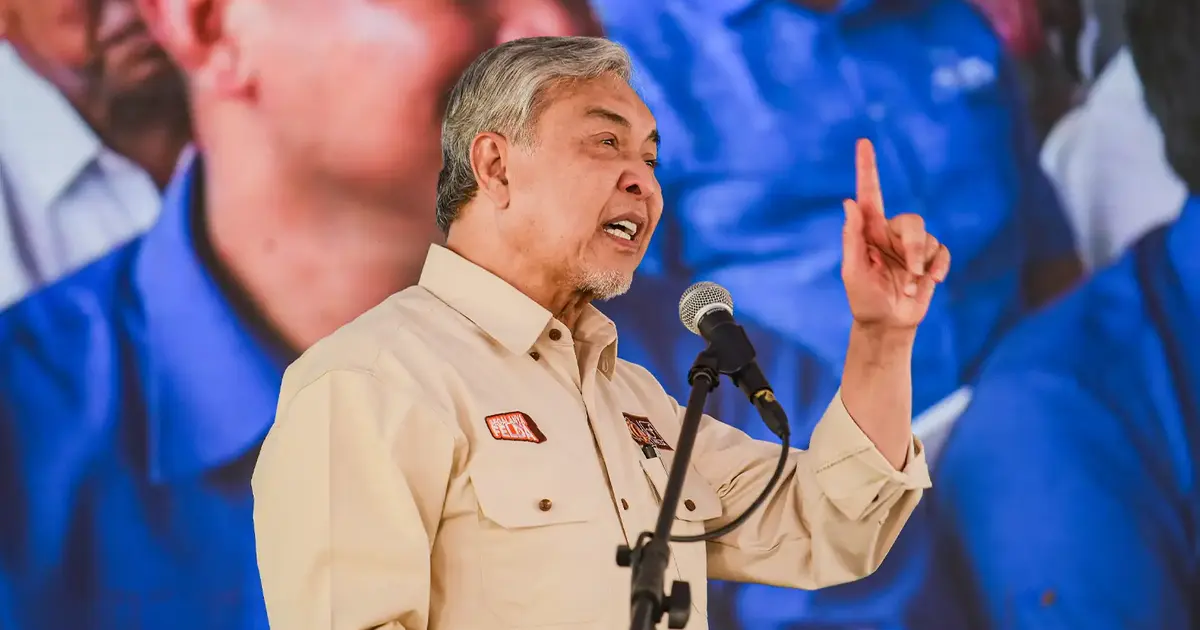
Barisan Nasional chairman Ahmad Zahid Hamidi has made clear that the results from the upcoming Negeri Sembilan state election will serve as a critical benchmark for the future trajectory of the coalition's relationship with Perikatan Nasional, potentially shaping electoral arrangements in subsequent contests and the looming general election.
Zahid's statement underscores the conditional nature of the current working arrangement between the two coalitions, which has been characterised as an 'electoral understanding' rather than a formal merger or long-term alliance. This pragmatic partnership emerged from Malaysia's fractious post-2018 political landscape, where no single bloc commands unambiguous dominance. The language employed by the BN leadership suggests that collaboration remains transactional, evaluated on performance metrics rather than ideological alignment or institutional commitment.
Negeri Sembilan represents a crucial testing ground for this understanding. The state has historically been a BN stronghold, but recent electoral patterns across Malaysia have demonstrated the volatility of voter preferences and the rising competitive pressure from Perikatan Nasional, particularly in areas where PAS maintains strong grassroots organisation. A strong combined showing could validate the strategy of cooperation, whilst a disappointing result might prompt both coalitions to recalculate their approach to upcoming contests.
The implications for Melaka are particularly significant. The coastal state has experienced considerable political turbulence, having switched hands multiple times in recent years and witnessed internal party defections that destabilised governance. Both BN and PN will be monitoring whether their Negeri Sembilan cooperation translates into effective vote consolidation before risking similar arrangements in Melaka, where the stakes are higher and historical grievances between component parties run deeper.
However, the reference to the sixteenth general election carries even greater weight. GE16, when it is eventually called, will determine the composition of Parliament for the next five years and represent the definitive statement on whether Malaysia's political system can stabilise around a coherent governing coalition. The success or failure of BN-PN cooperation at the state level will send crucial signals about the viability and credibility of extending such arrangements to the national stage, where the stakes and complexities are exponentially greater.
Malaysian political observers have noted that both coalitions face internal pressures that constrain their freedom to manoeuvre. BN comprises UMNO, MIC, and remaining state component parties, each with distinct constituencies and electoral calculations. PN, led by Muhyiddin Yassin's faction, includes BERSATU, PAS, and other Islamist-oriented components with ideological commitments that do not always align seamlessly with BN's traditional centrist positioning. These internal dynamics mean that any electoral understanding must deliver tangible benefits to key party leaders and their supporters, or face unravelling through defections and recriminations.
Zahid's conditional framing also reflects awareness that Malaysian voters increasingly view coalition politics with scepticism. The collapse of Pakatan Harapan following the 2018 general election shattered public confidence in inter-party cooperation, with many citizens concluding that political alignments are unstable and driven by power-seeking rather than principled governance. For either BN or PN to justify continued partnership, they must demonstrate that such arrangements produce superior electoral outcomes and, more importantly, credible government formation and policy delivery.
From a Southeast Asian perspective, Malaysia's coalition dynamics warrant attention given the region's broader experience with electoral alliances. Indonesia, Thailand, and the Philippines have all grappled with multi-party democracies where coalition formation is endemic to governance. The success or failure of Malaysian coalitions in maintaining coherence and delivering results will likely inform discussions about democratic sustainability and institutional design throughout the region.
The timing of Zahid's statement also merits consideration. By anchoring future cooperation to Negeri Sembilan's performance, he has effectively shifted responsibility for decision-making away from backroom negotiations and onto electoral outcomes. This transparent framing may be designed to manage expectations among BN component parties and demonstrate that expansion of the electoral understanding is contingent on clear evidence of electoral synergy rather than arbitrary political calculation.
Looking ahead, the Negeri Sembilan election will thus function as more than a state-level contest. It will constitute a referendum on the viability of BN-PN cooperation, providing data that will inform strategic decisions affecting Melaka's political future and, ultimately, the configuration of Malaysia's national political landscape in the years following GE16. The stakes for both coalitions are substantial, making electoral performance in this relatively modest state contest assume outsized national significance in Malaysia's perpetually fluid political environment.

