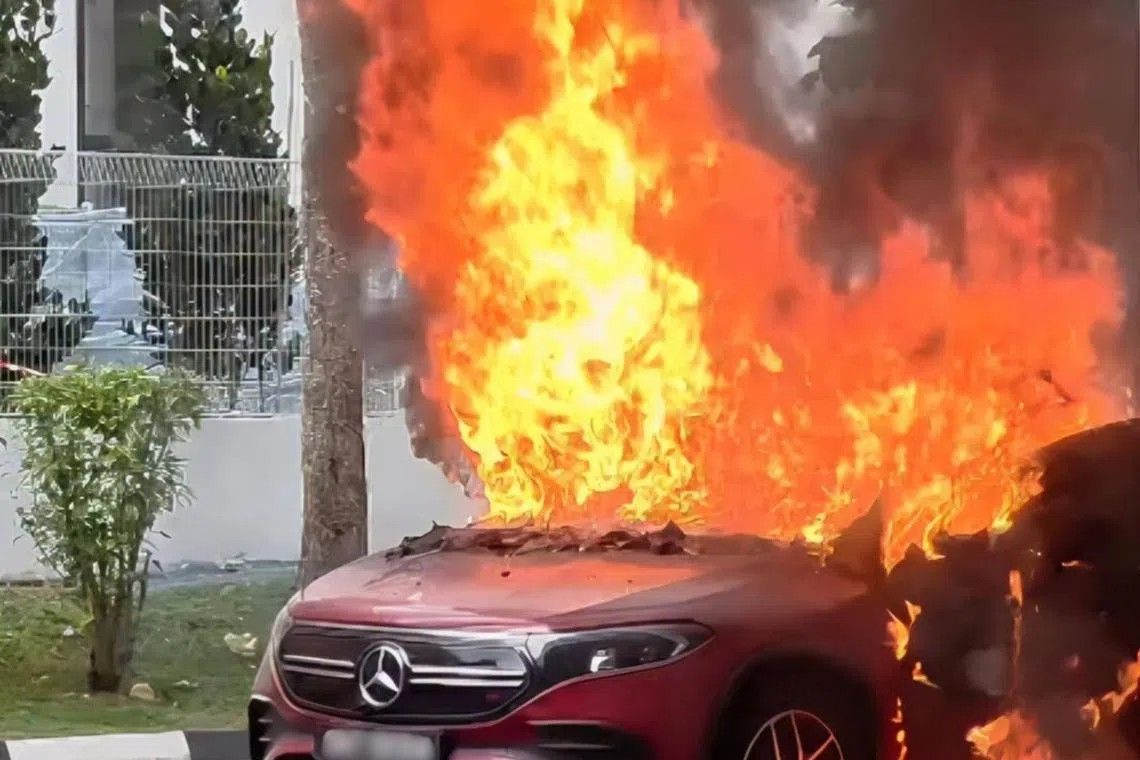
A residential neighbourhood in Singapore's Woodlands district experienced a dramatic vehicle fire on the morning of July 21 when an electric car's battery system ignited near the entrance to a multi-storey carpark at Block 548 Woodlands Drive 44. The Singapore Civil Defence Force responded to emergency calls around 10.10am and extinguished the flames using a single water jet, with no casualties reported. The incident underscores emerging safety concerns surrounding battery-powered vehicles in densely populated urban environments—a worry that reverberates across Malaysia and other Southeast Asian nations where EV adoption is accelerating rapidly.
The fire originated within the vehicle's interior, specifically in the space between the driver and front passenger seats, an area directly above where the car's battery pack is housed. This positioning of the battery system, while advantageous for vehicle stability and design efficiency, concentrates thermal risk in proximity to the occupied cabin. When the driver first detected burning odours while exiting the carpark, she initially attempted to address the situation by pulling over and assessing the situation. Within moments, visible smoke began emerging from the vehicle, confirming her suspicions that something had gone critically wrong with the car's electrical or thermal management systems.
Secondary response from building security personnel proved insufficient to contain the spreading fire. When staff members attempted to use conventional fire extinguishers available on-site, the flames continued their advance through the interior, consuming upholstery, wiring, and structural components with alarming speed. The rapid progression of the fire prompted the decision to evacuate the immediate vicinity entirely. Recognising the potential for battery rupture or explosion as temperatures continued rising unchecked, the driver and security staff withdrew to a safe distance and immediately contacted professional firefighting authorities. This prudent escalation ensured that the incident remained a property loss event rather than a potential tragedy.
Photographs captured after the fire's extinguishment reveal the devastating extent of internal damage. The vehicle's entire cabin presents a heavily charred appearance, with virtually no recognisable fabric or trim remaining. The dashboard has warped and deformed beyond functional recognition, and the structural framework supporting the vehicle's seats now lies exposed, stripped bare by intense heat. The extent of this destruction—particularly the complete disintegration of internal components—illustrates the ferocity of lithium-ion battery thermal runaway once initiated. Recovery teams towed the compromised vehicle away at approximately 12.15pm, removing it from the residential area to prevent further risk.
The Civil Defence Force has initiated a formal investigation into the fire's underlying cause, a process that will likely examine the vehicle's maintenance history, battery management system diagnostics, and potential manufacturing defects. Battery thermal runaway—the cascade failure that transforms functioning batteries into destructive infernos—can stem from internal short circuits, mechanical damage, manufacturing flaws, or degradation accumulated through numerous charging cycles. Understanding which factor triggered this particular incident holds significance not merely for the affected vehicle owner but for regulators and manufacturers monitoring EV safety across the region.
This incident arrives at a moment when electric vehicle penetration in Southeast Asia remains relatively modest compared to developed markets, yet is expanding substantially. Malaysia, Singapore, and neighbouring countries have implemented EV incentive schemes and charging infrastructure investments to accelerate the transition away from internal combustion engines. However, public confidence in battery safety remains fragile, particularly among populations living in high-density residential complexes where vehicle fires pose risks to neighbouring units and shared facilities. Incidents like the Woodlands carpark fire generate heightened media attention and consumer anxiety that policymakers and industry stakeholders must address through transparent communication and robust safety protocols.
The physical proximity of the battery system to the vehicle's occupied spaces raises design questions that extend beyond this single incident. In many EV models, battery packs occupy the floor pan between axles to optimise weight distribution and cabin space. This placement offers engineering advantages but concentrates thermal risk near where occupants sit. Whether current thermal management systems and fire containment features prove adequate for all failure scenarios—particularly in tropical climates where ambient temperatures remain elevated year-round—warrants ongoing scrutiny from independent testing authorities and regulatory bodies throughout Asia.
Carpark fire safety represents another dimension of this evolving challenge. Multi-storey carparks, whether in Singapore, Malaysia, or across the region, were designed and equipped with firefighting infrastructure developed when vehicle fires typically involved volatile petrol and diesel. Battery fires exhibit different characteristics: they burn hotter, persist longer, generate toxic smoke, and can reignite after initial suppression. Residential and commercial property managers increasingly face questions about whether existing fire suppression systems, ventilation protocols, and emergency procedures adequately address these novel thermal hazards. Some facilities have begun installing dedicated EV charging stations with advanced detection and suppression equipment, though widespread retrofit programmes remain limited.
The driver's quick recognition of warning signs—detecting the burning smell and promptly pulling over—demonstrates the importance of user awareness in mitigating risk. As EV ownership expands in Malaysia and Singapore, education campaigns emphasising the recognition of thermal warning indicators could prevent situations from escalating. Owners should understand that unusual odours, unexpected warning lights, or unusual heat emanating from the battery compartment warrant immediate professional inspection rather than continued operation.
Moving forward, this incident will likely prompt reviews of safety standards governing EV battery manufacturing, thermal management systems, and crash-safety features across Southeast Asian markets. Regulators may intensify scrutiny of imported vehicles to ensure compliance with rigorous safety protocols. Insurance companies may adjust pricing and coverage terms based on accumulated data about battery-related incidents. For consumers considering EV purchases in Malaysia and Singapore, incidents like the Woodlands carpark fire—while statistically rare—nonetheless shape confidence levels and purchasing decisions.
The Singapore authorities' swift and effective response prevented a minor vehicle incident from becoming a neighbourhood-threatening event. However, the incident serves as a reminder that as electric vehicle fleets mature and proliferate throughout Southeast Asia, vigilance regarding battery safety, infrastructure readiness, and regulatory oversight must keep pace with adoption rates. The transition to electrified transport brings undeniable environmental and economic benefits, yet realising those advantages sustainably requires addressing legitimate safety concerns through science-based solutions and continuous improvement across the entire vehicle lifecycle.

