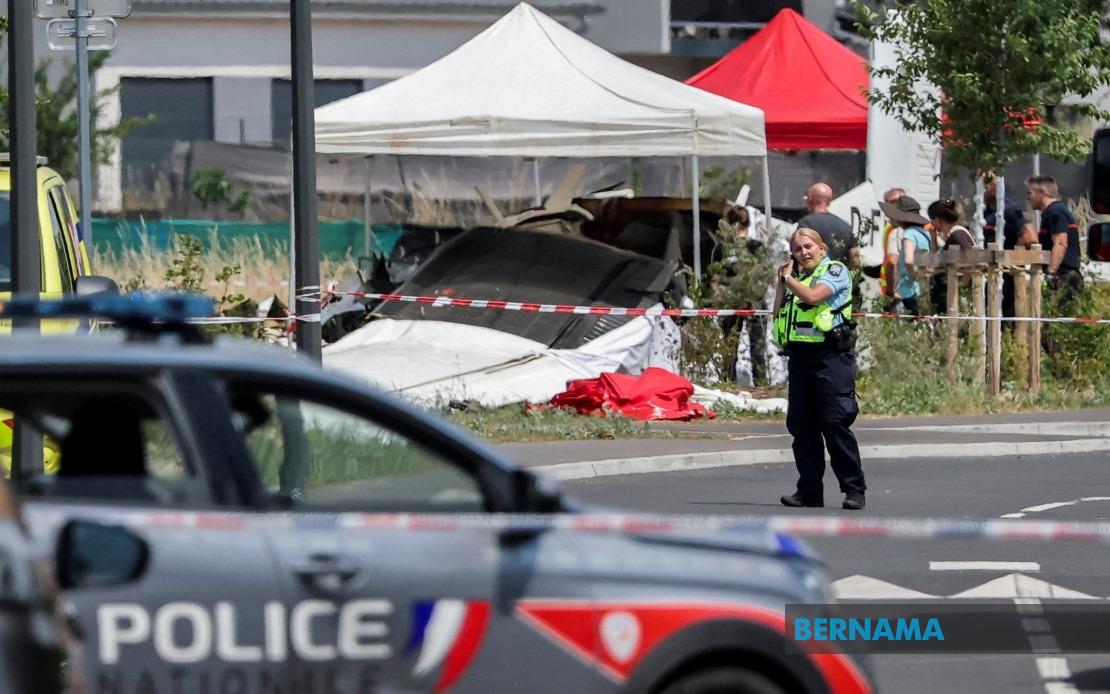
A civilian aircraft plummeted to the ground near Nancy in eastern France on Sunday, resulting in the deaths of all eleven individuals aboard. The plane went down in Tomblaine, a town within the Meurthe-et-Moselle department, shortly after departing from Nancy-Essey Airport, marking a tragic incident that has shaken the region and prompted immediate responses from French authorities at the highest levels.
Among those killed were the pilot, ten parachutists divided into two groups, and passengers who appear to have been participating in a coordinated skydiving and social gathering. According to Thierry Pechey, who heads the Meurthe-et-Moselle branch of the Order of Independent Nurses, the deceased included independent nurses who were taking part in what he characterised as an initiation celebration, a common practice for professional organisations to welcome new members or mark milestones within their ranks. The gathering had brought together skydiving instructors and nurses from the region in what should have been a memorable day.
The incident has drawn significant attention from France's political establishment, with Interior Minister Laurent Nunez planning to visit the crash site on the same day to assess the situation and oversee the response. Such ministerial visits underscore the gravity of aviation accidents in France and reflect the government's commitment to investigating such tragedies thoroughly and transparently. The presence of senior officials at disaster scenes serves both to coordinate emergency responses and to signal national concern for the victims and their families.
Prefect Yves Seguy of Meurthe-et-Moselle activated the departmental operational centre immediately following the crash, ensuring that emergency services, rescue teams, and investigative authorities could coordinate their efforts efficiently. This activation of emergency protocols represents standard French procedure for managing major incidents, allowing real-time monitoring of rescue operations and ensuring that all relevant agencies—from fire services to police to air accident investigators—work in concert.
Local law enforcement issued public advisories requesting that residents and onlookers avoid the vicinity of Rue Salvador Allende in Tomblaine, where the wreckage lay. Such cordons serve multiple critical purposes: they protect the public from potential hazards, preserve the crash site for investigation by accident specialists, and enable emergency responders to conduct their work without obstruction. The management of access to disaster scenes is particularly important in aviation incidents, where forensic examination of wreckage can yield crucial information about what caused the accident.
For Malaysian readers and the broader Southeast Asian community, aviation safety remains a paramount concern as regional air traffic continues to expand. While France maintains rigorous standards for aircraft maintenance and pilot training, incidents like this serve as sobering reminders that aviation risks persist regardless of a nation's development level or regulatory framework. The skydiving industry, which operates across Europe and increasingly in Asia, requires careful coordination between aircraft operators, parachute centres, and regulatory authorities to ensure that recreational pursuits do not compromise passenger safety.
The circumstances of this particular crash—involving a small civilian aircraft shortly after takeoff—warrant careful investigation. The early stages of flight are statistically significant in aviation safety, as aircraft are still climbing to altitude and pilots are managing multiple systems simultaneously. Additionally, the presence of parachutists adds complexity to aircraft operations, as weight distribution, emergency procedures, and communication between crew and jumpers all require precise coordination.
Investigators from the French air accident bureau will likely examine multiple factors in their inquiry, including weather conditions at Nancy-Essey Airport, the mechanical condition of the aircraft, pilot qualifications and experience, and adherence to safety protocols. Such investigations typically take months or longer, as specialists reconstruct events through examining physical evidence, reviewing flight data if available, and interviewing any witnesses or personnel who interacted with the flight.
The tragedy also raises broader questions about risk assessment in recreational aviation activities. Skydiving, while generally safe when conducted properly, introduces variables that differ from conventional passenger flights. The coordination required to load and deploy multiple parachutists, combined with the need to reach appropriate altitude and airspace, demands exceptional professionalism from all parties involved. Certification standards, pilot rest requirements, and equipment maintenance all play critical roles in ensuring such operations proceed safely.
For the families and colleagues of the victims, this incident represents an unimaginable loss. The nursing community in particular will be grieving the loss of colleagues who were united in professional fellowship. The skydiving instructors who died had dedicated themselves to safely introducing others to the sport, and their deaths represent a loss to their families and their profession.
French aviation authorities will use findings from their investigation to inform continuing improvements in safety protocols, regulatory frameworks, and training standards. Such lessons learned from tragic accidents have historically driven improvements across the aviation industry globally, including in Southeast Asia where regional carriers and operators benefit from accumulated knowledge about what factors contribute to safe operations.
As investigations unfold and families begin to mourn, the incident near Nancy stands as a stark reminder of aviation's inherent risks and the importance of unwavering commitment to safety standards by all parties involved in flight operations.

