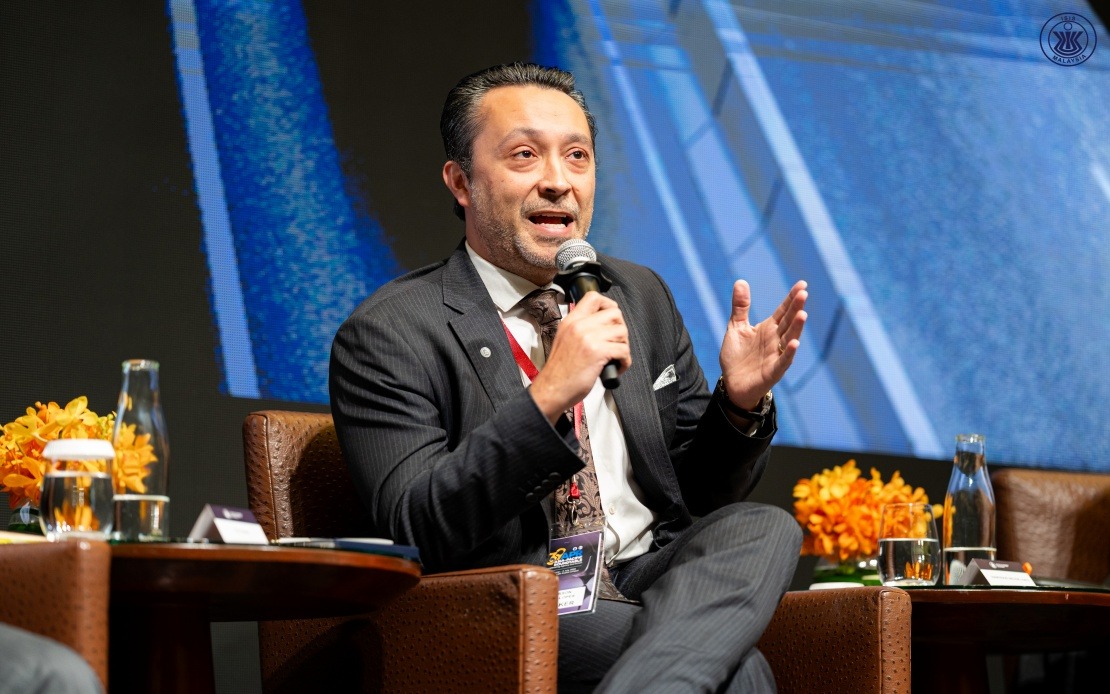
The emerging economies of the Global South face a critical juncture as the post-World War Two international system continues its gradual dissolution, requiring these nations to assert their own strategic priorities rather than defer to the agendas of established middle powers, according to experts gathered at the 39th Asia-Pacific Roundtable in Kuala Lumpur. The distinction between emerging and established middle powers represents more than a mere classification—it reflects fundamentally divergent political realities, historical trajectories, and strategic imperatives that should shape how countries like Malaysia, Brazil, India, Indonesia, Turkey, and Mexico navigate an increasingly fractured world order.
Dr Dawisson Belém-Lopes from the Federal University of Minas Gerais highlighted that emerging middle powers have harboured deep reservations about the liberal international architecture established after 1945, consistently advocating for substantial systemic reforms rather than marginal adjustments. These nations have long experienced the constraints of a system designed without their input and refined largely to serve the interests of Western powers and their allies. The professor's intervention at the roundtable's session on "Rogue World Order: Power, Principles, and Pragmatism" underscored that conflating emerging and established middle powers obscures crucial differences in outlook, capacity, and orientation. Countries of the Global South possess distinctive historical experiences—often shaped by colonialism, non-alignment movements, or regional conflicts—that have cultivated different perspectives on sovereignty, multilateralism, and great-power relationships compared to their counterparts in Europe, Japan, or other developed democracies.
The changing global landscape has paradoxically strengthened the collective position of emerging middle powers by providing them with both expanded resources and new institutional mechanisms previously unavailable. Belém-Lopes noted that platforms such as BRICS, the Shanghai Cooperation Organisation, and various regional groupings now offer alternatives to the traditional Western-dominated forums. This institutional proliferation reduces the dependency that once constrained Global South nations to accepting outcomes negotiated within institutions like the International Monetary Fund or World Bank where developed nations maintained decisive influence. The accumulation of economic clout through development and trade, coupled with these alternative forums, has created genuine policy space for emerging powers to pursue interests that diverge from prescribed Western preferences.
University of Queensland Chancellor Peter Varghese, drawing on his experience as former secretary of Australia's Department of Foreign Affairs and Trade, characterised the contemporary moment as an interregnum—a period when the old order has lost cohesion but no successor system has solidified. The American-led post-war arrangement that once projected overwhelming normative and material power now faces multifaceted pressures that transcend any single administration's decisions or preferences. Structural transformations including China's economic and military ascent, the emergence of multipolarity, the erosion of Washington Consensus economic prescriptions, and the resurgence of identity and cultural nationalism as political forces have collectively undermined the foundations upon which Western hegemony rested. This transition extends far beyond debates over trade rules or security alliances; it represents a wholesale reconfiguration of how international legitimacy is constructed and exercised.
Yet Varghese cautioned against assuming that the mere agency and assertiveness of emerging powers would automatically generate a new stable international order. Constructing functional multilateral arrangements requires not only the political will to challenge incumbent powers but also the technical capacity, diplomatic skill, and mutual interest alignment to forge sustainable agreements. The arduous process of building consensus among heterogeneous emerging powers—which often possess conflicting regional interests, different regime types, and competing development models—remains underestimated. Varghese advocated instead for a more modest but achievable agenda: strengthening regional cooperation mechanisms and fostering cross-regional partnerships that build incrementally toward broader frameworks without requiring wholesale reimagining of global governance. This pragmatic approach acknowledges both the necessity of change and the difficulty of achieving comprehensive systemic reform in an era of geopolitical competition.
Keio University's Dr Ken Jimbo contributed a regional perspective emphasising Asia's enduring importance despite the global order's fluidity. Asia will remain the arena where the most consequential strategic rivalries play out and where the stakes for Malaysia, Vietnam, the Philippines, and other Southeast Asian nations concentrate. The United States, regardless of its stated foreign policy orientation or which administration occupies the White House, will continue relying on regional alliances and partnerships as force multipliers for pursuing its strategic objectives. Even an "America First" approach does not presage American withdrawal from Asian affairs; rather, it reflects a different calculus about how American power is deployed. Japan and similarly positioned countries remain structurally dependent on the persistence of a rules-based international order to guarantee their security and economic access to markets, positioning them as stakeholders in preventing complete systemic collapse.
For Southeast Asia and Malaysia specifically, these dynamics create both opportunities and hazards. The weakening of established rules creates space for asserting interests that Western powers previously constrained, enabling countries to negotiate from stronger positions on issues ranging from maritime boundaries to trade arrangements. Simultaneously, the absence of clear rules increases uncertainty and raises the risk of miscalculation among competing powers, particularly in domains like the South China Sea where multiple claimants harbour overlapping ambitions. Malaysia must therefore navigate between leveraging the emerging multipolar competition to extract concessions from various powers while simultaneously working through regional institutions like ASEAN to establish new consensus-based norms that protect smaller nations from being steamrolled by larger competitors. This requires sophisticated statecraft that recognises both the fluidity of alliances and the importance of institutionalised cooperation mechanisms that bind powerful states to restraint.
The 39th Asia-Pacific Roundtable, organised by the Institute of Strategic and International Studies Malaysia under the theme "Accelerating Agency and Action," provided a forum for precisely these strategic conversations. The gathering of scholars, policymakers, and analysts from across the region reflected the growing recognition that passive adaptation to external forces no longer suffices for navigating international relations. Emerging powers must develop coherent strategies for advancing their interests, building coalitions with like-minded states, and where possible, shaping the rules of competition rather than merely responding to changes dictated by others. This demands investing in intellectual capacity to generate alternative policy ideas, strengthening diplomatic networks across the Global South, and building technical expertise in emerging domains like digital governance and climate finance where new rules remain unsettled.
The implications for Malaysia extend beyond abstract strategic theory into practical policy domains. As a trading nation dependent on open markets but also as a developing country frustrated by structural inequalities in the international system, Malaysia has incentives to support reformed multilateralism that addresses Global South grievances while maintaining the rules-based framework that protects smaller states. This delicate balancing act explains Malaysia's consistent emphasis on ASEAN solidarity, its participation in forums like BRICS and the Shanghai Cooperation Organisation, and its efforts to maintain working relationships across great-power divides. The challenge ahead involves doing so without sacrificing genuine autonomy or becoming trapped between competing blocs, a feat requiring both strategic clarity about core interests and diplomatic flexibility in tactics and partnerships.

