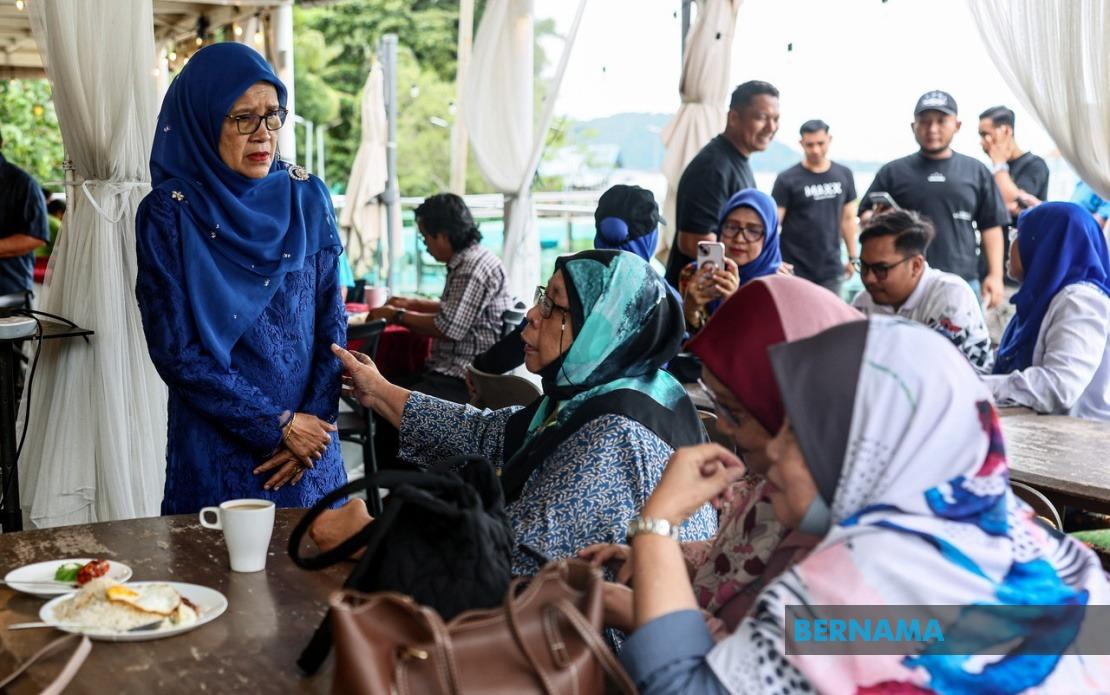
The northern Johor constituency of Endau is shaping up as one of the most intriguing contests in the 16th state election, presenting voters with a stark philosophical choice between experience and innovation. Incumbent Alwiyah Talib of Barisan Nasional, popularly known as Kak Awi, is campaigning on the strength of her two terms in office and a concrete portfolio of completed and ongoing projects. Opposing her is 42-year-old Saiful Nizam Samat from Pakatan Harapan, a think-tank oriented reformer pursuing a doctorate in economics who is positioning himself as an architect of systemic economic change. The four-way contest is further complicated by Hasnul Hakimi Hussien representing Perikatan Nasional and Jati Awang standing for Parti Orang Asli Malaysia, adding layers of complexity to what shapes as a competitive electoral battle.
Alwiyah's campaign narrative rests squarely on demonstrating that her track record of implementation justifies continuity at the ballot box. Having switched from Perikatan Nasional to Barisan Nasional between elections, she is attempting to reframe that move as a pragmatic decision to better serve her constituency's interests. Her overarching vision centres on transforming Endau's tourism economy from its traditional island-based offerings into a diversified ecosystem that encompasses inland and community-centred attractions. She points to existing demand for kampung homestays and resort facilities at locations like Teluk Buih, Penyabong and Tanjung Resang, where weekend bookings frequently reach capacity, as evidence that the market exists and simply requires political will to develop.
Beyond tourism, Alwiyah has identified a critical gap in Endau's educational infrastructure. The constituency currently relies on a single secondary institution, Sekolah Menengah Kebangsaan Ungku Husin, creating capacity constraints and forcing some students to undertake lengthy commutes or sacrifice educational opportunities. Her commitment to establish a new secondary school in Pekan Endau directly addresses this bottleneck, framing education as fundamental infrastructure rather than peripheral policy. She emphasises that her approach ensures equitable access to learning opportunities across all levels, from primary school through to tertiary education, positioning inclusive human development as central to her vision of progress.
Alwiyah's broader pitch to the 28,767 registered voters in Endau rests on the argument that electoral cycles and political transitions create momentum loss and wasted effort. By framing her continued tenure as essential to seeing projects through to completion, she is making an implicit case that institutional knowledge and relationship-building with federal and state agencies constitute tangible assets. Her acknowledgement that she has never occupied a comfort zone, describing the election itself as a demanding battle requiring sincerity without pretence, suggests she recognises the competitive nature of this contest and is attempting to inoculate herself against complacency accusations.
Saiful Nizam's platform presents a fundamentally different diagnostic of Endau's challenges and a distinctly different prescription for remedying them. Rather than focusing on tourism and education infrastructure alone, his framework prioritises systemic economic restructuring designed to address the root causes of youth outmigration and economic fragility. His flagship 'Fishermen's Economy 2.0' initiative represents an attempt to modernise the fishing sector, which remains crucial to Endau's identity and livelihood structure, through what he frames as contemporary methods and market-oriented approaches. By coupling fisheries reform with broader small and medium enterprise development, he argues that addressing one sector alone without addressing the broader entrepreneurial ecosystem would produce only partial gains.
The intellectual scaffolding of Saiful Nizam's campaign reveals a candidate attempting to position economic policy as a science rather than a collection of disconnected promises. His emphasis on spillover effects and systemic linkages—that improving fishermen's livelihoods creates multiplier effects throughout the local economy—reflects economic thinking centred on structural relationships rather than isolated interventions. Digital marketing programmes, skills training in technical and vocational fields, and English language instruction are presented not as competing priorities but as mutually reinforcing elements of a workforce development strategy designed to increase competitiveness and reduce the economic pressure that drives young people toward urban centres.
Saiful Nizam's educational proposals share thematic coherence with his economic agenda, positioning learning not merely as a social good but as essential infrastructure for economic transformation. The proposed Endau Children's Education Fund would provide financial assistance targeted at removing barriers to access, addressing the reality that families in fishing and agricultural communities often face genuine constraints in supporting children's education beyond secondary level. Technical and vocational education sits alongside STEM and English language training, reflecting recognition that Endau's future workforce will compete in diverse labour markets requiring varied skillsets. This approach contrasts with Alwiyah's focus on building new physical school infrastructure; Saiful Nizam prioritises making existing educational pathways more accessible and market-aligned.
Food security emerges as another distinguishing element of Saiful Nizam's platform, reflecting broader national concerns about agricultural resilience and self-sufficiency that have gained prominence in Malaysian policy discourse post-pandemic. His commitment to promoting modern farming methods suggests engagement with both sustainability and productivity goals, framing agricultural enhancement not as nostalgia for rural life but as contemporary economic necessity. This positioning may resonate particularly with younger voters in Endau who view agricultural and fishing sectors not as legacy occupations to be abandoned but as modernisable livelihoods requiring technological and methodological updating.
The structural differences between these two campaigns reflect broader tensions within Malaysian electoral politics between the politics of implementation and delivery versus the politics of systemic reform and restructuring. Alwiyah embodies the former: she has projects to show, infrastructure to point toward, and a narrative of steady accumulation of developmental achievements. Saiful Nizam represents the latter: he offers diagnostic frameworks about root causes and systemic solutions, appealing to voters who believe that piecemeal improvements cannot address fundamental structural challenges. The appeal of each approach varies by voter cohort; those benefiting from existing projects and infrastructure may favour continuity, while those experiencing stagnant incomes or limited opportunity may find the promise of systemic economic transformation more compelling.
The presence of Perikatan Nasional's Hasnul Hakimi Hussien and Parti Orang Asli Malaysia's Jati Awang adds unpredictability to the contest. Perikatan Nasional, having governed Johor previously and maintaining organisational capacity in the state, could split the anti-establishment vote. Jati Awang's presence reflects growing electoral visibility of indigenous communities' political mobilisation, though the extent to which this translates into meaningful vote share remains uncertain. These secondary contests within the primary contest mean that all three major candidates face scenarios where vote plurality rather than majority determines the outcome.
The Endau contest carries implications extending beyond its immediate constituency. The election showcases how Malaysian voters respond to different types of political messaging—experience and continuity versus intellectual frameworks for systemic change. With polling scheduled for 11 July and early voting on 7 July, the contest will provide early signals about voter sentiment across the broader Johor electorate. The constituency's demographic composition, combining fishing communities, agricultural zones, and tourism-dependent populations, makes it representative of rural-transitional Malaysia grappling with economic modernisation. How voters here evaluate competing visions of development may offer lessons about the political salience of different policy approaches across similar constituencies throughout Malaysia.
Both candidates appear to be conducting substantive campaigns focused on policy substance rather than personal attacks or divisive rhetoric. Alwiyah's engagement with tourism development and educational infrastructure reflects genuine engagement with visible development challenges, while Saiful Nizam's economic framework demonstrates serious intellectual engagement with structural issues. This elevation of discourse, if sustained throughout the campaign period, may offer voters genuine clarity about competing approaches to governance and economic development. The outcome will ultimately reflect whether Endau's electorate prioritises demonstrated implementation capacity or the intellectual promise of systematic reform—a choice that extends far beyond one state seat's future.

