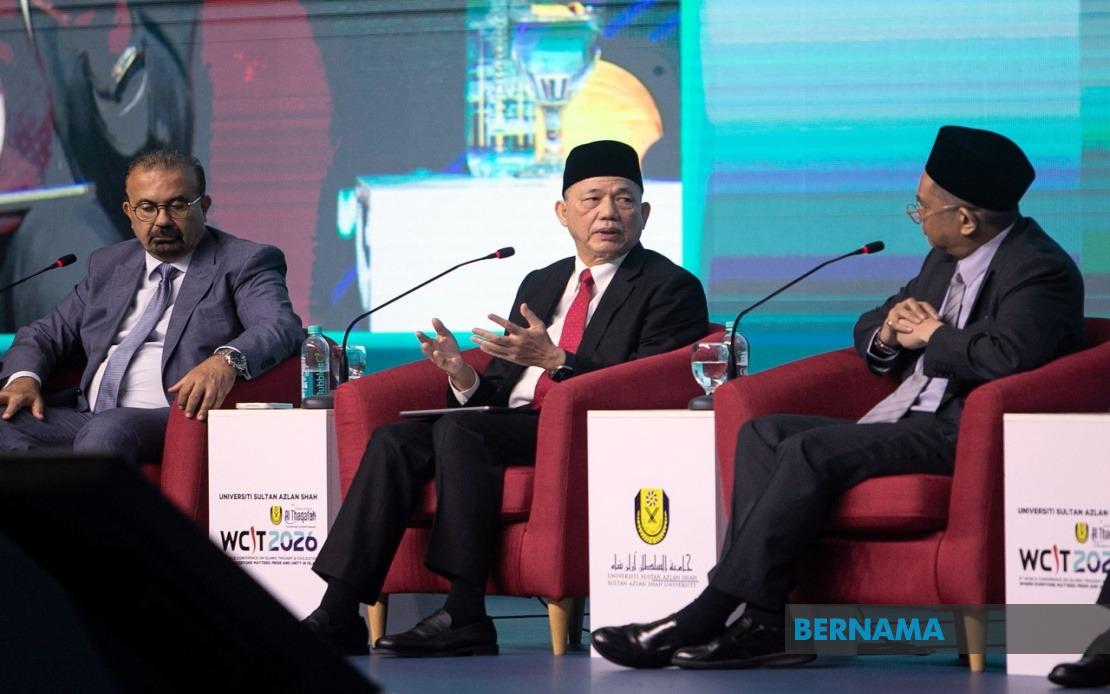
The boundaries separating energy security from maritime security have fundamentally dissolved in today's interconnected world, Deputy Prime Minister Datuk Seri Fadillah Yusof cautioned while addressing the 8th World Conference on Islamic Thought and Civilisation in Ipoh. Speaking in his capacity as Energy Transition and Water Transformation Minister, Fadillah highlighted how contemporary geopolitical flashpoints—particularly escalating tensions between the United States and Iran—demonstrate that these two critical domains can no longer be treated as isolated policy areas.
The consequences of this convergence extend far beyond theoretical economics. Fadillah explained that disruptions occurring thousands of kilometres away now cascade through global systems with immediate tangible effects. When maritime routes face instability or energy supplies become constrained, the ripple effects reach household electricity bills, petrol station pumps, manufacturing supply chains, and ultimately the purchasing power of ordinary citizens. This reality underscores a fundamental shift in how policymakers must approach national resilience and economic planning.
Developments in the Strait of Hormuz exemplify this interconnection vividly. The strategic waterway, through which a significant portion of global oil shipments transit, serves as a chokepoint where any disruption threatens not merely energy markets but the entire ecosystem of international commerce. When tension rises in this region, the consequences extend to Malaysia and across the world's integrated supply networks. Fadillah pointed to the cascading costs that accompany such uncertainty: insurance premiums for vessels surge, energy pricing becomes volatile, and logistics expenses climb, collectively creating inflationary pressures throughout economies far removed from the crisis zone.
International shipping and logistics operations face particularly acute vulnerabilities. Beyond the direct risk to vessels themselves, insurers respond to heightened danger by raising premiums substantially, effectively embedding geopolitical risk into the cost of goods transported globally. These increased transportation expenses then propagate through retail channels, affecting consumer prices across diverse sectors from manufacturing to agriculture. The supply chain dimension thus becomes inseparable from energy security concerns, creating a unified framework within which policymakers must operate.
Malaysia's geographical position amplifies the relevance of these developments to national interests. Straddling the Strait of Melaka, one of the world's most critical maritime corridors, Malaysia sits directly on a route essential to global commerce. The country's historical prosperity rested upon maintaining open, stable, and predictable trading systems that have enabled commerce for centuries. Any instability affecting major shipping lanes or energy transport mechanisms therefore carries direct implications for Malaysia's economic vitality and strategic interests. The Deputy Prime Minister's emphasis on this geographic reality reflects an acute awareness that Malaysian policymakers cannot regard distant regional conflicts as detached from domestic concerns.
Fadillah articulated Malaysia's response orientation as fundamentally rooted in diplomatic engagement rather than confrontational stances. This approach reflects a broader Malaysian foreign policy doctrine premised on friendship with all nations and commitment to rules-based international systems. Rather than choosing antagonistic sides in emerging great-power competitions, Malaysia seeks to preserve the institutional frameworks and norms that have historically enabled the country to benefit from global trade and cooperation. This diplomatic posture stems from recognition that Malaysia's vulnerability as a trading nation depends critically upon maintaining international order.
The integration of energy and maritime security concerns demands policy responses that transcend traditional departmental silos. Energy ministers, maritime authorities, trade officials, and defence planners must coordinate strategies that address both domains simultaneously. This administrative challenge grows more acute as global supply networks become increasingly complex and geopolitical tensions intensify. Malaysia's institutional capacity to navigate these interconnected challenges will substantially influence the nation's economic resilience and capacity to insulate citizens from external shocks.
Looking ahead, the acceleration of energy transition initiatives adds another layer of complexity to these security matrices. As Malaysia pursues renewable energy and technological transformation, the transition period creates temporary dependencies on imported fuels and equipment while new infrastructure develops. Simultaneously, maritime routes remain critical for transporting these transition technologies, materials, and energy sources. Strategic planners must therefore balance immediate energy security requirements against longer-term decarbonisation objectives, all while confronting the maritime vulnerabilities inherent in global supply chains.
The Deputy Prime Minister's remarks at the World Conference on Islamic Thought and Civilisation reflected a conviction that addressing interconnected security challenges requires not merely technical expertise but also ethical frameworks and civilisational dialogue. Collaborative approaches grounded in mutual respect and shared commitment to stability may offer pathways through which Muslim-majority nations and other stakeholders can navigate present turbulence. This perspective positions Malaysia as advancing not merely national interests but broader international stability that benefits all economies dependent upon open maritime routes and accessible energy supplies.
Fadillah's analysis ultimately underscores a transformed strategic landscape where energy disruptions, maritime conflicts, and economic welfare have become indivisible. For Malaysian policymakers and regional leaders, this reality demands elevated vigilance regarding developments in distant geopolitical hotspots, sustained commitment to diplomatic channels, and innovative institutional arrangements that can respond agilely to cascading crises spanning multiple policy domains. The interconnection Fadillah identified represents not merely an academic observation but an urgent call for integrated strategic thinking.

