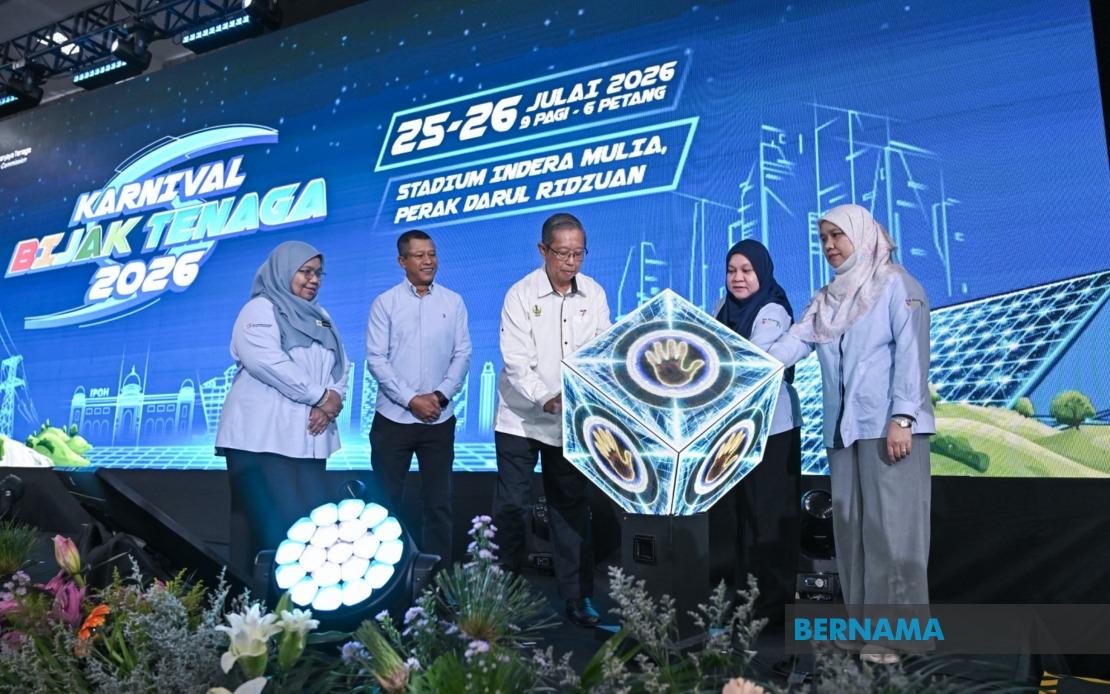
The Energy Commission held its inaugural Energy Smart Carnival 2026 at Stadium Indera Mulia in Ipoh, a two-day public engagement event that exceeded initial attendance projections and is expected to establish a template for future roadshows across Malaysian states. The carnival drew more than 10,000 visitors—double the original target of 5,000—from Perak, Kuala Lumpur, Johor Bahru and beyond, signalling substantial public curiosity about the country's evolving energy landscape.
Chairman Datuk Seri Asri Hamidon framed the carnival as a pivotal mechanism for the Energy Commission to communicate directly with Malaysian citizens and explain its dual mandate as the regulatory authority governing electricity and piped gas sectors. He emphasised that the event represented the agency's commitment to operating as a transparent public institution rather than an opaque bureaucracy, providing ordinary Malaysians with direct access to information about their services, regulatory responsibilities and the broader national energy transition agenda.
The carnival's programming reflected a deliberate strategy to make technical energy topics accessible to lay audiences. Exhibits, live demonstrations, educational talks and interactive competitions addressed practical household concerns: how to interpret and select electrical appliances bearing 4 or 5-Star Energy Efficiency Labels, recognition of ST-SIRIM Safety Labels, and concrete strategies for reducing domestic electricity consumption. Rather than lecturing consumers on abstract sustainability principles, the Energy Commission grounded the transition narrative in tangible cost savings and household safety.
Integrated within the Energy Commission's broader Silver Jubilee celebrations, the carnival functioned as a policy communication tool designed to build grassroots support for the national energy transition agenda. Malaysia's shift toward cleaner electricity generation, expanded renewable energy adoption and improved household efficiency represent foundational elements of the government's longer-term climate and energy security commitments. Public acceptance of these changes depends significantly on understanding—a factor the carnival explicitly targeted.
Siti Safinah Salleh, the Energy Commission's chief executive officer, worked alongside Perak Infrastructure, Energy, Water and Public Transport Committee chairman Datuk Seri Mohammad Nizar Jamaluddin to underscore the political and administrative coordination required for energy sector modernisation. At state level, Perak has emerged as a pilot jurisdiction for the Energy Commission's public engagement and outreach initiatives, reflecting the state's strategic importance to Malaysia's broader energy infrastructure.
Veliana Ruslan, head of the Energy Commission's Strategic Communications Section, indicated that the successful Ipoh event had validated the carnival format as a replicable model. The agency intends to deploy similar roadshows to additional Malaysian states commencing in 2027, leveraging the positive reception in Perak to build nationwide momentum. This expansion strategy acknowledges that energy transition messaging must reach citizens in their home states rather than remaining concentrated in federal capital communications.
The carnival's substantial cross-state attendance—with visitors travelling from as far as Johor Bahru and the Klang Valley—revealed appetite for direct engagement with energy sector regulators among Malaysians of varying geographic and socioeconomic backgrounds. This demographic diversity suggested that energy efficiency and transition concerns transcend regional boundaries, creating a potential foundation for coordinated national messaging across state lines.
Beyond public education, the carnival functioned as a recruitment and career awareness platform. The Energy Commission highlighted employment and professional development opportunities within the energy sector, positioning the transition toward cleaner generation and enhanced efficiency as an economic growth engine capable of generating skilled jobs. For young Malaysians and career changers, the energy transition represents an expanding employment frontier rather than merely an environmental imperative.
The carnival's emphasis on safety—particularly through promotion of ST-SIRIM Safety Labels—reflected the Energy Commission's recognition that public confidence in energy transition initiatives depends not solely on environmental or efficiency arguments but also on demonstrated commitment to consumer and household protection. By pairing efficiency messaging with safety certification information, the agency presented energy modernisation as benefiting household budgets and family wellbeing simultaneously.
Malaysia's energy transition faces the perpetual challenge of gaining public buy-in, particularly among lower-income households concerned that renewable energy adoption and efficiency requirements might drive electricity costs upward. The Energy Commission's carnival strategy directly countered such anxieties by demonstrating tangible cost-reduction pathways and showcasing government incentives supporting energy efficiency investment. This messaging reframed the transition from an imposed regulatory burden to an opportunity for household financial improvement.
The overwhelming response to the inaugural carnival in Ipoh reflects broader Malaysian interest in understanding the mechanics and implications of energy sector modernisation. As the country pursues increasingly ambitious renewable energy targets and grid modernisation initiatives, public understanding of these technical and policy domains becomes increasingly critical. The Energy Commission's carnival model suggests that interactive, accessible public engagement can effectively communicate complex energy topics while building institutional credibility and public trust in sector regulation.

