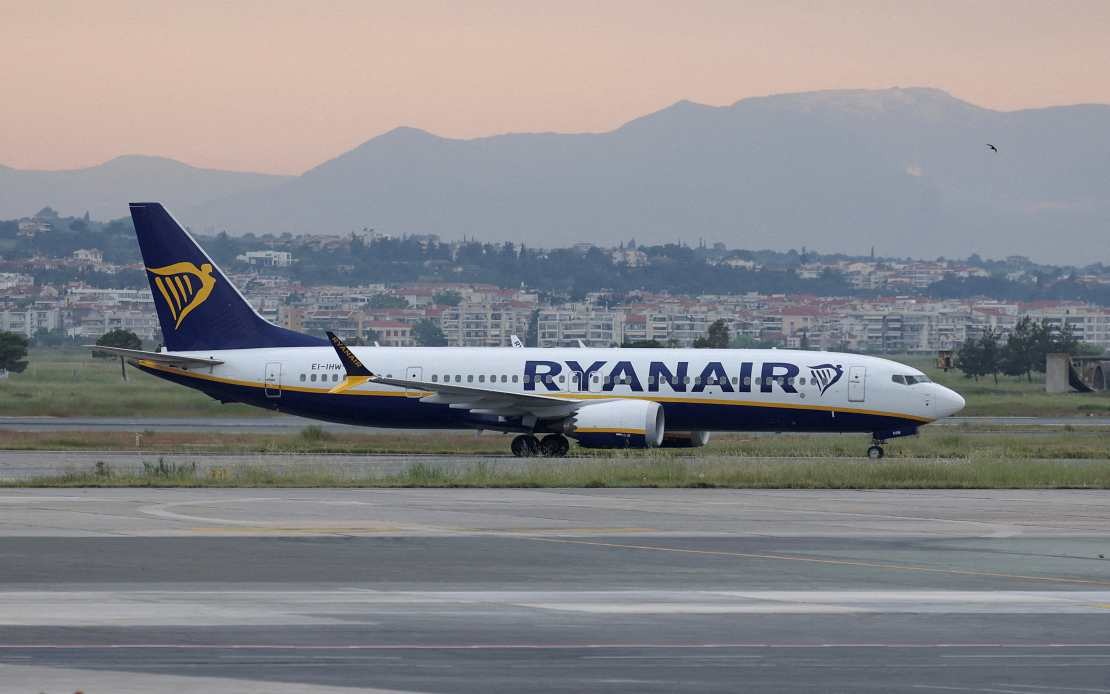
A detailed inquiry by the United States National Transportation Safety Board has uncovered the precise sequence of events that led to a harrowing incident aboard a Ryanair aircraft travelling between Greece and Germany last month. The investigation found that a critical failure of the right engine's fan blade set off a chain reaction of mechanical destruction, ultimately breaching the pressurised cabin and endangering the life of at least one passenger who was partially ejected through the resulting aperture before being rescued by fellow travellers.
The incident occurred aboard a Malta Air aircraft operating as Ryanair flight RYR-4978 from Thessaloniki International Airport in Greece bound for Munich during July. The trouble began shortly after takeoff as the aircraft was in its climbing phase, when one of the fan blades in the right engine separated unexpectedly from its mounting. This mechanical failure proved catastrophic, as the detached blade became a projectile that fragmented further, with pieces of the damaged engine housing accelerating through the fuselage skin.
The destructive path of the engine fragments created two distinct breaches in the aircraft's pressurised compartment. The investigation report specified that fragments penetrated the fuselage at the passenger cabin window positioned at row 11, completely destroying that window in the process. Additionally, the engine debris caused secondary damage to the lower section of the fuselage skin located behind the right wing-to-body fairing, indicating the severity and wide dispersal of the fragmentation.
The passenger occupying seat 11F found themselves in an extraordinarily perilous situation as the rapid decompression of that localised cabin area created a differential pressure that partially drew them toward and through the damaged window opening. The investigation documented that this individual became partially lodged within the broken window frame, with the entire glazing assembly missing entirely. What prevented a fatal outcome was the immediate intervention of surrounding passengers who physically restrained and pulled the injured traveller back into the cabin, likely at considerable personal risk and with the help of crew members.
Bird strike analysis emerged as a significant finding in the investigation's technical assessment. Examiners discovered bird remains, including feathers and organic matter, embedded within various internal components of the failed engine. This evidence suggests that a bird ingestion event may have been a contributing or precipitating factor in the fan blade separation, though the investigation did not conclusively establish bird strike as the sole cause. Such incidents, while statistically rare on modern turbofan engines equipped with protective measures, remain a known hazard in aviation, particularly during takeoff and landing phases when aircraft pass through lower altitudes where bird populations concentrate.
The immediate response to this emergency was professional and effective. Pilots successfully managed the damaged aircraft's return to Thessaloniki International Airport, where emergency services were standing by. The aircraft landed without further incident, allowing medical personnel to attend to the injured passenger and assess the structural integrity of the airframe. The safe conclusion of what could have been a catastrophic event underscores both the resilience of modern aircraft design and the critical importance of passenger awareness and crew training in emergency situations.
For regional aviation authorities and operators throughout Southeast Asia and beyond, this incident serves as a sobering reminder of the multi-layered safety systems required in commercial air transport. The case illustrates why rigorous engine maintenance protocols, comprehensive foreign object damage prevention programmes, and crew procedures for rapid decompression events remain non-negotiable elements of airline operations. Airlines operating in the region, particularly those with extensive international route networks, will likely review their own engine inspection regimes and cabin pressurisation monitoring systems in light of these findings.
The investigation's findings carry implications for engine manufacturers and maintenance providers globally. While fan blade failures remain statistically uncommon, the documentation of how engine fragments can penetrate modern fuselage designs provides valuable data for ongoing engineering assessments. Manufacturers may use such incidents to refine blade materials, stress analysis models, and containment strategies to further minimise the risk of secondary damage should similar failures occur in future.
This incident also highlights the unpredictable nature of aviation hazards despite decades of engineering advancement. Bird strikes, while manageable through design redundancy and protective measures, cannot be entirely eliminated from the operational environment. The fact that feathers were found throughout the engine component suggests that the ingestion event may have gone undetected initially, emphasising the importance of post-flight inspections and sophisticated engine monitoring systems that can detect subtle degradation in engine performance.

