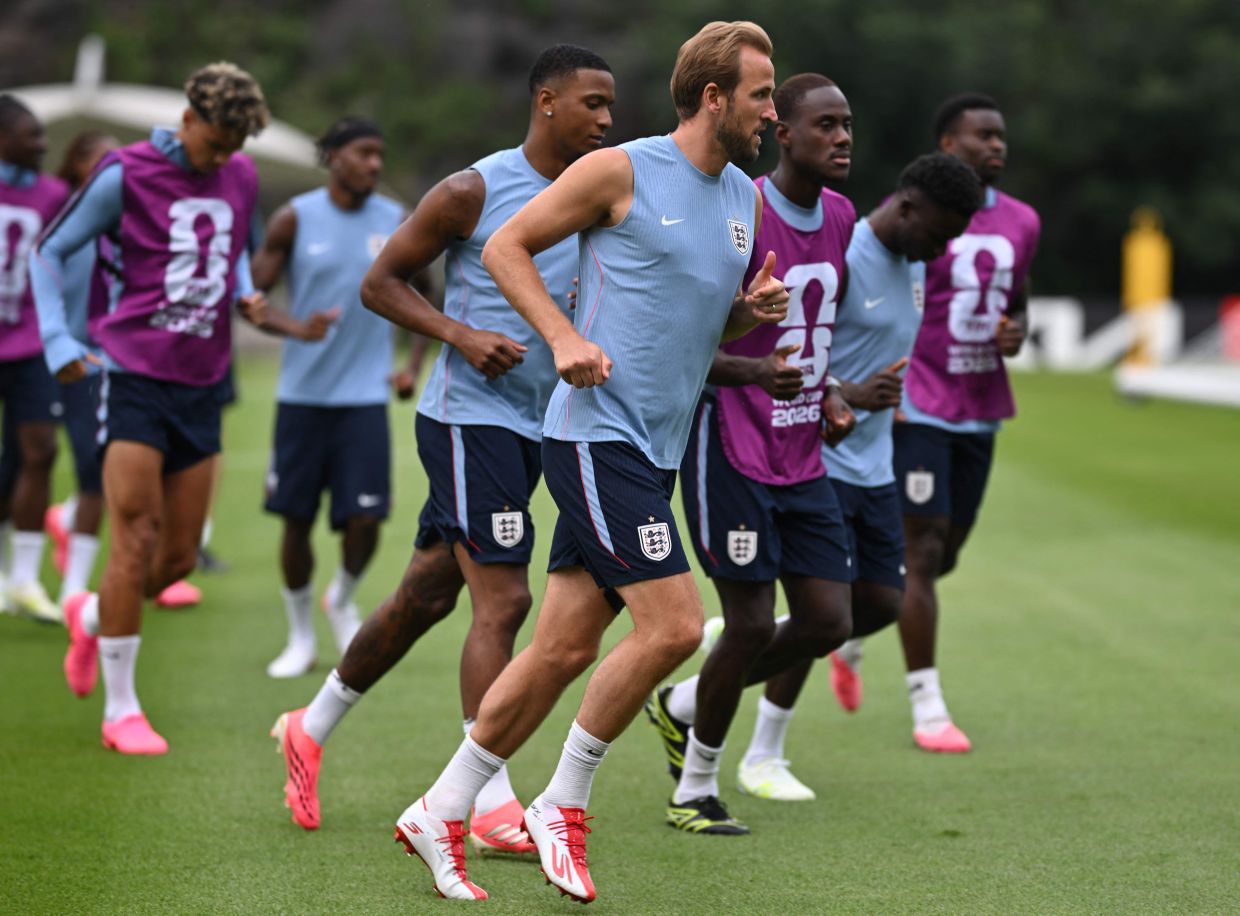
England's World Cup campaign reaches a defining moment on Sunday when Thomas Tuchel's side faces Mexico at the Estadio Azteca in Mexico City, a venue laden with historical significance and strategic challenges. The fixture represents far more than a conventional knockout match—it marks England's return to a stadium where one of football's most controversial moments unfolded nearly four decades ago, the 1986 encounter against Argentina that saw Diego Maradona's infamous 'Hand of God' goal. For the English, Sunday offers both redemption and the chance to revive a tournament that has thus far disappointed expectations, despite entering with genuine aspirations of ending a 60-year drought in major competitions.
England's passage to the last sixteen has been unconvincing, stumbling through the group stage in disappointing fashion before requiring a dramatic intervention from captain Harry Kane. A 2-1 victory over the Democratic Republic of Congo, secured by Kane's late heroics, proved sufficient to advance but offered little evidence of the quality supposedly befitting a fourth-ranked FIFA side. The team's vulnerability to pace has become increasingly apparent, particularly along the right flank where defensive solidity has been repeatedly compromised. Tuchel must resolve these structural issues immediately, knowing that a Mexican side operating at peak efficiency and energised by home advantage will exploit any weakness mercilessly.
Mexico, conversely, arrives at this encounter in commanding form. El Tri's unbeaten home record stands perfect across four matches, a sequence crowned by a commanding 2-0 dismissal of Ecuador that secured their first knockout victory at a World Cup in four decades. Playing before their own supporters at the Azteca transforms the dynamics entirely—Mexico's tenth-ranked status relative to England's fourth-place rating becomes almost irrelevant when confronted with the psychological advantage of a roaring home crowd and the tactical benefits of an intimate stadium relationship. Coach Javier Aguirre's acknowledgment that his team must produce something approaching perfection to overcome England reflects realistic assessment rather than false modesty, yet the Mexican performance trajectory suggests such levels are precisely within reach.
The Azteca itself represents a formidable obstacle independent of Mexico's quality. Situated 2,240 metres above sea level, the altitude imposes physical demands that cannot be overcome through mere tactical instruction or determined attitude. Tuchel has rightly lamented the impossibility of adequate acclimatisation within four days, a constraint that will disproportionately tax England's aerobic systems throughout the ninety minutes. Mexico's players, by contrast, train regularly at this elevation and have grown accustomed to its demands. The stadium's atmosphere—Tuchel described it as instantly overwhelming upon arrival—creates an additional psychological burden. These cumulative factors transform the encounter from a straightforward contest between two nations into an examination of English resilience under compounded adversity.
Weather conditions may yet prove decisive. Thunderstorms are forecast for Sunday evening in Mexico City, though FIFA rejected recommendations to advance the 6pm local kick-off time. The meteorological uncertainty introduces an unpredictable dimension that might favour the home side's adaptability and familiarity with local conditions. By Malaysian standards, the scheduling places the match at 4am Monday morning, making real-time viewership challenging for regional audiences yet ensuring heightened interest among morning commuters encountering news coverage.
Simultaneously, the contest between Norway and Brazil unfolds 2,400 kilometres northeast at the MetLife Stadium in New Jersey, where equally dramatic weather warnings have been issued. Erling Haaland's extraordinary tournament record—five goals in three appearances—has established the Manchester City striker as perhaps the tournament's most lethal finisher. His collision with Brazil's defensive resources, particularly Gabriel Magalhaes of Arsenal and PSG's Marquinhos, both possessing Premier League familiarity with Haaland, creates a compelling technical narrative. Yet Brazil, despite Carlo Ancelotti's measured demeanour, remains football's five-time world champion, a status reflecting accumulated experience and tactical sophistication that transcends individual brilliance.
Ancelotti's relaxed assessment of the Haaland challenge masks underlying confidence. The Brazilian manager correctly identifies that his defenders require no tactical education regarding the Norwegian striker's methods—experience has already provided that schooling. This confidence, however, risks underestimating Haaland's capacity for innovation and his tournament-honed sharpness. Norway's coach Stale Solbakken wisely counsels his players to prioritise match fundamentals over the occasion's magnitude, recognising that emotional overwhelm against five-time champions represents the surest path to elimination. His observation that Brazil's dominance has diminished compared to their standing four years previous suggests realistic assessment of shifting global football dynamics.
The quarterfinal awaiting the England-Mexico winner represents a tantalising prospect: deployment to Miami against either Haaland's resurgent Norway or Brazil's enduring pedigree. Each pathway offers distinct narratives. An England-Brazil encounter would pit contemporary English aspirations against historical South American supremacy. England-Norway would pit established ranking against tournament momentum and individual brilliance. For Mexican football, beyond Sunday's contest, the implications are equally profound—a quarterfinal appearance would represent significant progression and vindicate Aguirre's recent reinstatement as manager.
Southeast Asian supporters, despite inconvenient broadcast timings, maintain substantial investment in these proceedings. England's struggles resonate with regional observers tracking established European hierarchies; Mexico's resurgence inspires Global South audiences; Haaland's phenomenal form transcends geographic boundaries through Champions League familiarity. The next 48 hours will substantially reshape tournament architecture and narrative momentum entering the penultimate rounds.

