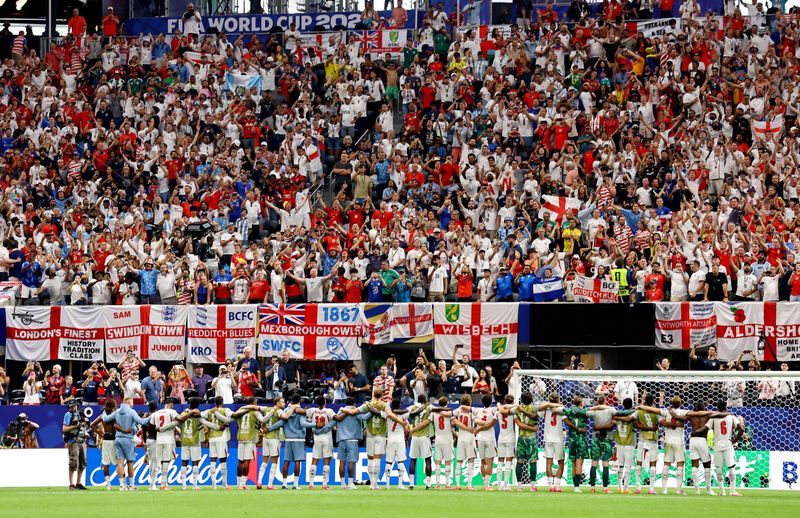
England's path through the initial stages of the World Cup had promised much but delivered inconsistency. An encouraging 4-2 victory over Croatia gave way to a goalless draw with Ghana and a laboured 2-0 defeat of Panama, performances that hinted at defensive vulnerabilities beneath the surface. Those concerns crystallised into genuine peril when England faced DR Congo in Atlanta on Wednesday, discovering just how fragile their campaign could become against a determined underdog.
The Congolese breakthrough came with alarming speed. Brian Cipenga's opening goal within ten minutes shattered the illusion of English superiority and signalled what would become an uncomfortable afternoon. For the first time in the tournament, Thomas Tuchel's team trailed. More troublingly, England had never previously won a World Cup match after going behind at halftime—a statistical burden that weighed visibly on players and supporters alike as the first half progressed.
DR Congo's defensive discipline proved suffocating. Despite England's attacking resources and tournament pedigree, the underdog outfit from central Africa constructed a seemingly unbreakable barrier around goalkeeper Lionel Mpasi. The contrast in efficiency was stark: the Congolese needed merely one clear chance to take the lead they secured early, while England squandered opportunity after opportunity. Yoane Wissa struck the woodwork before the interval, and moments later Harry Kane's penalty claims were dismissed, compounding the frustration as England retreated to the dressing room amid nervous murmurs from their travelling support.
The atmosphere inside the stadium had turned palpable. Television cameras captured the anxiety etched across English faces—supporters painted in red and white colours clutching their drinks, shifting their weight from foot to foot, seemingly powerless to influence proceedings on the pitch. Every Congolese attack generated genuine dread, a reminder of how quickly tournament dreams can unravel when defensive lapses invite dangerous opposition play. The narrative seemed to be writing itself: a fairy-tale upset brewing in Atlanta.
Tuchel's team emerged visibly more purposeful after the break, though breakthrough remained elusive. Jude Bellingham's header forced a magnificent save from Mpasi, while Declan Rice generated threat from wide positions with whipped crosses into the penalty area. Marcus Rashford was denied by desperate defensive intervention, and Bellingham again found himself thwarted as stoppage time approached. The pressure mounted without resolution, and Tuchel's visible frustration in the technical area—notably audible berating of Declan Rice over a backwards throw-in—suggested mounting exasperation. The tactical adjustment of repositioning Rice at right back and introducing Eberechi Eze provided fresh impetus, but the breakthrough remained stubbornly absent.
The equaliser, when it arrived in the 75th minute, released tension like a pressure valve. Kane's glancing header—his 83rd international goal—deflected past Mpasi's outstretched fingertips, and the roar that erupted seemed to validate every moment of the preceding struggle. The psychological shift was immediate and unmistakable. England's belief, dormant during the suffocating first half, suddenly rekindled, and Kane struck again eleven minutes later to secure passage into the knockout stage's next phase.
The victory carried particular historical resonance. England's comeback win represented their first World Cup comeback from trailing at halftime since their quarter-final victory over Cameroon in 1990—precisely 36 years prior to this dramatic Wednesday in Atlanta. The symmetry underscored how infrequently such reversals occur at football's highest level, lending greater significance to their ability to escape the DR Congo trap. Tuchel emphasised the resilience required, praising his players' commitment to maintaining belief when circumstances turned adversarial.
Kane himself acknowledged the contrasting challenges that lay ahead. Against DR Congo, England had tested their ability to penetrate deep defence through sustained pressure and creative ingenuity. Against Mexico, they would confront an entirely different examination: whether they could withstand high-tempo attacking play and maintain defensive shape against an opponent known for fluid, attacking football. The knockout stage's intensity transforms both the tactical landscape and the psychological demands placed on competing nations.
Complicating England's preparation is the geographic reality of Mexico City. The Azteca Stadium sits more than 2,200 metres above sea level, creating atmospheric conditions radically different from Atlanta's lower altitude. Oxygen levels diminish significantly, and the thin air causes the football to travel faster and more erratically than players accustomed to sea-level conditions expect. What tested England's nerves in Georgia will test their cardiovascular fitness and tactical discipline in Mexico—a physical and physiological challenge requiring deliberate adaptation.
The trajectory from Georgia to Mexico represents a microcosm of modern tournament football's demands. Teams must oscillate between defensive solidity and attacking vibrancy, between handling the pressure of trailing opposition and executing clear tactical directives under duress. England's escape from DR Congo, narrowly avoiding an embarrassing exit, provides both relief and caution. The performance revealed vulnerabilities that increasingly aggressive opponents might exploit, particularly once the competition reaches its decisive phases. Mexico awaits, a test of different dimensions but equally unforgiving outcomes.

