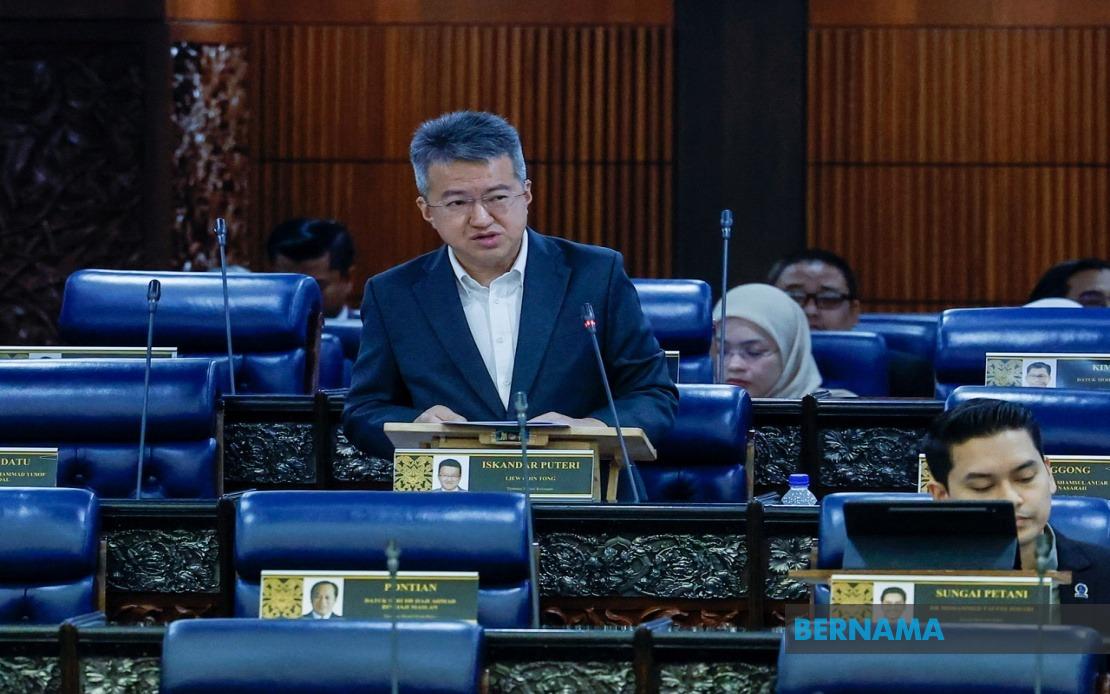
Malaysia's Employees Provident Fund has made tangible progress in helping members share their retirement wealth with family members through the i-Legasi programme, with Deputy Finance Minister Liew Chin Tong announcing that 63 applications have secured approval since the initiative's February launch. The approved transfers have moved a combined RM46.3 million to 86 beneficiaries across the country, demonstrating growing uptake of the wealth-transfer mechanism designed to support immediate family members during times of need.
The i-Legasi scheme, which became operational on February 1 this year, addresses a practical gap in Malaysia's retirement landscape by enabling EPF members aged 55 and above to redistribute a portion of their excess retirement savings to their immediate family's provident fund accounts. Eligibility hinges on members having accumulated retirement savings that exceed the Adequate Savings benchmark threshold of RM650,000, a safeguard intended to protect retirees' own financial security while allowing voluntary sharing of surplus balances. This measured approach reflects policymakers' recognition that family financial emergencies—whether for education, healthcare, or business needs—sometimes conflict with rigid savings preservation rules.
Liew's parliamentary statement, delivered during the July 6 question-and-answer session, came in response to concerns raised by Port Dickson MP Datuk Seri Aminuddin Harun about ensuring Malaysians maintain adequate retirement income as the nation faces dual pressures of rising living costs and demographic ageing. By 2030, Malaysia will officially transition into an aged society, a demographic milestone that raises urgent questions about pension adequacy and intergenerational financial support structures. The government's emphasis on both the i-Legasi programme and broader savings targets reflects acknowledgment that retirement security cannot rest on EPF contributions alone in an era of extended lifespans and volatile economic conditions.
Underscoring the broader retirement adequacy challenge, Liew revealed that as of May 31, only 3.04 million of Malaysia's 7.94 million active EPF members aged 18 to 60 had achieved the Basic Savings target for their respective age groups. This represents just 38.3 per cent of the economically active membership, though the figure reflects genuine improvement from the 35 per cent rate—representing 2.71 million members—recorded in the previous year. The Basic Savings benchmark increases with age, reaching RM390,000 by age 60, establishing a floor below which members should not fall to ensure minimal post-retirement income security. That only slightly more than one-third of working-age members meet this threshold illustrates the widespread savings shortfall affecting Malaysian workers across income levels.
The year-on-year improvement in Basic Savings achievement, rising from 35 to 38.3 per cent, suggests that recent policy interventions and increased awareness campaigns are gaining traction. However, the persistence of near two-thirds of members falling below the target reveals structural challenges in Malaysia's savings culture, ranging from wage stagnation and precarious employment to competing financial obligations such as housing debt and child education expenses. The gap between aspirational retirement targets and actual member balances will likely widen further as inflation erodes both current earnings and the real purchasing power of accumulated savings.
The government and EPF have signalled their intention to deepen collaboration on multi-faceted retirement security initiatives beyond i-Legasi alone. This encompasses strengthening contribution incentives—potentially through tax relief schemes or matching mechanisms—and expanding social protection frameworks that complement EPF reserves. Such holistic approaches acknowledge that provident fund balances represent only one pillar of retirement income, which ideally should be supplemented by government pensions, voluntary private insurance, investment income, and informal family support networks. Malaysia's experience mirrors patterns across Southeast Asia, where rapid urbanisation and weakening extended family structures mean retirees can no longer rely on traditional arrangements.
The i-Legasi scheme's emphasis on intrafamilial wealth transfer also reflects evolving attitudes toward retirement planning in Malaysian society. Rather than treating EPF accounts as purely individual retirement vehicles locked until age 55, the initiative recognises that optimal lifetime financial management sometimes requires strategic redistribution of surplus savings to younger family members during critical life stages. A parent might transfer accumulated savings to a child's EPF account to accelerate the child's retirement readiness, creating a multiplier effect across the household over decades. By allowing 63 such transfers in just five months, the scheme indicates genuine appetite among older workers to support their families' long-term security.
The RM650,000 Adequate Savings threshold itself merits scrutiny in Malaysia's current economic context. A retiree with RM650,000 in total EPF savings, drawing an annuity through EPF LIFE or other vehicles, faces a precarious financial situation given current inflation rates and the extended lifespans Malaysians increasingly experience. Applying standard retirement income replacement rates of 70 per cent of final salary, many workers will discover that even achieving the Adequate Savings benchmark leaves them significantly short of desired retirement living standards. This reality underscores why members with modest savings find it difficult to maintain both their own security and their traditional family support roles.
Looking ahead, Malaysia faces tough choices about how to improve retirement adequacy without imposing unsustainable contribution burdens on employers and workers already stretched by rising housing and healthcare costs. The i-Legasi scheme, while symbolically important and genuinely helpful in individual cases, addresses a symptom rather than the root cause of inadequate retirement savings. Truly resolving the challenge will likely require sustained wage growth, productivity improvements, and potentially recalibration of retirement age expectations as life expectancy continues to extend. Regional policymakers across Southeast Asia watch Malaysia's retirement security initiatives closely, seeking models that can be adapted to their own ageing societies and tight fiscal environments.

