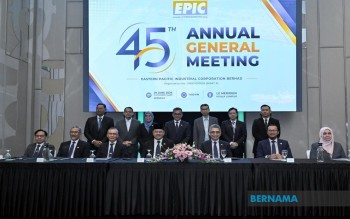
Eastern Pacific Industrial Corp Bhd (EPIC) has unveiled an ambitious five-year strategic blueprint aimed at nearly doubling its annual revenue to RM700 million while simultaneously building net asset value to RM1 billion by the end of this decade. The roadmap, detailed in EPIC's Strategic Business Plan 2025-2030, represents a significant escalation from the company's current financial position and signals management's confidence in the integrated oil and gas solutions provider's capacity to capture emerging opportunities across multiple business verticals in an evolving energy landscape.
The company's chief executive officer Dr Ts Muhtar Suhaili framed these targets as achievable based on recent operational momentum and an expanding contract portfolio, particularly within the oil and gas sector where EPIC maintains its core competencies. Current financial performance lends credibility to these projections. EPIC posted net profit of RM20.6 million for the year ended December 31, 2025—a robust 24 percent increase from RM16.6 million in the prior year—while revenue climbed to RM411.9 million from RM403.8 million, extending a consistent growth trajectory that commenced in 2022.
This upward financial trend reflects several converging factors that management believes will sustain momentum into the medium term. The acquisition of Rahar Niaga Sdn Bhd meaningfully bolstered the group's capabilities, whilst newly secured maintenance and commissioning contracts with Petronas—particularly the Pan Malaysia Maintenance, Commissioning and Modification and Hook-Up and Commissioning arrangement—have diversified revenue streams. Simultaneously, increased offshore rig arrivals and rising cargo volumes through EPIC's port operations have buoyed financial performance, demonstrating the benefits of the company's diversified operating model.
Looking immediately ahead, leadership anticipates 2026 will deliver another record-setting year for the organisation. The company's board has approved contract values ranging between RM1.3 billion and RM1.5 billion specifically within the oil and gas business segment, providing a substantial pipeline for forthcoming revenue recognition. However, actual earnings realisation remains contingent upon the issuance of specific work orders and purchase orders by clients, introducing an element of variability that must be carefully managed operationally. This contractual foundation nevertheless demonstrates genuine commercial traction with Malaysia's energy sector anchor tenant, Petronas.
Petronas relationships have proven particularly fruitful for EPIC's geographic expansion within Malaysia. Beyond the company's traditional stronghold in Terengganu, EPIC has successfully penetrated Petronas operations in the southern Peninsular region, including the significant petrochemical and refining complexes at Pengerang and Melaka. More recently, the company has established a presence in Sabah through a collaboration agreement with Begas Energy Sdn Bhd, formalising provision of project management services for terminal turnaround, maintenance and modification contracts. This eastward expansion into Sabah and Sarawak positions EPIC to participate in regional oil and gas infrastructure development, an increasingly strategic consideration as energy companies diversify production beyond Peninsular Malaysia's mature fields.
Renewable energy represents a critical component of EPIC's diversification strategy as the company seeks to hedge against potential long-term headwinds in conventional hydrocarbon sectors. The company is actively bidding for a hybrid hydro-solar project at Kenyir, competing alongside parent company Terengganu Inc, reflecting the group's commitment to participating in Malaysia's renewable energy transition. Such ventures, whilst inherently more competitive and subject to regulatory approval, offer exposure to growth markets and align EPIC's strategic positioning with Malaysia's broader decarbonisation commitments and renewable energy targets outlined in the National Energy Transition Roadmap.
Internationalisation constitutes another pillar supporting the 2030 growth agenda. The company's board has formally mandated management to pursue expansion opportunities across neighbouring Southeast Asian markets, capitalising on EPIC's proven technical capabilities in oil and gas services to markets potentially underserved by global tier-one contractors. Such expansion would diversify geographic revenue concentration and reduce dependency on Malaysian energy sector dynamics alone. Simultaneously, management is cautiously monitoring West Asian markets, though geopolitical uncertainties—encompassing regional tensions and policy volatility—currently constrain aggressive market entry strategies, suggesting a measured approach to international growth.
The strategic business plan's credibility ultimately depends upon EPIC's execution capabilities and the external operating environment. Whilst the company's track record of consistent earnings growth and successful contract acquisition demonstrates operational competence, achieving the projected RM700 million revenue target by 2030 requires sustained contract wins at scale, successful international market penetration, and meaningful contributions from renewable energy investments that remain competitive and subject to government allocation processes. The RM1 billion NAV target similarly depends upon maintaining profitability margins and effective capital deployment.
For Malaysian investors and regional stakeholders, EPIC's ambitions reflect broader dynamics reshaping the Southeast Asian energy sector. As traditional oil and gas provinces mature, integrated service providers capable of supporting complex maintenance and modification operations whilst simultaneously building renewable energy capabilities occupy strategic positions. EPIC's diversification across port management, offshore services, and clean energy investments mirrors sector-wide adaptation to energy transition imperatives. The company's expanding geographic footprint beyond Terengganu into Sabah, Sarawak, and potentially neighbouring ASEAN markets suggests positioning for next-generation infrastructure development across the region's energy economy.

