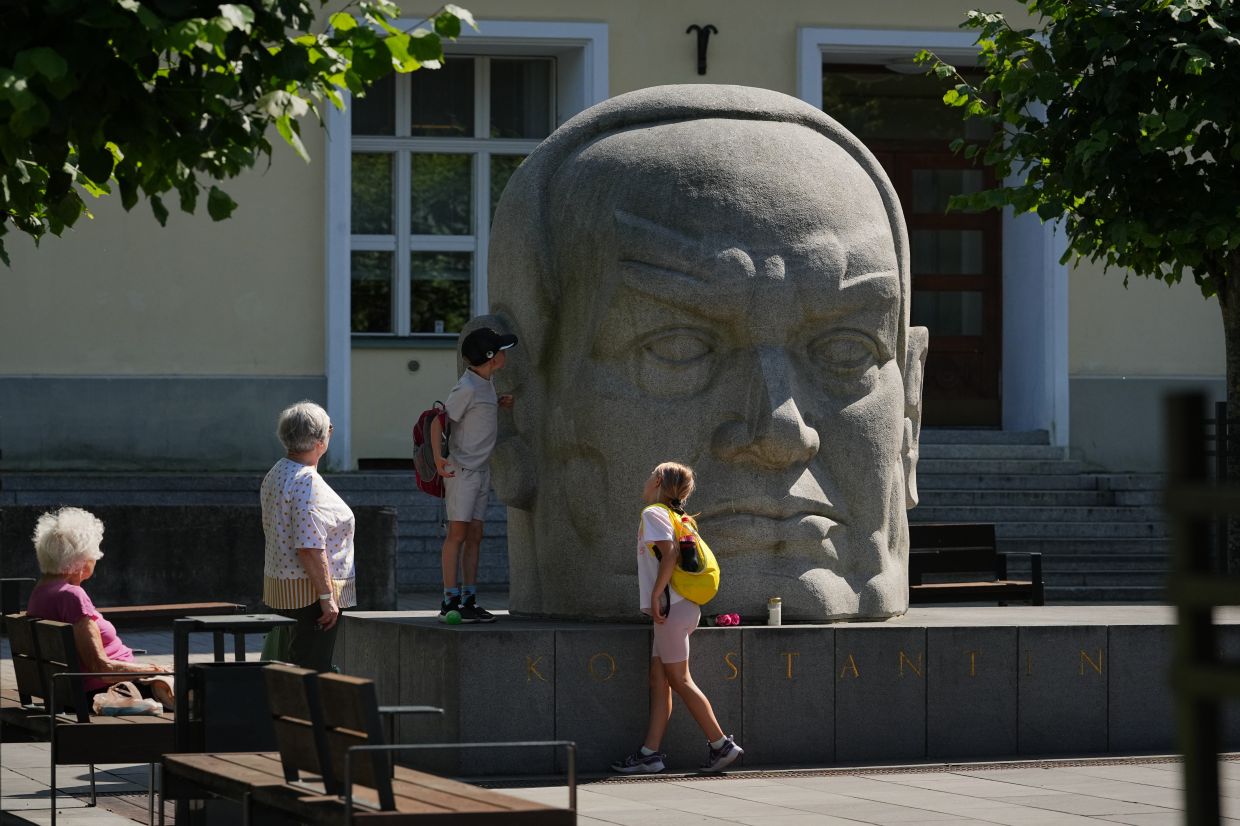
Estonia is undertaking an ambitious cultural reckoning, commissioning students and researchers to systematically inventory and preserve Soviet-era artworks scattered across the Baltic nation—from rural tavern etchings to sprawling municipal murals. This comprehensive mapping project, coordinated by Estonia's Board of Heritage in partnership with the Estonian Academy of Arts and Tallinn University, represents a deliberate attempt to document a complicated chapter of national identity rather than consign it entirely to historical oblivion. The initiative reflects a broader reassessment among younger Estonians born after independence in 1991, who view communist-era creative output not merely as propaganda but as legitimate cultural artefacts shaped by their own ancestors.
The symbolic centrepiece of this endeavour is an unassuming 1963 etching by graphic artist Olev Soans depicting a glassblower, discovered hanging in a modest rural bar. This modest work encapsulates the project's central tension: how a nation brutally occupied for 51 years can acknowledge the professional accomplishments of its citizens during that dark period without appearing to legitimise the regime that controlled them. Across Estonia's landscape, hundreds of comparable artworks endure—including murals, mosaics, frescoes, and stained glass installations—each bearing witness to an era many Estonians understandably wish to forget. Yet many were created by native Estonian artists who had no choice but to work within the constraints imposed by Soviet authority, raising profound questions about agency, complicity, and artistic merit.
Siiri-Liis Huttunen, one of the project's principal coordinators, articulates this nuanced position with striking clarity. Life did not pause during occupation; Estonian artists continued their professional development, exhibited their work, and contributed to their nation's collective cultural memory, even as the Soviet system circumscribed their creative freedom. This recognition does not whitewash Soviet domination but rather acknowledges that artistic creation persisted alongside suffering, resistance, and compromised choices. The project's fundamental premise is that understanding this complex duality is essential to forging a mature national narrative—one that neither erases inconvenient history nor permits it to overshadow contemporary identity.
Yet Estonia's approach to Soviet symbolism remains decidedly contested and, in many respects, uncompromising. Since Russia's devastating 2022 invasion of Ukraine, Tallinn has emerged as Kyiv's steadfast ally, intensely aware that its own 294-kilometre border with Russia places it perpetually in Moscow's strategic sightline. The country faces relentless probes—drone incursions into Estonian airspace, Russian fighter jets testing NATO's response capabilities, persistent military threats that lend urgency to historical reconciliation efforts. Alongside Latvia and Lithuania, Estonia has systematically dismantled visible symbols of Soviet occupation, removing military monuments and Red Army graves from public spaces. This aggressive decommunisation reflects not merely historical grievance but contemporary security anxiety; the state actively distinguishes between cultural heritage worthy of preservation and propagandistic glorification that risks rehabilitating the occupier's image.
The inventory project itself excludes military artworks containing Soviet-era political iconography, a deliberate boundary that distinguishes between civilian artistic expression and regime propaganda. Reesi Sild, Cultural Heritage adviser at Estonia's Ministry of Culture, confirms that numerous such works have already been removed from buildings or obscured to ensure "the occupying regime is not glorified in today's public space." A government working group has recommended removal or substantial alteration of approximately 240 "ideologically charged" monuments deemed incompatible with post-Soviet Estonia's democratic values. This distinction, however precise in principle, proves increasingly murky in practice, as students conducting fieldwork across abandoned factories, collective farms, and shuttered schools discover.
The challenge of distinguishing genuine artistic merit from ideological messaging proves surprisingly complex. Socialist realist art, that predominant Soviet aesthetic, embedded official ideology into seemingly innocent industrial imagery—workers, factories, five-year plans, labour as transcendent national purpose. Maria Leemet, a doctoral student coordinating on-site research, observes that these ubiquitous motifs themselves represent ideology materialised, making aesthetic assessment inseparable from political interpretation. The very subject matter carries conceptual baggage that no amount of artistic skill can entirely neutralise. Yet trained observers and younger researchers increasingly notice subtle resistances embedded within officially acceptable compositions—artistic choices that managed to elude Soviet censors, subversive details hidden in plain sight. Martin Danilas, a 23-year-old Tallinn University student examining Soans' glassblower, speculates whether the figure's headwear deliberately echoes traditional Estonian folk costume, an act of cultural assertion masked within ideologically sanctioned form.
The project's practical dimensions prove equally daunting. Many Soviet-era artworks have vanished entirely as the buildings housing them succumbed to demolition, requiring researchers to reconstruct partial historical records through archival investigation, newspaper research, and oral testimony from elderly residents who remember lost installations. This archaeological dimension transforms the inventory into something more than a simple cataloguing exercise; it becomes a race against time to preserve memory of cultural artefacts already erased from the physical landscape. Hilkka Hiiop, rector of the Academy of Arts, explains that the comprehensive data compilation will eventually enable Estonia's heritage authorities to make informed decisions about which remaining pieces merit formal preservation and which require urgent intervention to prevent further deterioration.
The broader implication of Estonia's approach carries significance extending well beyond the Baltic state itself. As post-communist nations across Central and Eastern Europe grapple with comparable Soviet legacies, Estonia's methodology—simultaneously acknowledging artistic contributions while refusing to rehabilitate imperial domination—offers a potential template for mature historical reckoning. The project implicitly rejects two equally reductive responses: wholesale erasure of an entire historical period, or uncritical acceptance of all communist-era cultural production as equally valuable. Instead, it proposes granular evaluation, recognising that people are "not at fault for being born during Soviet time," in Huttunen's formulation, while maintaining firm boundaries against propagandistic glorification of occupation itself. For Malaysia and other Southeast Asian nations with complex colonial and post-colonial histories, Estonia's nuanced preservation approach might suggest possibilities for acknowledging difficult heritage without legitimising the structures that produced it.

