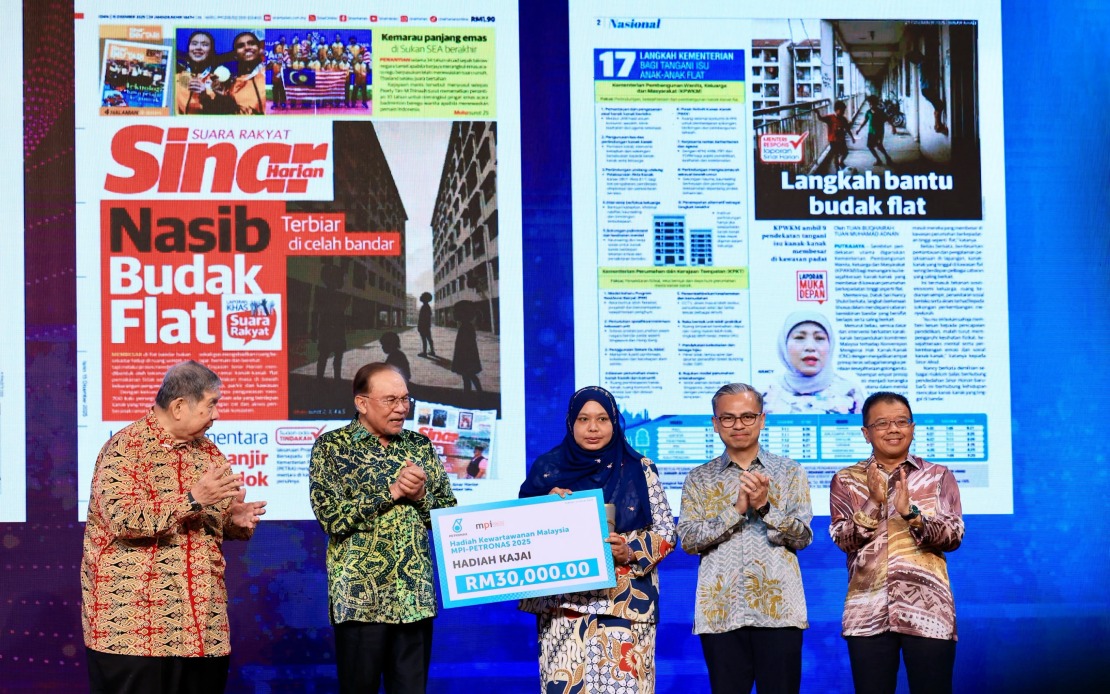
Malaysia's Communications Minister Datuk Seri Fahmi Fadzil has underscored the fundamental importance of ethical and independent journalism to the nation's democratic health, highlighting how responsible media serves as a cornerstone for informed citizenship and institutional accountability. Speaking at a major industry gathering, Fahmi emphasised that the integrity of news reporting and the commitment of media practitioners to factual accuracy remain indispensable in safeguarding democratic values and public trust.
The minister's remarks come at a time when newsrooms across Malaysia and the wider region are grappling with unprecedented challenges to editorial autonomy and credibility. The proliferation of digital platforms has fundamentally altered the information landscape, creating an environment where misinformation spreads rapidly and false narratives can undermine public discourse before fact-checkers can intervene. Fahmi's call for renewed dedication to journalistic standards reflects broader concerns within Southeast Asian democracies about the destabilising effects of disinformation campaigns on electoral processes, public health initiatives, and social cohesion.
Fahmi made these comments while accompanying Prime Minister Datuk Seri Anwar Ibrahim at the Malaysian Journalists' Night 2026, an event that drew approximately 1,000 attendees representing the full spectrum of Malaysia's media ecosystem. The gathering served as a platform for recognising outstanding contributions to the profession through the presentation of the MPI-PETRONAS Malaysian Journalism Awards 2025, which honours reporters, editors, and news organisations that have demonstrated excellence in their coverage and adherence to professional standards. The presence of senior government officials at the event signals official acknowledgment of media's role in national development.
The annual Malaysian Journalists' Night, organised by the Malaysian Press Institute, has evolved into a flagship event for the local media industry. It brings together not only journalists and editors but also government representatives, corporate leaders, and executives from educational institutions, creating an ecosystem where different stakeholders can engage in dialogue about media's future. This convening function is particularly valuable in a region where press-government relations can sometimes be tense, as it provides neutral ground for discussion and mutual understanding.
The challenge of distinguishing reliable reporting from deliberately crafted falsehoods has become more acute in Malaysia's digital-first media consumption patterns. With social media platforms serving as primary news sources for significant portions of the population, particularly younger demographics, the responsibility of professional newsrooms to maintain editorial standards has never been more pronounced. Fahmi's emphasis on integrity and truth-telling addresses this specific vulnerability, suggesting that government recognises how corrosive misinformation can be to institutional legitimacy and public confidence.
For Malaysian journalists working in an increasingly complex information environment, the minister's endorsement of independence carries particular significance. News organisations operating in Southeast Asia frequently navigate competing pressures from commercial interests, political actors, and audience expectations. The Communications Ministry's public articulation of support for editorial independence, therefore, reinforces protections for newsrooms seeking to pursue investigative reporting or coverage that might displease powerful interests. This backing is especially important for smaller outlets that may lack the resources or institutional weight of major media conglomerates.
The recognition of journalistic excellence through the MPI-PETRONAS awards ceremony serves a dual function in Malaysia's media landscape. Awards programmes simultaneously celebrate professional achievement and establish benchmarks for quality that elevate industry standards overall. By highlighting exemplary work in areas such as investigative journalism, feature writing, and multimedia reporting, the awards programme encourages newsrooms to invest in rigorous reporting practices and encourages individual journalists to pursue stories of public importance rather than simply chasing clicks or sensationalism.
The participation of corporate organisations in the Malaysian Journalists' Night demonstrates that business sectors increasingly understand their stake in a healthy media environment. Companies operating in Malaysia benefit from transparent governance, predictable regulatory frameworks, and informed public discourse—all dependent on functional journalism that investigates wrongdoing and holds institutions accountable. When private sector leaders engage with media practitioners at industry events, they reinforce the message that independent journalism serves broader economic and social interests beyond immediate news cycles.
Fahmi's framing of media independence as essential to democracy aligns Malaysia with international norms regarding press freedom, though implementation of these principles can sometimes prove uneven. The minister's statement suggests a commitment to defending journalistic prerogatives, even as Malaysian media has occasionally faced pressure from various quarters. For regional observers, Fahmi's remarks contribute to an ongoing regional conversation about how Southeast Asian democracies can balance security concerns, social stability, and press freedom in the digital age.
The scale of the Malaysian Journalists' Night—attracting roughly 1,000 guests and featuring participation from Prime Minister Anwar Ibrahim—underscores the political importance attached to media relations in contemporary Malaysia. This level of official attention suggests that government understands media's power to shape narratives around government performance, policy outcomes, and national priorities. The forum itself becomes a venue where government messaging reaches influential media figures directly, though the presence of award ceremonies and industry recognition also ensures the event maintains legitimacy as a professional gathering rather than a purely governmental occasion.
Moving forward, the challenge for Malaysian media will involve translating the principles Fahmi articulated into sustainable business models and organisational practices. Many newsrooms globally struggle with financial pressures that can compromise editorial independence, as advertising revenue declines and subscription models prove insufficient. The Communications Ministry's rhetorical support for ethical journalism must ideally translate into concrete measures—whether through regulatory frameworks that protect editorial autonomy, support for digital transition funding, or public broadcasting investments—that enable newsrooms to maintain standards without sacrificing economic viability.
For media practitioners throughout Southeast Asia, Fahmi's remarks provide both encouragement and a pointed reminder that democracy depends on their willingness to prioritise public interest over commercial or political pressures. The Malaysian experience, with its mix of competitive media outlets and regulatory constraints, offers lessons for other regional democracies attempting to navigate similar challenges. As misinformation continues to evolve and new technologies reshape information flows, the foundational principles Fahmi emphasised—ethical conduct, independence, and responsibility—will remain essential benchmarks for distinguishing professional journalism from the proliferating noise of unverified information.

