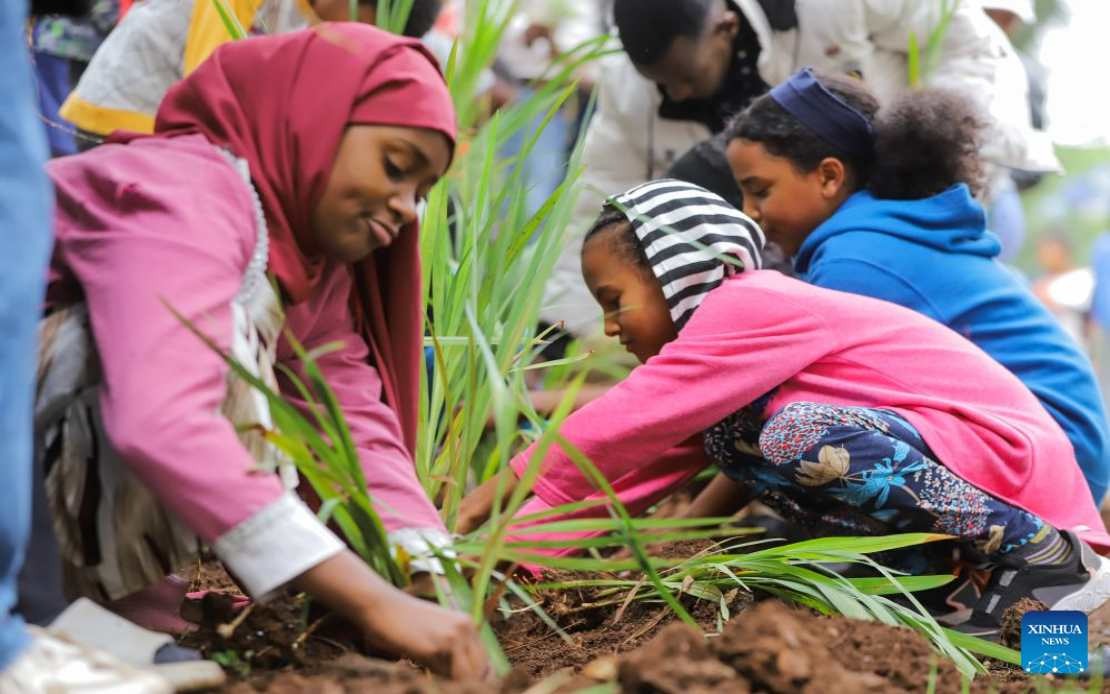
Ethiopia has undertaken an ambitious environmental initiative that demonstrates how large-scale grassroots mobilisation can address ecological degradation at the national level. On Monday, millions of Ethiopians and international residents participated in a coordinated tree-planting exercise designed to establish 800 million seedlings across the country in a single day. This unprecedented undertaking reflects the East African nation's commitment to reversing decades of deforestation and creating a more sustainable future for its population.
The campaign operates under the framework of the Green Legacy Initiative, a flagship environmental programme established by Prime Minister Abiy Ahmed in 2019. This year's phase of the initiative encompasses a more ambitious target: planting over 8 billion seedlings during the rainy season. The cumulative impact of these efforts represents a transformative approach to environmental restoration, positioning Ethiopia among nations taking decisive action against climate change and habitat loss. As developing nations across Africa and Asia grapple with similar environmental challenges, Ethiopia's experience offers instructive lessons in mobilising public participation for large-scale conservation projects.
The participating population cut across all demographic and professional groups. Thirteen-year-old Edilawit Legesse, who planted her seedlings in the Alembank neighbourhood on Addis Ababa's periphery, exemplified the multigenerational commitment to the initiative. Legesse noted that this represented her third consecutive year of participation, indicating how the programme has embedded itself in the civic consciousness of Ethiopian households. Her statement reflected the personal investment ordinary citizens bring to the endeavour, transforming a government policy into a community movement that transcends official mobilisation.
Healthcare workers similarly demonstrated professional class participation. Hewan Legesse, a nurse from a local hospital, coordinated planting efforts with thirty-five colleagues near Entoto Mountain in the capital, setting an individual goal of ten trees for the day. Such sectoral participation suggests that the initiative has successfully permeated institutional structures across Ethiopian society, with workplaces and professional organisations mobilising their personnel. This model of institutional coordination proves particularly valuable for nations seeking to scale environmental programmes beyond symbolic gestures to meaningful ecological impact.
The Green Legacy Initiative addresses multiple environmental and developmental objectives simultaneously. By expanding forest cover across Ethiopia's degraded landscapes, the programme combats deforestation, strengthens climate resilience, and preserves biodiversity. These interconnected goals reflect contemporary understanding of environmental restoration as integral to broader sustainable development. Ethiopia's emphasis on ecological renewal aligns with international climate commitments while targeting the country's immediate economic and environmental needs. The restoration of forest ecosystems provides long-term benefits including improved water retention, soil stability, and carbon sequestration capacity.
Prime Minister Abiy Ahmed has framed the annual one-day planting event as a unifying national exercise that transcends social divisions. His characterisation of the campaign as a moment when Ethiopians from all walks of life collaborate to establish a lasting legacy emphasises the initiative's symbolic as well as practical dimensions. Such collective action generates social cohesion alongside environmental restoration, creating shared ownership of climate outcomes. In a region where environmental degradation often exacerbates resource competition and social tension, this approach to inclusive environmental stewardship carries implications beyond forestry.
The numerical scale of Ethiopia's ambitions warrants comparative analysis. The target of planting 50 billion trees since 2019 represents one of the world's most extensive reforestation programmes. To contextualise this effort for regional audiences, such programmes typically generate employment for rural populations, provide ecosystem services, and contribute to climate adaptation. Southeast Asian nations facing similar deforestation challenges might examine Ethiopia's institutional framework and mobilisation strategies, adapting lessons to local contexts. However, the long-term success of such initiatives depends heavily on post-planting survival rates and ongoing land management, factors that require sustained investment beyond the symbolic single-day event.
The engagement of international residents in the Ethiopian campaign suggests recognition of environmental challenges as transcending national boundaries. Globalised communities increasingly recognise their stake in ecosystem restoration across borders, particularly regarding climate mitigation. This inclusive approach potentially strengthens diplomatic relationships and demonstrates Ethiopia's position as a regional environmental leader. For multinational corporations and diaspora communities operating in Ethiopia, participation in such initiatives aligns operations with host nation development priorities while generating positive reputational outcomes.
From a developmental perspective, Ethiopia's green economy aspirations reflect acknowledgment that traditional resource-intensive growth models prove unsustainable. The government's articulation of building a green, lower-middle-income economy demonstrates that environmental stewardship need not compromise economic advancement. This positioning carries significance for other African and Asian nations navigating the tension between development imperatives and ecological limits. Successful models of inclusive green growth potentially reshape conventional development debates by demonstrating compatibility between poverty reduction, economic expansion, and environmental restoration.
The momentum gained by the Green Legacy Initiative over eight years of consistent implementation reveals important patterns about sustainability of large-scale environmental programmes. Government commitment, public participation, and clear measurable targets combine to maintain focus and generate accountability. This contrasts with seasonal or episodic environmental campaigns that generate initial enthusiasm but fail to embed ecological consciousness into routine institutional and individual practice. Ethiopia's approach suggests that sustained environmental transformation requires institutionalisation through annual rituals that reinforce environmental values.
Challenges inherent in such massive undertakings merit consideration alongside achievements. Seedling survival rates in post-conflict regions, variable rainfall patterns, and land tenure complexities affect programme outcomes. Furthermore, ensuring equitable distribution of ecosystem benefits across Ethiopia's diverse regions and populations requires sophisticated management beyond the planting phase. The initiative's success ultimately depends on comprehensive landscape management that extends well beyond a single planting day.
For regional observers in Southeast Asia and beyond, Ethiopia's Green Legacy Initiative provides a tested model for mobilising populations around environmental restoration. The programme demonstrates that with sustained political commitment and institutional coordination, nations can achieve large-scale ecological transformation whilst building social cohesion. As climate pressures intensify across developing regions, such inclusive, sustained approaches to environmental restoration merit adaptation and localisation. Ethiopia's experience suggests that environmental restoration functions most effectively when framed as collective national endeavour rather than technical or bureaucratic exercise.

