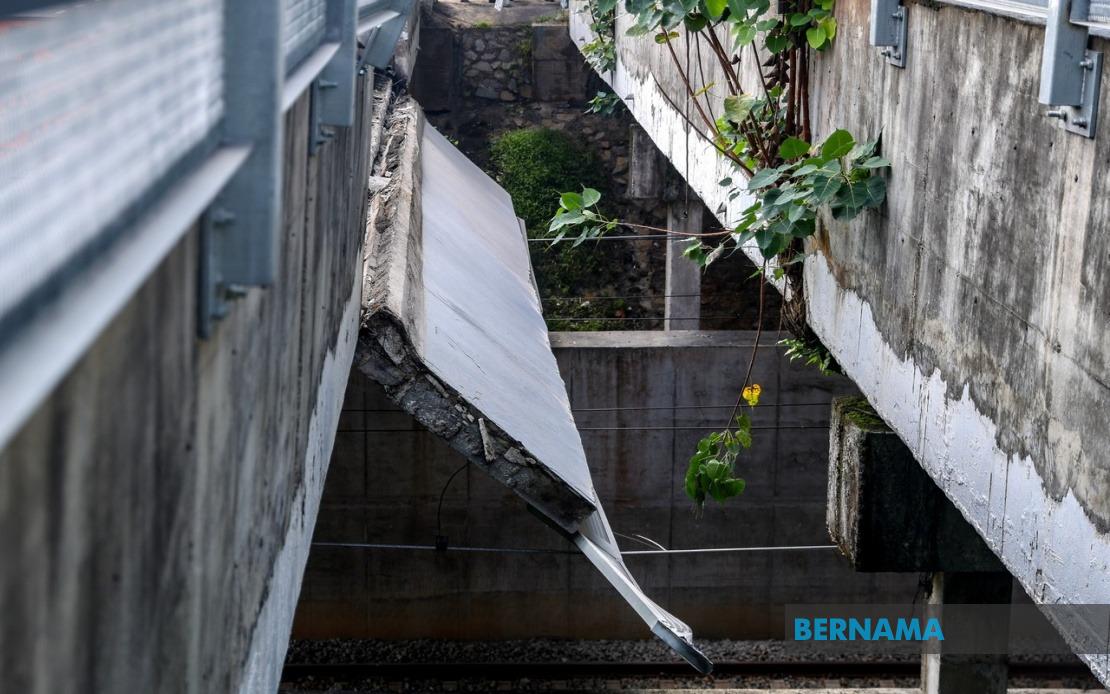
A lorry collision near the Kulai-Kempas Baru rail corridor in Johor has left commuters stranded and forced Keretapi Tanah Melayu Berhad (KTMB) to implement emergency transport arrangements to keep passengers moving. The incident, which involved a heavy vehicle striking infrastructure adjacent to the electrified track, has triggered one of the more significant recent disruptions to regional train services, affecting three separate Electric Train Service (ETS) routes that operate between Johor Bahru and destinations across Peninsular Malaysia.
In response to the crisis, KTMB mobilised shuttle buses from both JB Sentral and Kempas Baru stations to ferry affected passengers to Kulai Station, where they could reconnect with operational ETS services to complete their journeys. The three services impacted by the early morning disruption were the ETS 9442 running between JB Sentral and Padang Besar, the ETS 9524 connecting JB Sentral with KL Sentral, and the ETS 9326 linking JB Sentral to Butterworth. These routes collectively carry a substantial volume of commuter and long-distance passenger traffic through one of Malaysia's busiest transport corridors.
For passengers unwilling to proceed with alternative transport arrangements, KTMB announced a full refund policy whilst maintaining staff presence at affected stations to provide guidance and assistance. This customer-centric approach reflects the operator's awareness of the inconvenience caused to travellers who had made plans dependent on reliable rail connectivity. The decision to offer multiple options rather than simply suspending services demonstrates a pragmatic approach to managing the operational crisis whilst maintaining service continuity where possible.
The root cause of the service interruption lay in the structural damage inflicted on the overhead line (OHL) system following the lorry impact. A concrete parapet structure, detached from its moorings in the collision, had made contact with both tracks' overhead electrical infrastructure, necessitating immediate power isolation for safety reasons. This type of damage requires meticulous repair protocols, as the overhead line system represents the literal lifeline powering all ETS operations along the affected corridor.
Restoration efforts faced initial logistical constraints, as KTMB revealed that securing the 120-tonne specialist crane essential for removing the fallen concrete structure had not been completed as of the early morning announcement. The lorry company involved in the incident, Transmare-Chemie (M) Sdn Bhd, communicated at 3 am that crane availability remained unconfirmed, pushing expected removal operations to around 10 am. This delay underscored the complexity of coordinating multi-agency emergency response in rail infrastructure incidents, particularly when heavy lifting equipment availability becomes a bottleneck.
The broader Shuttle Selatan service network experienced partial disruption as well, with the dedicated regional shuttle routes between Pasir Gudang and JB Sentral continuing normal operations, whilst the Kulai-Kempas Baru shuttle service was entirely suspended pending track clearance. This selective suspension strategy preserved some regional connectivity while concentrating resources on managing the primary incident response. The operational complexity reflected KTMB's attempt to maintain service on undamaged portions of the network even whilst managing significant infrastructure restoration demands.
Technical considerations extended well beyond simply removing the obstructing concrete structure. KTMB made clear that track reopening would depend not only on debris removal but also on comprehensive technical inspections and formal safety certification from appropriate authorities. This multi-layered approval process, whilst administratively burdensome, reflects essential safety protocols governing electrified rail infrastructure where equipment failures or incomplete repairs could pose serious risks to passengers and operational staff.
The incident echoed similar concerns from the previous day, when another lorry carrying flammable liquid had skidded near the rail corridor, creating a power supply disruption that delayed both Shuttle Selatan and ETS services. The proximity of two significant incidents within consecutive days raised questions about the adequacy of safety barriers and warning systems along the route, suggesting that infrastructure vulnerability around the Kulai-Kempas stretch warranted closer examination by relevant authorities.
For Malaysian commuters reliant on the ETS network, these disruptions highlight the inherent vulnerabilities of rail infrastructure that runs adjacent to road corridors carrying heavy commercial traffic. The incident demonstrated how a single vehicular mishap can cascade into regional transportation gridlock, affecting hundreds or potentially thousands of travellers across multiple route combinations. This reality underscores the ongoing importance of investment in either physical separation between road and rail infrastructure or enhanced containment and warning systems.
Coordination between KTMB and external agencies proved critical to managing the response, with the operator committing to ongoing liaison with relevant parties throughout the restoration process. The absence of a predetermined reopening timeline, while frustrating for waiting passengers, reflected the operational reality that infrastructure repairs cannot be rushed without compromising safety protocols. Restoration work would proceed methodically, with final clearance depending on whether technical inspections revealed any secondary damage to the overhead line system or track structure itself.

