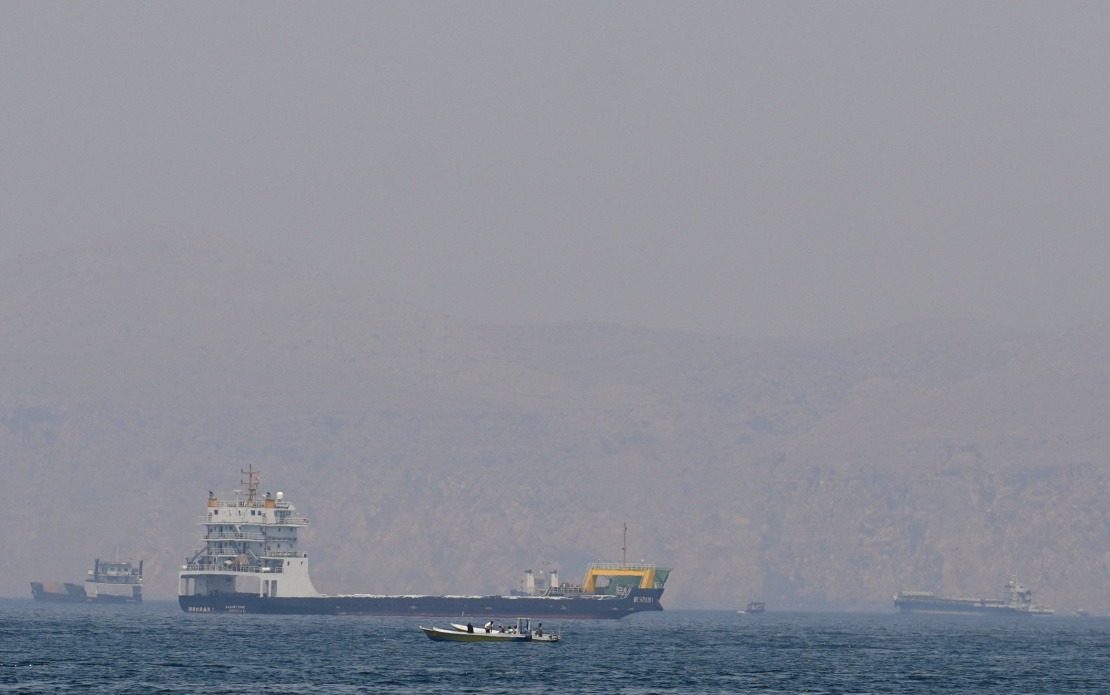
The European Union and the Gulf Cooperation Council have issued a forceful joint statement rejecting any attempt by any nation to assert control over the Strait of Hormuz, one of the world's most critical maritime chokepoints. Speaking after high-level talks in Brussels on July 13, the two blocs made clear that freedom of passage through the waterway—which handles roughly one-third of global maritime trade—is an inviolable right guaranteed under international law and cannot be subject to unilateral restrictions, permit requirements, or toll schemes imposed by any state.
EU foreign policy chief Kaja Kallas and Bahraini Foreign Minister Abdullatif bin Rashid Al-Zayani, speaking in his capacity as chair of the GCC Ministerial Council, co-chaired the High-Level Forum on Regional Security and Cooperation that produced the statement. Their joint declaration specifically invokes the UN Convention on the Law of the Sea as the binding legal framework governing maritime transit rights, emphasising that vessels flagged to any nation possess equal entitlement to passage and that no government may unilaterally suspend, obstruct, or conditionalise such passage.
The carefully worded statement serves as a veiled but unmistakable rebuke to Iran's increasingly assertive posture in the Persian Gulf. In recent months, Iranian forces and allied militias have launched multiple attacks on commercial shipping transiting the strait, targeting both vessels and infrastructure in what regional analysts characterise as a strategic effort to weaponise maritime commerce and extend Tehran's sphere of influence. The EU and GCC joint position condemns these operations in the strongest possible terms, categorising them as violations of international law and breach of UN Security Council Resolution 2817, whilst noting that such actions endanger the lives of civilian seafarers and international mariners irrespective of nationality.
For Malaysia and other Southeast Asian economies, the implications of instability in the Strait of Hormuz extend far beyond the Middle East. Although no direct Malaysian vessels may transit these waters, Malaysian shipping interests, energy importers, and trade-dependent enterprises face elevated costs and logistical disruption whenever tensions spike in the region. Approximately 30 per cent of seaborne oil passes through the strait, and supply shocks or insurance premium increases directly filter through to Asian economies heavily reliant on energy imports. Malaysia, as a significant importer of crude oil and liquefied natural gas, would face inflationary pressures if maritime tensions persist or escalate further.
The broader geopolitical context frames this statement against the backdrop of intensifying US-Iranian confrontation, with both powers conducting military operations and counter-operations that have progressively destabilised the region. Yet simultaneously, a Pakistan-brokered memorandum of understanding signed in June raised hopes that diplomatic channels might facilitate de-escalation and establish durable peace arrangements. The EU-GCC statement reflects this tension: whilst condemning Iranian actions in unambiguous language, both blocs explicitly call for restraint, dialogue, and diplomatic solutions as the means to resolve the underlying crisis.
This dual messaging—firm condemnation paired with an explicit appeal for negotiation—represents a carefully calibrated diplomatic posture. The EU, despite its traditional tension with Iran over nuclear proliferation and human rights, remains formally committed to the Joint Comprehensive Plan of Action and favours diplomatic engagement over military escalation. The GCC states, whilst hosting significant US military infrastructure and maintaining close security partnerships with Washington, similarly prefer crisis management through dialogue to avoid the economic and security devastation that a full-scale conflict would inflict across the Arabian Peninsula and beyond.
The statement's emphasis on collective vulnerability represents another significant dimension. By framing threats to any single state's security as threats to all parties dependent upon the strait's safety, the EU and GCC seek to mobilise a shared interest in maritime stability. This framing implicitly expands the circle of stakeholders beyond immediate regional powers to include global trading nations, energy importers across Africa, Asia, and Europe, and any economy whose supply chains traverse these waters. It reflects an understanding that the strait's security is fundamentally a global concern requiring coordinated international response.
For maritime commerce and insurance markets, the statement provides some measure of reassurance that leading international actors remain committed to upholding the legal frameworks that govern freedom of passage. Shipping companies and underwriters have grown increasingly anxious about escalating incidents and the prospect of expanded conflict zones. By reaffirming their commitment to freedom of navigation and pledging continued coordination to protect international shipping, the EU and GCC offer symbolic support for the principle that maritime commerce should not become a casualty of geopolitical tensions.
The mention of attacks on regional sovereign territories broadens the statement beyond maritime security concerns into a wider indictment of Iranian regional activities. This reference encompasses the ballistic and drone strikes Iran has launched against targets in Saudi Arabia, the UAE, and other states, framing these as violations of the same international legal principles that govern maritime passage. In doing so, the EU and GCC attempt to construct a comprehensive legal and normative framework within which Iran's broader pattern of regional behaviour is presented as systematic violation of accepted international law.
The practical implementation of the EU-GCC coordination commitment remains to be seen. Whilst rhetoric affirming freedom of navigation carries symbolic weight, translating such declarations into concrete measures—whether enhanced naval patrols, expanded maritime surveillance, escort services for vulnerable vessels, or economic sanctions against states or entities threatening shipping—requires sustained political will and military capability. Southeast Asian nations, whilst not party to this specific agreement, have substantial interest in observing whether the EU and GCC follow through with substantive protective measures or whether the statement remains primarily rhetorical.
The reference to seafarers of all nationalities and the expression of solidarity with affected mariners underscores the humanitarian dimension often overlooked in strategic discussions of maritime chokepoints. Every incident on the Strait of Hormuz places human lives at immediate risk, regardless of the geopolitical objectives at stake. This framing appeals to universal humanitarian principles and attempts to establish that maritime commerce and seafaring constitute shared human endeavours entitled to international protection.
Moving forward, the durability of this EU-GCC position depends substantially on whether circumstances in the Middle East stabilise or deteriorate further. Should Iranian attacks on shipping intensify or expand, both blocs face mounting pressure to move from diplomatic statements toward more active military intervention or support for regional powers seeking to restore security. Conversely, should diplomatic channels prove effective and the Pakistan-brokered memorandum yield tangible progress toward de-escalation, the joint statement may be remembered as marking a turning point toward renewed stability. For Malaysian policymakers and business interests, close monitoring of developments in the Strait of Hormuz remains essential given the acute economic implications of any further disruption to global energy and trade flows.

