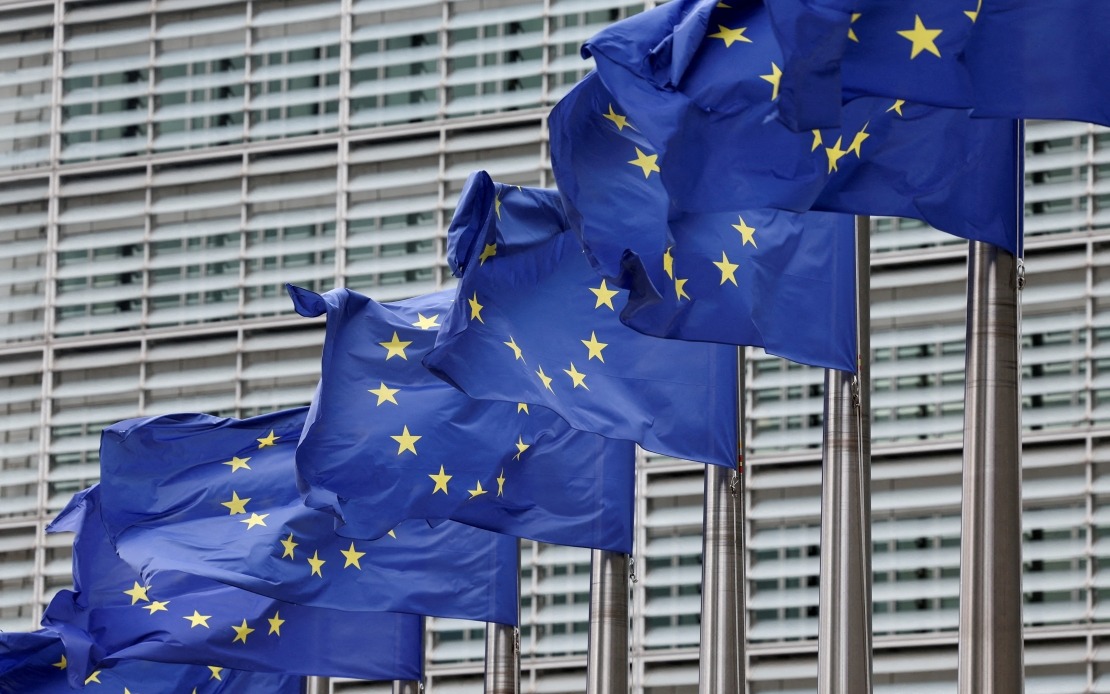
European Union foreign ministers are gathering in Brussels on Monday to examine escalating tensions in West Asia, with the Israeli settlements issue taking centre stage as three member states push for punitive trade measures while others counsel restraint. The meeting represents a critical moment for European foreign policy coherence, as the bloc attempts to formulate a unified response to Israel's ongoing expansion in the occupied West Bank—a practice that has drawn international criticism and threatens to deepen divisions within the EU's ranks.
The European Commission has developed a comprehensive menu of potential responses for the ministerial discussion, ranging from selective import restrictions to outright bans on goods originating from Israeli settlements. These options reflect mounting pressure from progressive EU members to translate rhetorical condemnation into concrete economic consequences. However, the proposals remain contingent on whether the 27 member states can overcome their philosophical and strategic differences to present a coordinated front—a prospect that appears increasingly uncertain given the hardening positions emerging from capitals across the continent.
Spain, Ireland, and Belgium have emerged as vocal advocates for stringent sanctions, arguing that the settlement expansion violates international law and perpetuates the occupation. Their position reflects growing activism among smaller EU nations that have sought to reposition Europe as a principled actor in the Israeli-Palestinian conflict. Conversely, Germany and several other states have resisted such measures, citing concerns about effectiveness, potential backlash, and the risk of alienating Israel at a time when regional stability remains fragile. This transatlantic divergence mirrors broader tensions within the EU regarding how forcefully to challenge policies by key allies in the Middle East.
The procedural complexity surrounding any potential sanctions further complicates matters. Should the EU classify trade restrictions as foreign policy sanctions—a designation many legal scholars favour—unanimous consent would be required from all member states, making Germany's opposition potentially fatal to the entire initiative. However, if the measures are characterised as commercial regulations rather than foreign policy tools, a qualified majority of 15 member states representing at least 65 percent of the EU's combined population would suffice. This distinction carries enormous weight, as it effectively determines whether Spain, Ireland, and Belgium can prevail without German support or whether they must either convert Berlin to their position or accept continued inaction.
For Malaysian observers and policymakers, the EU's internal struggle over Israeli settlements carries significant implications for broader questions about international governance and the credibility of multilateral institutions. Southeast Asia, as home to the world's largest Muslim population and numerous nations with substantial Palestinian diaspora communities, has consistently maintained that settlement expansion undermines peace efforts and violates international law. The EU's inability to impose unified consequences signals to regional partners that even wealthy, institutionally sophisticated blocs struggle to translate moral positions into enforceable action when powerful members object.
Beyond the settlement question, the Brussels gathering will address two additional geopolitical flashpoints commanding international attention. Further sanctions targeting Russian individuals, entities, and organisations appear likely given the EU's longstanding opposition to Moscow's invasion of Ukraine. Ministers are expected to endorse additional designations, though uncertainty persists regarding whether a comprehensive trade sanctions package will secure sufficient backing to take effect. This ongoing pressure on Russia demonstrates the EU's greater unity on Eastern European security issues compared to Middle Eastern matters, suggesting that geographic proximity and historical grievances shape European consensus more readily than ideological commitments to international law in distant regions.
Ukrainian Foreign Minister Andrii Sybiha has been invited to participate in informal consultations alongside the EU ministers, underscoring Kyiv's centrality to European foreign policy deliberations. His presence will likely reinforce messaging about the EU's steadfast commitment to Ukraine while allowing Ukrainian diplomats to ensure their security concerns remain at the forefront of discussions. The inclusion of the Ukrainian delegation also demonstrates how multilateral European forums increasingly serve as venues where non-member states with strategic importance can influence collective decision-making through informal channels and behind-the-scenes engagement.
The settlement debate touches fundamental questions about whether the EU possesses the political will to enforce its stated principles consistently. International law and EU declarations affirm that Israeli settlements are illegal under international humanitarian law, yet translating these positions into binding restrictions requires navigating member-state interests, commercial considerations, and bilateral relationships. The outcome in Brussels will signal whether the EU views settlements as a sufficiently grave violation to warrant economic consequences or whether it prefers diplomatic pressure supplemented by rhetorical criticism.
For Southeast Asian governments monitoring European foreign policy evolution, the stakes extend beyond the immediate Israeli-Palestinian context. EU decision-making patterns on international law enforcement establish precedents for how the bloc might approach other regional disputes, territorial claims, and human rights concerns. If the EU cannot achieve consensus on settlements despite rhetorical commitment to international law, smaller nations and emerging powers may question the bloc's reliability as a guarantor of rules-based international order, potentially accelerating shifts toward alternative partnerships and security arrangements outside Western-led frameworks.
The ministerial meeting also reflects the EU's broader strategic realignment, with members increasingly balancing traditional Atlantic relationships against emerging regional powers and security challenges. Questions about how aggressively to confront Israel relate to calculations about maintaining influence in the Middle East, managing US relations, and preserving internal cohesion. These competing imperatives create the paralysis evident in Berlin's resistance to sanctions, despite rhetorical acknowledgment that settlements complicate peace prospects and violate international norms.

