The European Union has pledged €2.1 million in humanitarian assistance to Colombia in the aftermath of a devastating earthquake that struck the nation earlier this week, with seismic activity registering 7.4 on the magnitude scale and claiming the lives of at least 181 people across the country. The rapid mobilisation of funds represents the bloc's commitment to supporting Colombia during the critical early phase of disaster response, when search and rescue operations remain ongoing and immediate humanitarian needs are most acute.
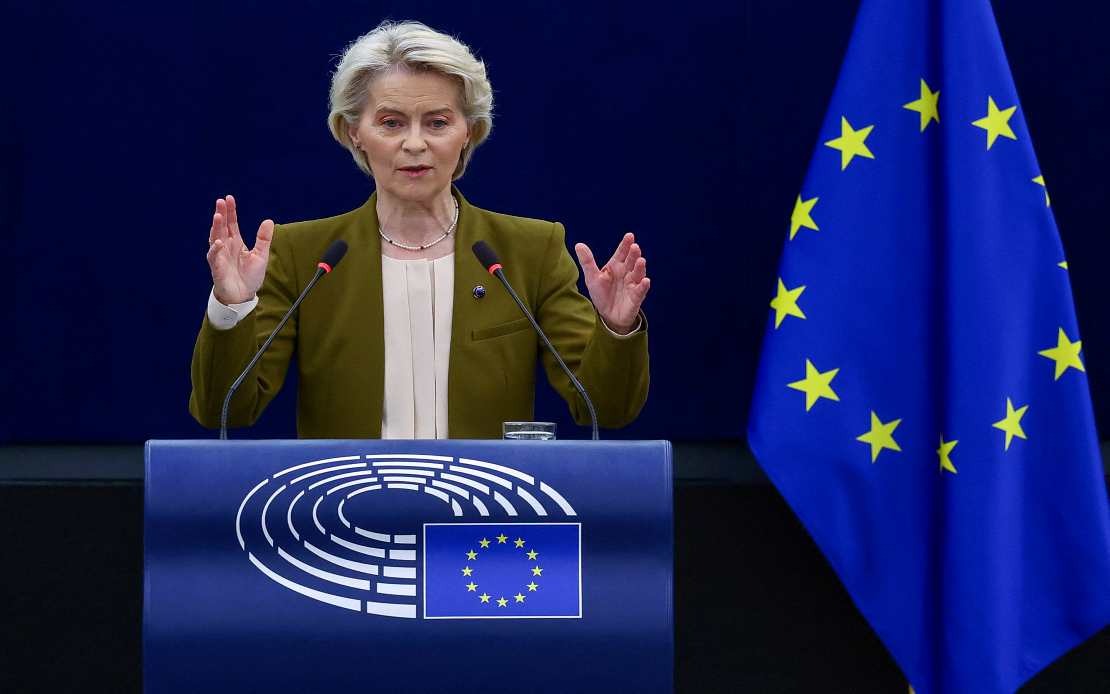
European Commission President Ursula von der Leyen announced the support on Wednesday, emphasising the EU's readiness to stand alongside Colombian authorities as emergency operations continue to unfold. The statement reflected a broader institutional commitment to providing tangible assistance during the crucial window when survivor extraction and emergency medical care often determine survival rates. Von der Leyen's comments underscored that the EU views such crises not merely as isolated events requiring charitable response, but as moments demanding coordinated international action.
The financial package has been strategically designed to address the most pressing humanitarian requirements identified by emergency officials on the ground. The funding will support the delivery of critical health services, clean water supplies, sanitation facilities, and hygiene materials to affected populations—sectors that typically face immediate collapse following major seismic events when infrastructure damage compounds public health risks. Additionally, resources have been allocated for emergency shelter provision, food distribution, protection services for vulnerable groups, and cash assistance programmes that enable affected families to meet urgent needs independently.
The German Red Cross, already positioned in the most severely impacted regions of Chocó and Valle del Cauca, received €100,000 from the European Commission on Tuesday to address immediate requirements facing approximately 2,500 families. This channelling of funds through established humanitarian organisations on the ground reflects best-practice disaster response methodology, ensuring that resources reach vulnerable populations swiftly through organisations with existing infrastructure and local knowledge. Chocó and Valle del Cauca, both among Colombia's regions with significant challenges in development indices, faced compounded vulnerability given pre-existing infrastructure limitations.
Beyond financial contributions, the EU has deployed its sophisticated satellite mapping capabilities to enhance coordination of emergency rescue and recovery operations. This technological support provides Colombian authorities and humanitarian organisations with real-time geographical intelligence, enabling more efficient deployment of search teams, identification of critical access routes, and assessment of structural damage across affected areas. The integration of satellite imagery with ground-based emergency response represents a modern approach to disaster management that significantly enhances operational effectiveness.
The European Commission indicated its intention to maintain active dialogue with Colombian government authorities to ensure that aid provision evolves in response to emerging needs as the disaster situation develops. This commitment to adaptive assistance recognises that humanitarian crises rarely follow predictable trajectories—initial assessments frequently underestimate secondary needs including disease outbreaks, psychological support requirements, and reconstruction challenges that emerge in recovery phases. The stated coordination mechanism suggests the EU will remain positioned to adjust its response as circumstances warrant.
Colombia's geographical position within the Pacific Ring of Fire means the nation experiences periodic seismic activity, though earthquakes of this magnitude remain comparatively infrequent at the national level. The disaster underscores the importance of international solidarity mechanisms and pre-established humanitarian frameworks that enable rapid response when major natural disasters strike developing nations. For Malaysia and Southeast Asian nations similarly vulnerable to seismic activity, the EU's response model offers relevant lessons regarding the value of international cooperation infrastructure and pre-positioned humanitarian capacity.
The earthquake's impact extends beyond immediate casualties to encompass broader economic and developmental consequences. Colombia's strategic position as a major South American economy means significant regional ramifications flow from major infrastructure disruption. The EU's engagement reflects recognition that supporting stable, democratic governance in the Americas remains a strategic priority for European foreign policy, particularly in regions confronting multiple simultaneous development challenges.
The scale of the EU response—while substantial in absolute terms—reflects the evolving architecture of international humanitarian assistance where multilateral organisations increasingly coordinate responses alongside bilateral aid initiatives from individual nations. For Malaysian policymakers and development professionals, the Colombian situation illustrates how disasters in geographically distant regions nonetheless generate transnational assistance flows increasingly characterised by technical expertise and satellite-enabled coordination rather than purely financial transfers. The incident reinforces that modern humanitarian response demands integration of technological capabilities with traditional resource provision to maximise effectiveness in saving lives and alleviating suffering.

