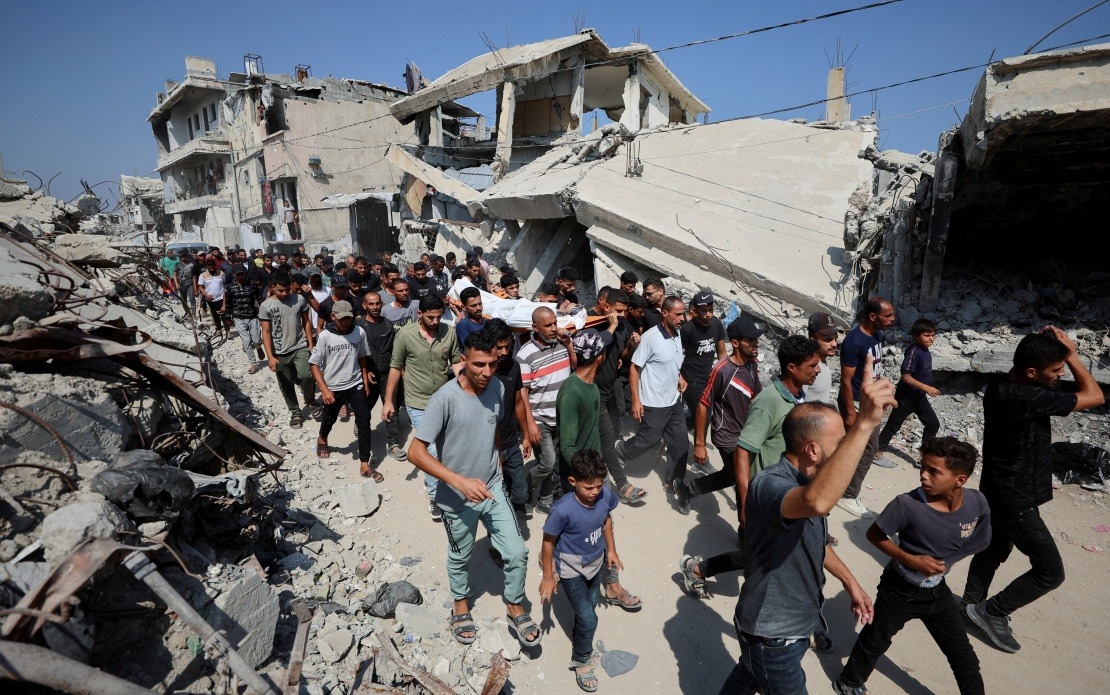
Brussels' disapproval of Israel's territorial policies deepened on Friday when the European Union formally condemned fresh moves to expand settlements across the occupied West Bank. The bloc's position, articulated through the European External Action Service, signals mounting frustration within European capitals over what officials characterise as actions that systematically dismantle prospects for a negotiated peace settlement between Israelis and Palestinians.
At the heart of the EU's concern lies Israel's approval of substantial new financial allocations specifically designated for expanding existing settlements in the West Bank. According to the bloc, this funding mechanism represents a deliberate strategy to cement settlement infrastructure in strategically sensitive regions, effectively converting temporary military or civilian presences into permanent political facts on the ground. The EU's language emphasises that such entrenchment directly contradicts the diplomatic frameworks that have underpinned international peace efforts for decades.
Particularly troubling to European officials is the territorial fragmentation that accompanies this settlement expansion. As new settlements proliferate and existing ones expand, Palestinian-controlled territories become increasingly disconnected from one another, resembling an archipelago of isolated enclaves rather than a contiguous state. This fragmentation, EU officials argue, strips Palestinian communities of fundamental mobility rights and economic capacity while creating pockets of vulnerability where human rights protections become difficult to enforce or monitor.
The EU specifically rejected Israel's elevation of Givat Ze'ev to municipal status, treating this administrative decision as a further provocation. By granting such status, Israel effectively normalises a settlement within the international legal framework, signalling permanence and integration into broader Israeli governance structures. Brussels has previously declined to recognise such moves, maintaining instead that settlements remain illegitimate occupations of territory seized through military force.
Fundamental to the EU position is its consistent refusal to acknowledge Israeli sovereignty over any territories conquered during the June 1967 Six-Day War. This principled stance, anchored in multiple United Nations Security Council resolutions, reflects a consensus within European leadership that acquisition of territory through military conquest violates international law. Malaysia, as a fellow UN member committed to principles of international legality and territorial integrity, shares aspects of this perspective, particularly given historical experiences with colonial occupation and the importance of respecting established borders.
Brussels has called directly upon Israel to halt all further settlement expansion activities, cease the legalisation of unauthorised outposts, and desist from seizing Palestinian-owned land. The EU's language extends beyond settlements to encompass other Israeli actions in occupied territories—specifically demolitions of Palestinian structures and forcible evictions of residents—all of which Brussels characterises as unilateral measures that fundamentally undermine diplomatic possibilities.
The EU's repeated warnings about threats to the two-state solution carry particular weight given Europe's historical investment in Israeli-Palestinian peace efforts. For decades, Brussels has provided financial and technical support to both parties, sponsored dialogue initiatives, and advocated internationally for a settlement framework that would see an independent Palestinian state coexist with Israel along pre-1967 borders. The bloc's current rhetoric betrays frustration that these efforts face systematic obstruction through territorial expansion policies.
For Southeast Asian observers and policymakers, including Malaysia, this ongoing dispute illustrates broader patterns regarding occupation, settlement, and international law compliance. The principles the EU invokes—non-recognition of territorial conquest, protection of indigenous populations, and resistance to unilateral fait accompli creation—mirror concerns raised about other regional disputes where powerful actors attempt to alter territorial status through military presence and administrative reorganisation.
The strategic implications of this European stance extend beyond symbolic protest. The EU collectively represents enormous economic leverage, significant diplomatic influence within multilateral institutions, and considerable cultural soft power. Sustained criticism from Brussels, particularly when united across 27 member states, carries consequences for Israeli international standing, trade relationships, and security cooperation frameworks that Israel values highly. This economic and diplomatic dimension distinguishes EU statements from mere rhetoric and potentially constrains Israeli policy choices.
Yet the persistence of these EU criticisms despite their apparent ineffectiveness raises questions about diplomatic efficacy. Israel has continued settlement expansion for decades despite repeated international condemnation, suggesting that EU warnings, however strongly worded, face limited practical consequences in shaping Israeli decision-making. This gap between international disapproval and on-the-ground reality indicates the complex dynamics surrounding territorial disputes and the challenges inherent in enforcing international law through diplomatic pressure alone.
The broader context involves competing narratives about historical claims, security requirements, and demographic realities that have proven resistant to diplomatic resolution. European officials frame their opposition in humanitarian and legalistic terms, emphasising Palestinian rights and international law. Israeli policymakers counter with security arguments and historical narratives that prioritise Jewish settlement in territories they view as historically significant. This fundamental disagreement over foundational premises complicates efforts to forge consensus solutions.

