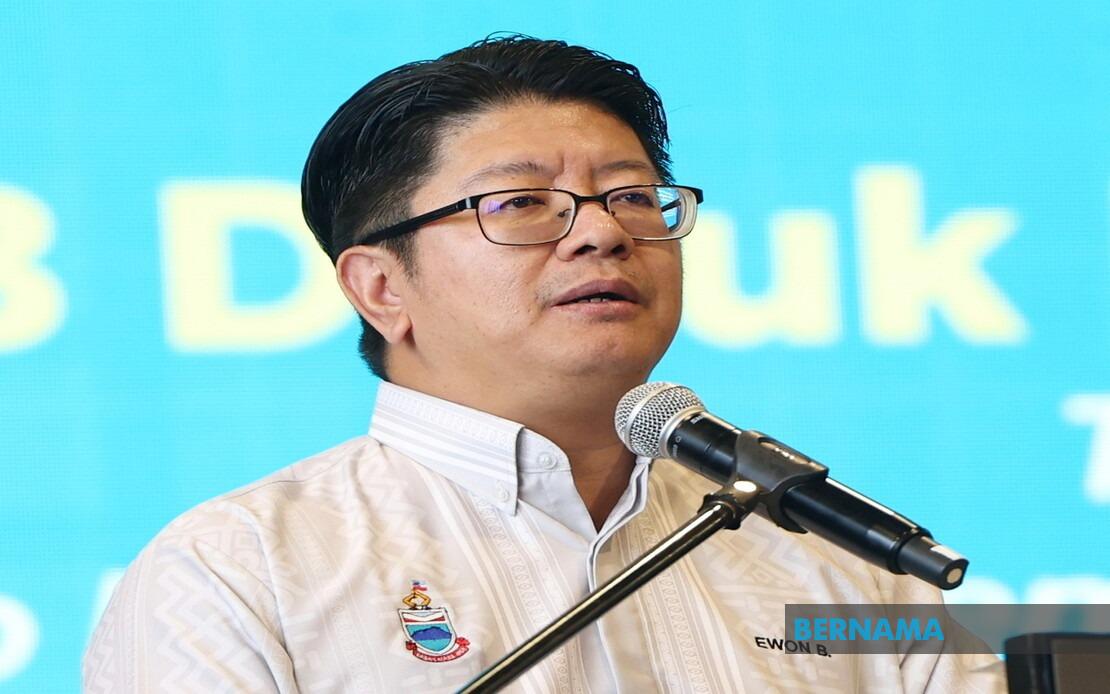
The United Progressive Kinabalu Organisation has reaffirmed its existing leadership structure, with Datuk Ewon Benedick continuing as president and Datuk Donald Peter Mojuntin as deputy president following elections held during the party's 17th triennial delegates conference in Penampang on August 10. The outcomes saw both men retain their posts without facing opposition, signalling party unity heading into the new three-year cycle and reflecting broader confidence within the grassroots membership.
The election results extended beyond the top two positions. Five vice-presidential roles remain unchanged, with Jairaiaz Joseph, Datuk Wong Thien Fook, Datuk Pangiran Lalung, Datuk Basari Sarikun, and Datuk Dr Laurentius Nayan Ambu each holding their respective seats. The absence of contested races at this level suggests a consolidation of the party's senior management and reflects Ewon's ability to maintain factional equilibrium within UPKO's broader coalition membership.
UPKO operates within the framework of Gabungan Rakyat Sabah, the coalition government that has governed Sabah since 2020 under Chief Minister Datuk Seri Hajiji Noor. As a component party of GRS, UPKO's internal decisions carry implications for the broader coalition's stability and the representation of its specific electoral and community interests in state-level decision-making. The uncontested nature of the leadership contest suggests the party leadership has successfully managed potential dissent and positioned itself as a unified bloc within the larger political arrangement.
In his closing remarks during the conference, Ewon emphasised the importance of democratic process and inclusive governance. He stressed that the leadership election should enhance rather than fragment party cohesion, framing all members as part of a unified UPKO family. This messaging is significant for maintaining morale among those who may have harboured alternative preferences, suggesting a president attuned to preventing post-election divisions from undermining organisational effectiveness.
Ewon outlined key responsibilities for the newly affirmed leadership, particularly the task of conveying party positions and resolutions to the state government administration. This includes direct engagement with Hajiji Noor in his capacity as GRS chairman, positioning UPKO as an active participant in coalition governance rather than a peripheral player. The emphasis on direct communication channels reflects the importance of small component parties maintaining visible influence within multi-party coalitions.
Parliamentary and state legislative representation will serve as another critical platform for UPKO to articulate its policy positions. Ewon indicated that party elected representatives will use debates in Parliament and the Sabah legislative assembly to present party resolutions and take principled stands on key issues. For Malaysian readers familiar with coalition politics, this signals UPKO's intention to secure measurable influence and visibility despite its smaller parliamentary footprint compared to larger coalition partners.
Wing-level leadership did experience significant turnover, indicating that party renewal is occurring at lower organisational levels even as the central leadership remains stable. Carlye Lajimin emerged as the new UPKO Youth chief, with Newbaxter Tibin appointed deputy chief, bringing fresh energy to youth mobilisation efforts. These appointments could influence UPKO's engagement with younger voters and its capacity to organise community-level activities across Sabah.
In the Women's wing, Mohina Sidom successfully retained her position as chief while Lomiti Jahan was elected as deputy chief. The re-election of the incumbent women's leader alongside the addition of new deputy leadership suggests continuity in women's representation strategy while broadening the leadership base. Women's wings in Malaysian political parties often serve as crucial mobilisation forces and community liaison points, making these positions significant for party reach and social connectivity.
Emmanuel Atin was chosen to lead the Young Generation wing with Alison Chan as deputy chief. The creation and emphasis on a distinct young generation structure, separate from the youth wing, indicates UPKO's recognition of generational diversity within its membership and an attempt to cultivate leadership pathways for younger cadres. This two-tiered youth structure mirrors approaches taken by other Malaysian political parties seeking to engage different age cohorts with appropriate messaging and policy focus.
The 17th triennial conference served as a demonstration of UPKO's organisational capacity and internal democratic procedures. For a smaller regional party operating within a coalition context, maintaining formal democratic processes and holding regular conferences signals institutional maturity and legitimacy to both members and external observers. In Malaysian politics, where questions about party democracy and internal governance structures frequently arise, UPKO's visible adherence to scheduled triennial conferences reinforces its position as a structured organisation with clear succession mechanisms.
The uncontested leadership outcomes must be contextualised within UPKO's broader political positioning in Sabah. As a component party within GRS, UPKO balances representation of specific Sabah-based interests and communities while maintaining coalition discipline. The leadership continuity suggests Ewon has managed this balance effectively, maintaining sufficient internal legitimacy to avoid serious challengers while preserving coalition harmony. This is particularly important given the competitive nature of Sabah politics and the presence of rival Sabah-based parties outside the current coalition structure.
Moving forward, the 2026-2029 leadership term positions UPKO for engagement with state-level governance priorities and potential involvement in future electoral cycles. The confirmed leadership will need to translate internal organisational unity into tangible policy outcomes and electoral performance that justifies the party's coalition membership and secures continued relevance. For Malaysian observers tracking coalition dynamics and component party management, UPKO's recent leadership renewal provides a case study in how smaller parties maintain unity and influence within larger political arrangements.

