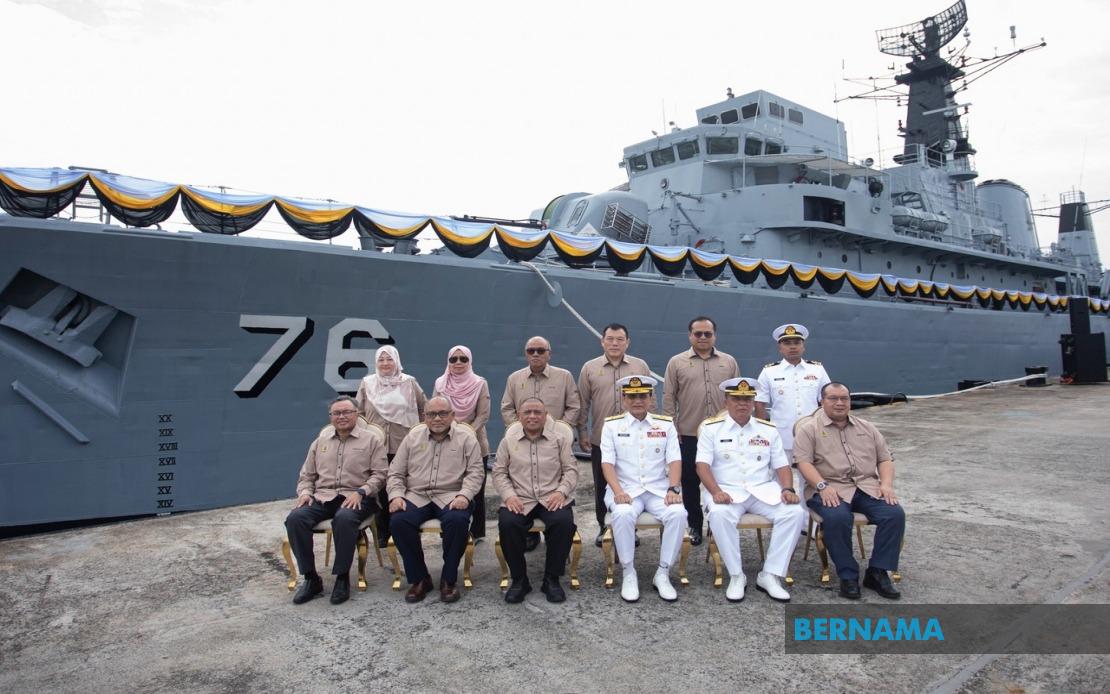
The Perak state government has taken ownership of the Ex-Hang Tuah, a decommissioned naval vessel, marking a significant moment for the state's maritime heritage ambitions. Handed over by the Royal Malaysian Navy at Lumut Naval Base on July 27, the warship will anchor what officials describe as a transformative cultural and tourism project expected to reshape how visitors engage with the state's seafaring history. The museum is projected to welcome its first public visitors in 2027, positioning Lumut as a destination for heritage enthusiasts and families seeking educational experiences connected to Malaysia's naval traditions.
Menteri Besar Datuk Seri Saarani Mohamad outlined an expansive vision for the Ex-Hang Tuah Memorial Museum, framing it as far more than a static exhibition space. The project integrates historical preservation, educational programming, tourism development, and community benefits—a multifaceted approach reflecting broader state priorities around sustainable growth. Rather than serving purely as a nostalgic tribute, the initiative aims to breathe new economic life into Lumut's waterfront district while honouring the contributions of naval personnel to Malaysia's maritime security.
The development will unfold through a public-private partnership arrangement between Menteri Besar Incorporated (MB Inc) Perak and Aero Art Sdn Bhd, a structure increasingly common in Malaysian state-level infrastructure projects. This collaborative model allows Perak to leverage private sector expertise and capital while maintaining public oversight of a strategically important cultural asset. The partnership framework signals the state government's pragmatic approach to scaling heritage tourism without bearing the full financial burden alone.
The first development phase carries a price tag of RM30 million, with implementation occurring in sequential stages rather than as a single construction push. This phased strategy permits adaptive management and allows the project team to assess public response and refine operations between phases. The staged approach also distributes financial exposure and enables course correction based on visitor patterns and community feedback once initial sections open.
Beyond the vessel itself, the broader precinct will feature amenities designed to maximize visitor engagement and local economic participation. A public park with no entrance fees will provide free access to the waterfront, encouraging casual visits alongside deeper museum experiences. Dedicated commercial zones will support local entrepreneurs and small businesses, ensuring that tourism revenue circulates through the community rather than concentrating entirely with large operators. Family activity spaces and community gathering areas reflect recognition that successful heritage destinations must offer varied experiences catering to different age groups and preferences.
The project explicitly targets the revitalisation of Lumut's Marina Wing and Esplanade districts, areas that historically have served naval functions but faced economic challenges as global shipping patterns shifted and military presence evolved. Planners expect that increased visitor arrivals will generate spillover benefits for local hospitality, food, and retail sectors. Employment opportunities—both direct positions within the museum and indirect jobs supporting visitor services—will provide employment pathways for residents in a region where economic diversification remains important.
State officials have positioned the Ex-Hang Tuah initiative within the broader Perak Sejahtera 2030 strategic framework, which emphasises sustainable development as the foundation for long-term prosperity. This alignment suggests the memorial museum represents not an isolated cultural vanity project but rather a deliberate component of Perak's economic planning. By framing heritage tourism as a vehicle for sustainable growth, the state government attempts to demonstrate that historical preservation and modern economic development need not be competing priorities.
The military tourism concept introduces a distinctive product into Perak's existing maritime tourism portfolio. While many Malaysian states emphasize beaches, diving, and water sports, few have pioneered naval heritage as a primary attraction. The Ex-Hang Tuah museum positions Perak as the custodian of a unique experiential offering—one that educates visitors about naval history while simultaneously celebrating the role of maritime personnel in protecting national waters and sovereignty. This specialisation could differentiate Perak within Malaysia's competitive tourism landscape.
From the broader national perspective, the handover represents the Royal Malaysian Navy's confidence in Perak's capacity to preserve and interpret a vessel of historical significance. The RMN, represented at the ceremony by Western Fleet Commander Vice Admiral Datuk Baharudin Wan Md Nor, effectively transferred custodianship of an asset symbolising decades of naval operations. This transition from purely military use to civilian heritage stewardship reflects changing attitudes toward military infrastructure, with ageing vessels increasingly recognised as educational resources rather than mere scrap.
The Ex-Hang Tuah project arrives as several Malaysian states explore similar heritage-tourism combinations. The initiative aligns with national aspirations to develop experiential tourism products that retain spending within the country and create employment beyond resort enclaves. However, the success of such ventures depends heavily on effective interpretation, maintenance standards, and sustained marketing—factors that will determine whether Perak's RM30 million investment generates anticipated returns.
The 2027 opening timeline provides nearly three years for design refinement, conservation planning, and community engagement. During this window, state officials must address practical considerations including vessel structural integrity, safety protocols for public access, interpretive strategy, and staffing models. International examples of naval heritage museums offer templates, though each project must respond to local contexts, available expertise, and visitor demographics.
For Southeast Asian readers, the Ex-Hang Tuah project exemplifies how regional nations are recalibrating relationships with military heritage, transforming decommissioned assets into public assets serving education and tourism. The model suggests pathways for other nations in the region possessing surplus naval vessels, though successful replication requires institutional capacity, financial commitment, and sustained political support across multiple election cycles.

