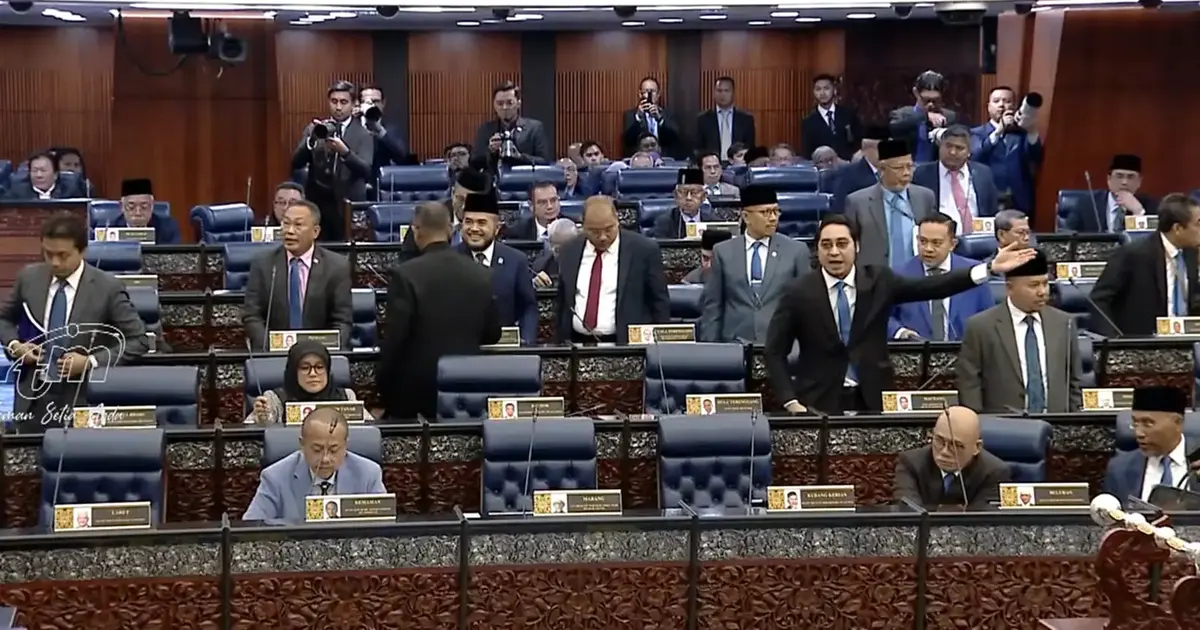
Communications Minister Fahmi Fadzil has publicly commended Bersatu MPs for their participation in the royal commission of inquiry examining Tabung Haji's affairs, marking a notable split within the Perikatan Nasional coalition as other component parties chose to boycott the proceedings. The minister's remarks underscore growing fissures within the opposition alliance, with Bersatu's decision to engage constructively with the inquiry standing in stark contrast to the more confrontational stance adopted by their coalition partners.
The Tabung Haji inquiry represents a significant governance flashpoint in Malaysian politics, addressing longstanding concerns about the management and operations of the pilgrimage savings fund that serves millions of Malaysian Muslims. The royal commission's investigation carries considerable symbolic weight, as Tabung Haji has historically been viewed as a crucial institution safeguarding the financial interests of ordinary Malaysians preparing for the Hajj pilgrimage. Public trust in the institution had been strained by previous controversies and governance questions that prompted the decision to establish the formal inquiry.
Bersatu's choice to participate in the RCI proceedings reflects a pragmatic political calculus that prioritizes substantive engagement with matters of public importance over partisan theatrics. By maintaining a presence in the inquiry sessions, the party positioned itself as willing to scrutinize governance issues through established institutional mechanisms rather than resorting to boycotts or obstructionism. This approach carries implications for how voters across the political spectrum perceive Bersatu's commitment to transparency and accountability, particularly among constituencies concerned about institutional integrity.
The walkout by other Perikatan Nasional MPs introduces a complicating factor in the coalition's internal dynamics. These lawmakers' decision to absent themselves from RCI proceedings may have reflected calculations about maintaining party discipline or making political statements, yet it also highlighted a fundamental disagreement within the opposition bloc about the appropriate response to government-initiated investigations. Such divisions can weaken coalition cohesion, particularly when different member parties adopt divergent strategies on high-profile issues affecting the public interest.
Fahmi's public recognition of Bersatu's participation serves multiple strategic purposes within Malaysia's complex political landscape. By explicitly contrasting Bersatu's constructive engagement with other coalition partners' absence, the communications minister reinforces a narrative of responsible governance and institutional respect. This positioning carries weight among middle-ground voters and civil society observers who value political actors willing to work within established frameworks rather than reject them outright. For Bersatu specifically, such external validation from the government side potentially burnishes their credentials as a serious political force beyond coalition considerations.
The incident reveals underlying tensions within Perikatan Nasional regarding coalition discipline and strategic direction. Opposition coalitions typically struggle with balancing unified messaging against constituent parties' desires for independent political action. When component parties pursue divergent strategies on prominent national issues, such discord becomes visible to the broader electorate and can undermine the coalition's effectiveness as an alternative political force. Fahmi's comments, whether intentionally or incidentally, have now drawn public attention to this internal disagreement.
Tabung Haji itself remains a politically sensitive institution given its deep connections to the Muslim community and its role in facilitating religious observance. Any inquiry into its operations intersects with multiple constituencies including religious organizations, economic stakeholders, and millions of ordinary Malaysians with funds at stake. The differing responses from Perikatan Nasional components to the inquiry suggest varying assessments of how to balance oversight concerns against political calculations, with Bersatu apparently viewing constructive participation as more advantageous than confrontational absence.
For Malaysian observers tracking coalition politics, this episode demonstrates how ostensibly technical governance matters can become flashpoints for deeper alliance tensions. The opposition coalition's ability to present unified positions on major issues affecting public institutions directly influences its credibility as a potential governing alternative. When constituent parties adopt inconsistent approaches to high-profile inquiries, questions inevitably arise about how they would coordinate in actual governance contexts where policy coherence becomes essential.
The broader significance of Fahmi's remarks extends beyond immediate coalition politics to questions about institutional legitimacy and public trust. Royal commissions of inquiry represent formal mechanisms through which governments address accountability concerns and governance gaps. Parliamentary and opposition participation in these processes, whether supportive or critical, generally strengthens the inquiry's legitimacy. Conversely, systematic boycotts risk appearing obstructionist to segments of the public concerned primarily with accountability rather than partisan advantage. Bersatu's presence therefore potentially enhanced the RCI's standing as a credible investigative body.
Looking forward, the Tabung Haji inquiry will likely generate findings and recommendations with implications for governance across multiple institutions. How opposition parties position themselves relative to the final report and its conclusions will shape perceptions of their commitment to institutional reform. Bersatu's early engagement with the inquiry proceedings positions the party to substantively engage with findings and recommendations, while other coalition partners' absence may limit their subsequent influence over how the inquiry's outcomes are received and implemented by stakeholders and the broader public.

