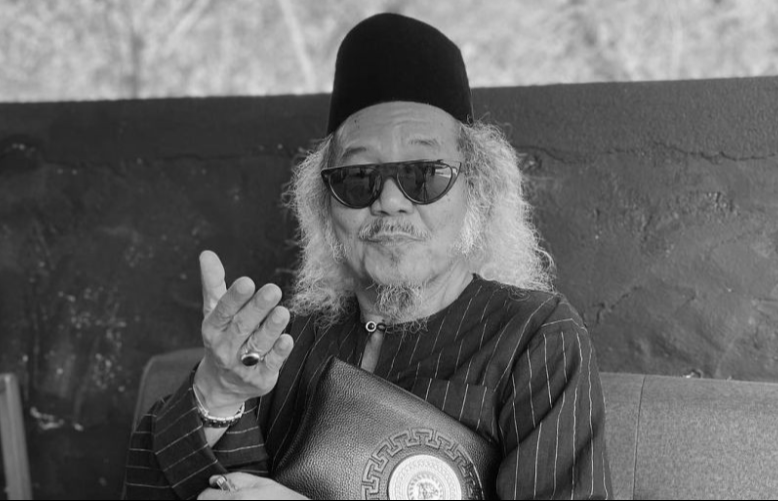
Malaysian cinema has lost one of its most recognisable character actors with the passing of Kamarool Yusoff, popularly known as Cik Man, who died on August 5 at the age of 68. His son, Ahmad Fakhrol Aliff, confirmed that the veteran performer passed away at 5.30 pm while hospitalised at Tanah Merah Hospital, where he had been receiving treatment for a heart condition. The news of his death was first shared publicly through a Facebook post by comedian Mohammad Amirullah Azmi, better known as Amir Raja Lawak, who extended heartfelt condolences to the grieving family.
Cik Man's four-decade career in Malaysian entertainment left an indelible mark on audiences who grew up during the golden age of Malay cinema, particularly in the 1980s when the industry was producing films that would become cultural touchstones for an entire generation. His most celebrated role came in the 1986 film where he portrayed Farouk, the menacing leader of the Gagak Hitam gang—a character so memorable that it remained the defining role throughout his life. The film itself became a seminal work in Malaysian cinema, and Cik Man's portrayal of the antagonist demonstrated his remarkable range as a performer, capable of commanding the screen with an intensity that made him unforgettable to audiences across the region.
Communications Minister Datuk Seri Fahmi Fadzil issued a formal statement acknowledging Cik Man's passing and the profound loss to Malaysia's cultural landscape. In his Facebook tribute, Fahmi recognised that generations of Malaysians who experienced the flourishing of local cinema during the 1980s would instantly recall Cik Man's iconic interpretation of the Farouk character, a role that had transcended its original film to become part of Malaysian pop culture mythology. The minister's acknowledgement underscores how significantly the actor had influenced the nation's entertainment industry and the collective memory of those who witnessed his performances during their formative years.
Beyond his most famous role, Cik Man maintained an active presence in Malaysian entertainment throughout his career, appearing in subsequent productions well into the 2010s. His continued work demonstrated his enduring appeal and the respect the industry held for his craft. The diversity of his roles showcased his versatility as an actor, whether portraying menacing villains or contributing to comedic narratives, revealing depths to his abilities that extended far beyond the character for which he remained best known. This longevity in a notoriously demanding and often unpredictable industry spoke to both his talent and his commitment to his profession.
Fahmi's tribute went beyond mere acknowledgement of Cik Man's passing, emphasising the actor's standing not only among his professional peers in the entertainment world but also among the broader community of those dedicated to preserving and advancing Malaysia's artistic heritage. The minister noted that Cik Man held considerable respect across multiple circles, representing a figure who had genuinely contributed to enriching the nation's cultural fabric. This assessment reflects how the veteran actor had transcended the role of mere entertainer to become something of a cultural ambassador, embodying an era when Malaysian cinema was producing internationally competitive work and gaining recognition beyond the region's borders.
The minister extended formal prayers for the deceased, invoking Islamic traditions of mercy and spiritual peace. In his statement, Fahmi asked that Allah SWT would forgive any transgressions committed during Cik Man's lifetime, grant his soul divine mercy, and ensure his place among the righteous in the afterlife. These sentiments, expressed through the lens of Malaysia's Muslim-majority society, reflected the deep respect and affection in which the veteran performer was held across religious and cultural communities alike. The outpouring of tributes from public figures demonstrated that Cik Man's impact extended well beyond the entertainment industry into the broader fabric of Malaysian society.
Cik Man's departure marks the end of an era for Malaysian cinema. The 1980s represented a unique moment in the nation's film history, a period when domestic productions could compete effectively with international offerings and when local actors achieved genuine stardom based on talent and screen presence alone. That golden age gradually faded as the industry faced evolving challenges, changing audience preferences, and shifts in how entertainment was consumed. Cik Man remained a living connection to that period, a reminder of Malaysian cinema's capacity to produce world-class entertainment and performers of genuine international calibre.
The circumstances of his death—a heart ailment that proved fatal despite hospitalisation—underscore the vulnerability that extends even to those who have achieved prominence and recognition. Cik Man's final years saw him largely absent from the public eye, a common trajectory for veterans of his generation as newer performers emerged and the industry's focus inevitably turned toward fresh faces. Yet his absence from contemporary screens in no way diminished the significance of his earlier contributions or the gratitude that many Malaysians felt for the entertainment and cultural value he had provided across his lengthy career.
For Malaysian audiences and regional cinema enthusiasts, Cik Man's name will forever remain synonymous with a particular vision of screen villainy—menacing, charismatic, and utterly commanding. The Farouk character demonstrated how effectively Malaysian cinema could create memorable antagonists, proving that local productions could achieve the dramatic sophistication required to produce truly compelling drama. As tributes continue to flow from the entertainment community and beyond, they collectively affirm that Cik Man's place in Malaysian cultural history remains secure, preserved in the films he made and in the memories of those whose entertainment he shaped across the decades.

