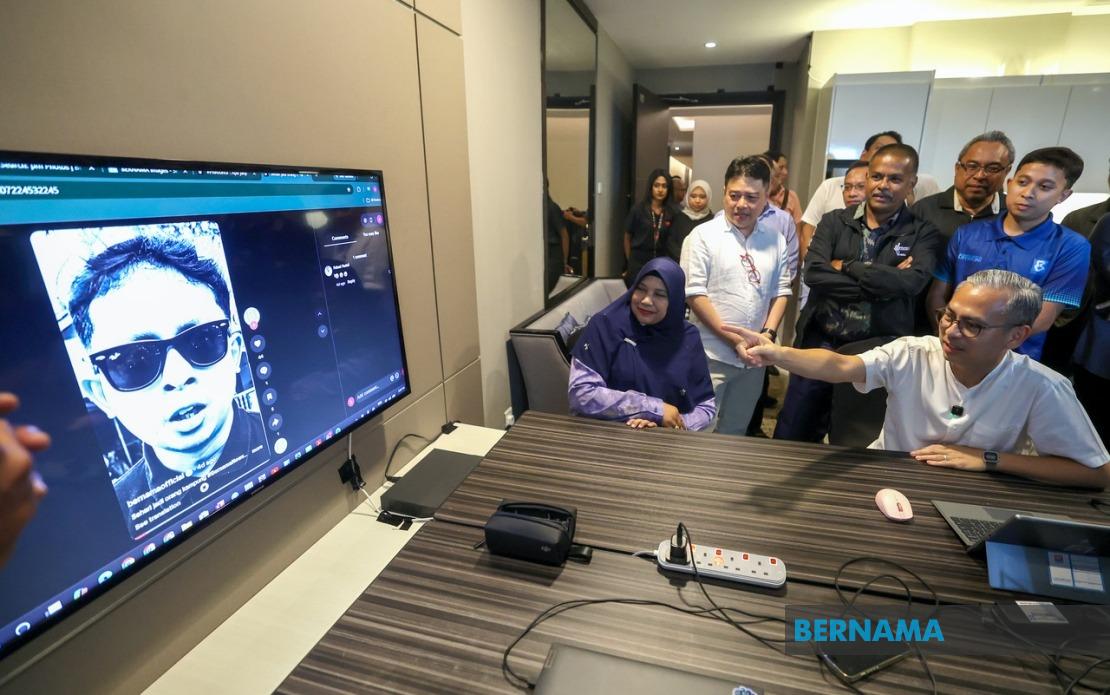
Communications Minister Datuk Fahmi Fadzil has commended the Malaysian National News Agency (Bernama) for its dedicated efforts in reporting on the Johor state election, emphasising the importance of maintaining public access to reliable and thorough election coverage. During a visit to Bernama's operations centre in Johor Bahru on July 7, Fahmi expressed satisfaction with the agency's readiness and operational capacity to document the significant political event unfolding across the state.
The minister's inspection of the news agency's command centre revealed a well-coordinated infrastructure supporting election reporting. Bernama had mobilised 44 personnel, including journalists, cameramen, and photographers, positioned strategically to deliver updates from across Johor's diverse geography. This deployment enabled the team to maintain surveillance over polling developments spanning the entire state, from the southern reaches of Endau through to Tanjung Surat and extending into Johor's northern constituencies.
Fahmi's remarks underscored the role that professional news gathering plays in democratic processes. By ensuring accurate dissemination of election-related information, Bernama contributes to an informed electorate capable of understanding electoral dynamics and outcomes. The minister's public appreciation for the agency's work reflects government recognition of responsible journalism during politically sensitive periods, when media standards become particularly consequential for maintaining public confidence in the democratic system.
The scale of Bernama's assignment reflected the significance of the Johor contest, in which 172 candidates competed for 56 seats in the state assembly. The election represented a substantial test of the nation's political landscape, and comprehensive media coverage served as a counterweight to fragmented reporting that might otherwise dominate social media platforms. By maintaining a structured, professional approach to information dissemination, Bernama functioned as a bulwark against the spread of unverified claims and sensationalised narratives that frequently accompany electoral campaigns.
During his extended visit to the operations centre, Fahmi conducted an inspection lasting more than an hour, during which he examined the technical and logistical arrangements supporting the newsroom. The minister's hands-on engagement with Bernama's personnel demonstrated direct government interest in media infrastructure and working conditions. His observations of satisfactory facilities indicated that adequate resources had been allocated to support journalists working under demanding deadline pressures typical of election coverage.
Fahmi specifically acknowledged the leadership contributions of Bernama chief executive officer Datin Paduka Nur-ul Afida Kamaludin and editor-in-chief Arul Rajoo Durar Raj, crediting them with orchestrating comprehensive preparations and coordination protocols. The executive team's coordination efforts extended across multiple departments within the news agency, integrating journalists, sub-editors, editors, and television personnel into a unified operational structure. This institutional coordination ensured consistency in information quality and prevented the fragmentation that can occur when different media branches operate without coherent direction.
The Johor state election campaign coincided with broader discussions in Malaysia regarding media standards and journalistic independence. By publicly recognising Bernama's professionalism, Fahmi signalled government support for established news institutions operating within regulated frameworks, as opposed to unaccountable digital media proliferating online. This positioning reflects ongoing tensions between traditional media regulatory structures and the decentralised information ecosystem created by social media platforms.
Bernama's coverage mandate extended beyond routine reporting to encompass early voting conducted on July 7, with polling scheduled for July 11. This extended timeline required sustained operational intensity and resource management throughout multiple voting phases. The news agency's ability to maintain continuous coverage across these distinct electoral stages required both logistical planning and journalistic flexibility to adapt to emerging developments.
For regional observers, Malaysia's media response to elections offers insights into how Southeast Asian democracies balance press freedom with institutional accountability. Bernama's status as a government-affiliated news agency positions it differently from privately owned media outlets, yet its professional standards and operational transparency during major political events demonstrate how state media can contribute constructively to democratic communication. The model of deploying dedicated teams to systematically cover electoral territory reflects investment in comprehensive information infrastructure rather than reliance on opportunistic or fragmentary reporting.
Fahmi's visit and public acknowledgment also addressed broader questions about workforce morale within government institutions. By personally inspecting facilities and expressing appreciation for staff efforts, the minister reinforced recognition of journalism as professional work requiring resources, training, and supportive working environments. This approach contrasts with contexts where media personnel operate under constraints or receive minimal institutional support, potentially compromising coverage quality.
The interaction between ministerial oversight and news agency operations illuminates Malaysia's approach to managing state media during critical democratic moments. Rather than attempting to control coverage content, the government's visible engagement with operational standards and resource allocation suggests confidence in professional journalism to serve public information needs. This institutional confidence, if sustained, can contribute to maintaining public trust in both democratic processes and information sources during periods of heightened political intensity.
As the Johor election proceeded through its various phases, Bernama's systematic coverage provided Malaysian audiences with a consistent information reference point. The 44-person deployment across the state ensured that electoral developments received professional documentation and contextualisation, reducing space for unsubstantiated claims to dominate public discourse. This foundational role of comprehensive reporting in supporting democratic legitimacy underscored why government recognition of news agency efforts carries significance beyond administrative courtesy.

