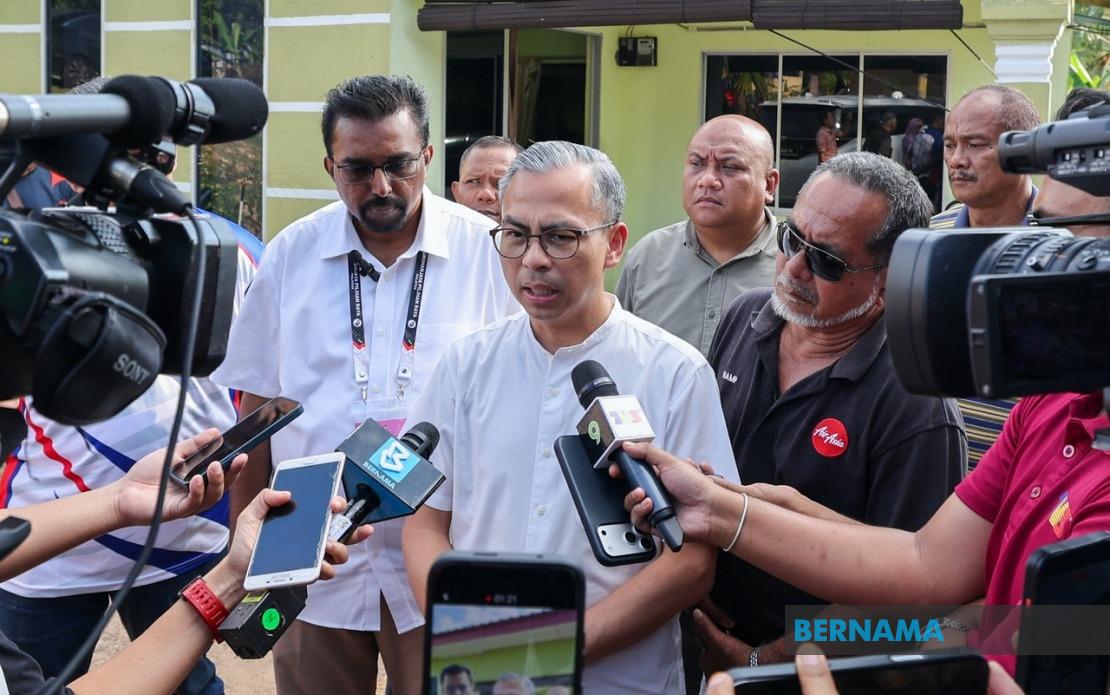
The government is moving toward greater transparency regarding the Royal Commission of Inquiry into Tabung Haji, with Communications Minister Datuk Seri Fahmi Fadzil publicly advocating for full public disclosure of the final report. Speaking at the Ziarah Kasih MADANI programme in Felda Palong 1, Jempol, on July 23, Fahmi emphasised that depositors, contributors, and ordinary citizens deserve access to comprehensive information about the circumstances surrounding the religious endowment fund's troubled past.
Fahmi's intervention reflects a shift toward openness within the government's handling of the inquiry, which examined allegations concerning the sale of Tabung Haji's strategic assets—a matter that had sparked considerable public concern and debate. The minister framed the publication of the report not merely as a procedural formality but as a fundamental obligation rooted in democratic governance principles. His statement underscores growing recognition that institutional accountability depends on public understanding and scrutiny of investigative findings.
Prime Minister Datuk Seri Anwar Ibrahim had already signalled the government's readiness to make the report available, indicating that the decision would be reviewed in consultation with Chief Secretary to the Government Tan Sri Shamsul Azri Abu Bakar. The Prime Minister suggested a timeline for release no later than the following Wednesday from his July 23 statement, indicating that the internal approval process was advancing. This sequential endorsement from both the Prime Minister and Communications Minister demonstrates unified government messaging on the transparency issue.
The timing of this commitment carries significance for Malaysia's institutional health. Tabung Haji, as a major Islamic financial institution holding deposits from millions of Malaysian Muslims who save specifically for their pilgrimage to Mecca, occupies a special place in the national consciousness. The allegations surrounding asset sales had raised questions about governance, fiduciary responsibility, and the adequacy of oversight mechanisms—concerns that extended beyond individual depositors to encompass broader questions about how critical national institutions are managed.
Fahmi specifically noted that under its current management and administration, Tabung Haji operates from a substantially stronger position than during the period covered by the inquiry. This observation introduces an important contextual element: the public release is occurring in the context of institutional reform and stabilisation rather than ongoing crisis. The communications minister's assertion that the fund's current trajectory is positive may serve to reassure stakeholders while the report details past failures and misconduct.
The principle of transparency that Fahmi invoked resonates particularly strongly in Malaysia's current political environment, where the government has positioned itself as committed to combating corruption and improving institutional governance. By voluntarily releasing an investigation report that likely contains critical findings about previous administration failures, the government can demonstrate alignment with its anti-corruption messaging. However, this openness also carries risks, as public access to detailed findings about mismanagement could reignite debates about accountability and whether appropriate consequences were imposed on those responsible.
For depositors and contributors to Tabung Haji, the promised release offers the opportunity to understand exactly what occurred with their savings and the strategic assets the fund once held. Many individuals entrust substantial portions of their savings to Tabung Haji specifically for the Hajj pilgrimage, making this institution uniquely significant in terms of personal financial security and religious practice. The ability to access the RCI's findings allows these stakeholders to form independent judgements about whether the fund's governance improvements are genuinely adequate or merely cosmetic.
The inquiry itself represents a formal government recognition that serious irregularities had occurred, distinguishing this from simple administrative matters. Royal Commissions of Inquiry carry particular weight in Malaysia's constitutional framework and investigative tradition. The decision to conduct an RCI rather than relying solely on internal audits or regulatory processes indicated that authorities viewed the situation as requiring independent, high-level scrutiny. The subsequent move toward public release amplifies the message that the matters examined were sufficiently grave to warrant public knowledge.
Institutionally, this development has implications for how Malaysian government agencies and statutory bodies balance confidentiality with public accountability. Traditionally, sensitive government reports have been restricted, with release determined by classification systems that privilege caution. The apparent willingness to publish the Tabung Haji RCI report suggests evolving standards around what constitutes justifiable secrecy versus legitimate public interest in institutional oversight. This precedent could influence expectations regarding future inquiry reports and the default presumption about disclosure.
For the broader regional context, Malaysia's handling of the Tabung Haji situation and the transparency measures now being implemented reflect the nation's commitment to addressing governance concerns within Islamic financial institutions. Several Southeast Asian countries operate similar pilgrim fund schemes, and Malaysia's approach to accountability and transparency could influence how regional peers address their own institutional vulnerabilities. Demonstrating effective governance of religiously-significant financial institutions strengthens public confidence in Islamic finance more broadly across the region.
The anticipated release also addresses a practical information deficit that has existed since the inquiry concluded. Media coverage and public discussion of Tabung Haji issues has often proceeded with incomplete information, relying on fragmentary reporting and speculation about the inquiry's findings. Full public access to the formal investigative record should enable more informed public discourse, better-informed policy decisions, and clearer accountability for any individuals or systems that contributed to the problems identified.

